RAG with Google Gemini: Optimizing Vertex AI Pipelines for Enterprise Data
Master RAG with Google Gemini 2026. This guide covers Vertex AI Vector Search, Gemini embeddings, and cost-effective architectures for enterprise data grounding.

Long Nguyen
Fullstack Developer · AI Engineer · Researcher
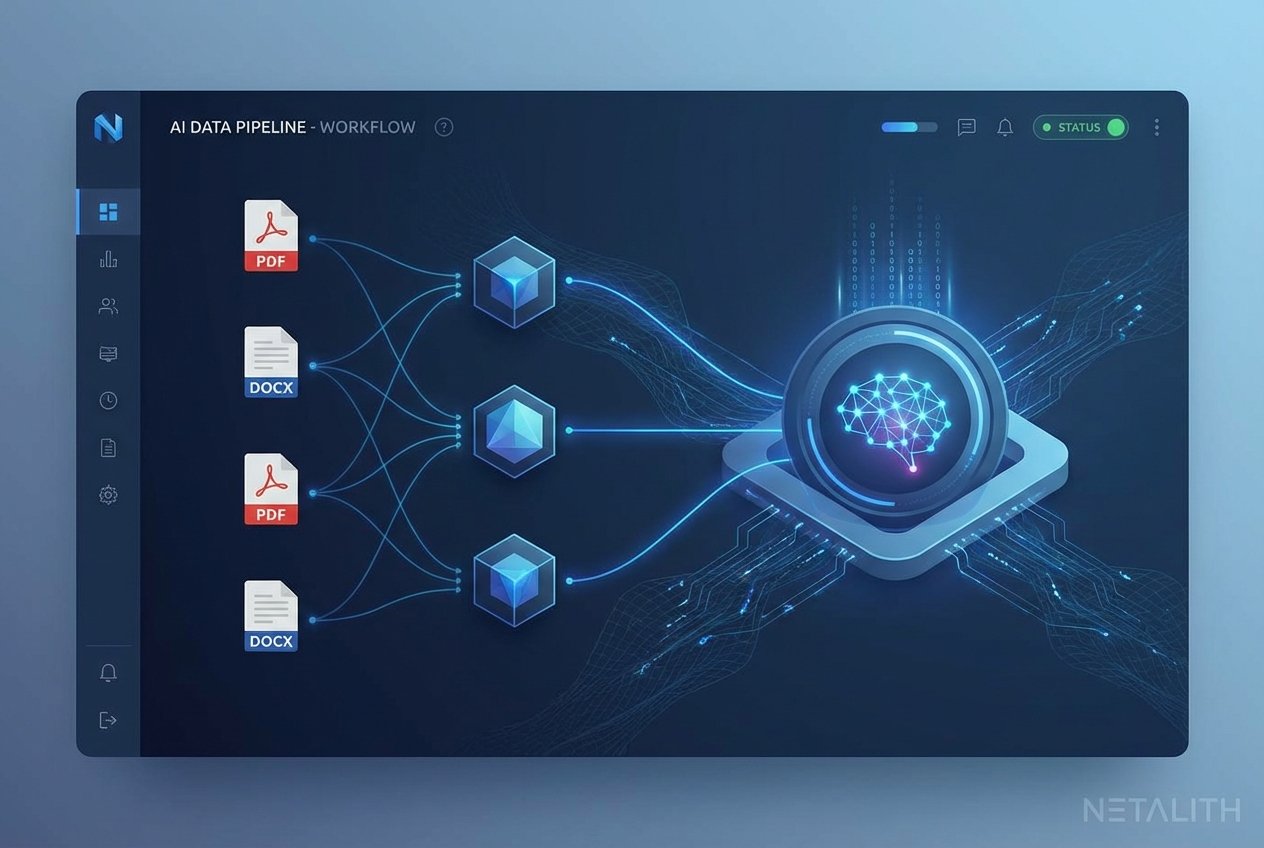
RAG with Google Gemini 2026: The Evolution of RAG with Google Gemini
In the rapidly advancing enterprise AI landscape, leveraging top-tier large language models requires more than just powerful prompting; it demands robust and verifiable data integration. This comprehensive Gemini RAG Guide explores how modern architectures are built upon the reliable foundation of Google Cloud AI infrastructure. With expanding Google Gemini 2026 capabilities, developers now have unprecedented tools to inject domain-specific knowledge directly into generative workflows. Building a highly optimized RAG with Google Gemini 2026 pipeline is the definitive strategy for reducing AI hallucinations and deploying enterprise applications that truly understand your proprietary data.
Mastering Retrieval Augmented Generation on Google Cloud 2026 allows organizations to keep their data secure while granting language models access to vast internal repositories. As we explore these methodologies, you will discover that implementing Retrieval Augmented Generation on Google Cloud 2026 is no longer a theoretical exercise, but a production-ready necessity for scaling intelligence.
Core Components of a Retrieval Augmented Generation Pipeline
A modern Retrieval Augmented Generation pipeline elegantly marries document retrieval with generative synthesis. The overarching goal of grounding gemini with enterprise data is to ensure every output is backed by verifiable sources. In practice, this pipeline executes an advanced semantic search google cloud operation before the language model even begins to formulate a response.
This two-step architectural process—retrieval followed by generation—ensures that Data grounding with Gemini API relies on factual internal databases rather than parametric memory alone. Whether you are building internal knowledge bases or customer-facing chatbots, deploying Retrieval Augmented Generation on Google Cloud 2026 guarantees that responses remain contextually accurate and highly relevant across all business units.
Setting Up Vertex AI Vector Search
At the heart of the retrieval process is Vertex AI Vector Search. Setting up a high-performance vector database vertex ai environment is crucial for achieving low-latency queries at scale. When configuring vector search on google cloud for gemini rag, developers must systematically chunk textual data and convert it into high-dimensional numerical vectors using document embeddings google, which allow the system to perform approximate nearest neighbor (ANN) searches.
By matching user queries with the most semantically relevant enterprise documents, Vertex AI seamlessly bridges the gap between raw data storage and actionable AI context for any Retrieval Augmented Generation on Google Cloud 2026 implementation.
Improving Retrieval Accuracy with Gemini Embeddings
Generating high-quality vectors is the bedrock of system performance. By focusing on improving retrieval accuracy with gemini embeddings 2026, AI engineers can capture nuanced contextual meaning that older embedding models frequently missed. The advanced Gemini Embeddings 2026 support broader dimensional configurations and richer multilingual representations, offering a far more precise engine inside a Retrieval Augmented Generation on Google Cloud 2026 architecture.
Pro Tip: Semantic richness is only half the battle. Always evaluate your chunking strategy alongside your chosen embedding model to maximize context retention and minimize noise.
To push accuracy even further, technical teams are actively employing advanced retrieval optimization techniques such as hybrid search algorithms—which intelligently combine sparse keyword matching with dense vector search. Furthermore, knowledge graph ai integration is increasingly being utilized to establish deterministic relationships between isolated data points before passing the consolidated context to the Gemini model.
Cost-Effective RAG Architecture with Gemini Flash Models
Managing API and inference costs is critical when operating at an enterprise scale. A truly cost effective rag architecture with gemini flash models balances processing speed, latency, and operational expense perfectly. Within the broader Google AI model ecosystem, the "Flash" tier of Gemini models is purpose-built for high-frequency, lower-latency conversational tasks.
By intelligently routing standard retrieval queries to Flash models, enterprises are succeeding in optimizing rag pipelines with google vertex ai and gemini 2026 without sacrificing output quality. Running Retrieval Augmented Generation on Google Cloud 2026 efficiently means knowing when to deploy lightweight models for straightforward synthesis and when to reserve heavyweight models for complex reasoning tasks.
Long Context Window vs RAG: Striking the Right Balance
A frequent and important debate among AI professionals is evaluating the long context window vs rag 2026. Thanks to the Google DeepMind latest breakthroughs 2026, Gemini models can now seamlessly ingest millions of tokens directly in a single prompt. However, simply stuffing the context window is computationally expensive and can lead to "lost in the middle" phenomena across massive documents.
Building a dynamic Retrieval Augmented Generation on Google Cloud 2026 system remains the superior choice for verifiable, multi-source knowledge retrieval. The most resilient architectures versus Retrieval Augmented Generation on Google Cloud 2026 alone actually utilize a hybrid approach: leveraging RAG to fetch the most relevant documents, and utilizing the expanded context window to synthesize extensive, targeted data without exceeding strict token limits or budget constraints.
Step-by-Step Gemini API Integration Guide
For developers ready to build, integrating the ecosystem requires navigating Google AI Studio for developers and utilizing the robust Vertex AI SDK. This Gemini API integration guide outlines the essential steps to bootstrap your pipeline:
- Environment Setup: Authenticate your Google Cloud project and enable the Vertex AI API.
- Data Indexing: Process your enterprise documents, generate embeddings, and upload them to your Vertex AI Vector Search index.
- Query Processing: Intercept user inputs, embed the prompt, and retrieve the top-K matching documents.
- Generation: Pass the retrieved context alongside the user prompt to the Gemini API for final synthesis.
# Example conceptual flow for RAG with Google Gemini 2026
from google.cloud import aiplatform
from vertexai.language_models import TextGenerationModel

def generate_rag_response(query, retrieved_context):
    prompt = f"Context: {retrieved_context}Question: {query}Answer:"
    model = TextGenerationModel.from_pretrained("gemini-1.5-flash-2026")
    response = model.predict(prompt)
    return response.text
Frequently Asked Questions
How does RAG with Google Gemini improve enterprise AI retrieval accuracy?
By dynamically grounding the model's responses in factual, up-to-date enterprise data, deploying Retrieval Augmented Generation on Google Cloud 2026 prevents hallucinations and ensures the AI outputs are deeply contextualized to your specific business domain.
What are the best practices for setting up vector search on Google Cloud for Gemini RAG?
Best practices include utilizing optimal document chunking strategies, leveraging the latest Gemini embeddings for high-dimensional accuracy, and tuning your approximate nearest neighbor (ANN) parameters within Vertex AI to balance latency and recall effectively.
How do I choose between long context windows and dedicated RAG pipelines?
Use long context windows for one-off deep analyses of static documents. Choose a dedicated RAG pipeline for applications requiring real-time updates, cost-efficiency at scale, and verifiable source attribution across massive datasets.
Conclusion: The Future of RAG with Google Gemini
As we have explored, the integration of Vertex AI and the Gemini model suite provides a powerful framework for data-driven intelligence. By mastering the Retrieval Augmented Generation pipeline, organizations can ensure their AI applications are both performant and trustworthy. Ultimately, implementing RAG with Google Gemini 2026 represents the gold standard for enterprise-grade AI, offering the perfect balance of retrieval precision, cost-efficiency, and generative power.