AI for Cloud Infrastructure Tutorial: Automating Terraform and Kubernetes
A comprehensive tutorial on using AI tools to automate Terraform scripts, Kubernetes manifests, and cloud infrastructure debugging for modern DevOps.

Long Nguyen
Fullstack Developer · AI Engineer · Researcher
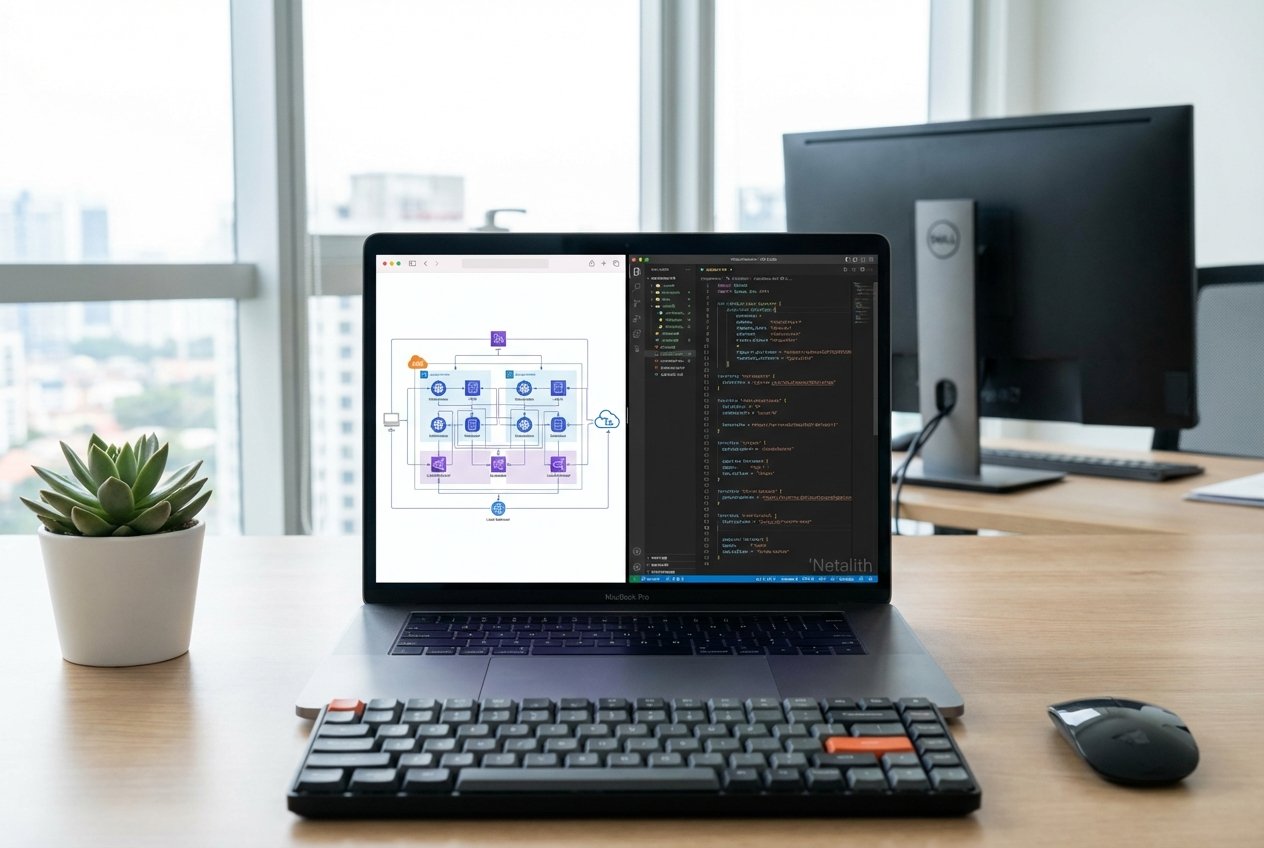
Introduction to Cloud AI Automation
The landscape of cloud computing and DevOps has evolved rapidly. Manual configuration and tedious scripting are increasingly being replaced by intelligent, AI-powered DevOps systems. Welcome to this comprehensive AI for Cloud Infrastructure tutorial, where we explore how modern engineering teams are drastically accelerating their development lifecycles. By embracing cloud AI automation, engineers can reduce boilerplate coding, minimize human error, and deploy resilient architectures faster than ever.
Understanding modern cloud automation trends is critical for any IT professional. Today’s AI agents do more than simple auto-completion; they actively design, scaffold, and troubleshoot complex cloud environments. Throughout this IaC AI tutorial, we focus on hands-on strategies for automating resource provisioning and configuration management, ensuring you are equipped to lead your team’s transition into intelligent operations.
Prerequisites for this AI for Cloud Infrastructure Tutorial
Before diving deep into automated provisioning workflows, you need to ensure your local environment and toolchain are ready. This section outlines the essential requirements for following along with this IaC AI tutorial, focusing heavily on cloud AI automation and AI for DevOps readiness.
- Cloud Provider Account: Active access to AWS, Google Cloud Platform (GCP), or Microsoft Azure.
- Infrastructure as Code Tools: The latest version of Terraform (CLI installed and authenticated).
- Kubernetes Environment: A local cluster (like Minikube or Docker Desktop) or remote cluster access via
kubectl. - AI Assistants: Access to leading AI tools such as GitHub Copilot, Google Gemini, or Claude.
Having these tools installed will allow you to leverage the full power of AI-powered DevOps and maximize the benefits of this guide.
AI-Driven Infrastructure as Code (IaC) Walkthrough
Transitioning from manual provisioning to an ai-driven infrastructure as code (iaac) walkthrough requires a shift in how we write and conceptualize infrastructure. Infrastructure as Code (IaC) has always been about predictability, but AI brings unprecedented speed to cloud configuration generation. In this IaC AI tutorial segment, we demonstrate how you can prompt AI models to draft robust, scalable infrastructure modules.
An effective automated provisioning workflow begins with clear context. Rather than writing HCL (HashiCorp Configuration Language) from scratch, you can supply high-level architectural requirements to an AI assistant, refining the output to meet security and operational standards.
Automating Terraform Scripts with GitHub Copilot and Gemini
One of the most powerful workflows today involves automating terraform scripts with github copilot and gemini. When combined, these tools act as an expert pair programmer. Leveraging a solid Gemini for developers guide or utilizing Github Copilot advanced features allows you to generate foundational Terraform automation AI scripts in seconds.
For example, if you want to deploy a secure AWS VPC with public and private subnets, you can use the following prompt in Gemini or Copilot chat:
"Generate a Terraform module for an AWS VPC in us-east-1. Include two public subnets, two private subnets, an Internet Gateway, and a NAT Gateway. Output only production-ready HCL with appropriate tagging."
The AI will rapidly produce cloud configuration generation outputs similar to this:
resource "aws_vpc" "main" {
  cidr_block           = "10.0.0.0/16"
  enable_dns_support   = true
  enable_dns_hostnames = true
  tags = {
    Name        = "ai-generated-vpc"
    Environment = "production"
  }
}
# (Additional subnets and gateways generated automatically...)
By effectively automating terraform scripts with github copilot and gemini, your Terraform automation AI capabilities expand, allowing you to focus on architecture rather than syntax.
How to Generate Kubernetes Manifests Using AI
Managing containerized applications has also been transformed. If you are looking for a how to generate kubernetes manifests using ai tutorial, the secret lies in highly specific prompt engineering. Modern Kubernetes management demands efficiency, and following a structured ChatGPT tutorial or a Claude AI workflow automation process ensures accurate YAML generation.
To generate a Kubernetes Deployment and Service for a Node.js microservice, provide Claude or ChatGPT with clear container parameters. Instead of manually typing YAML, use this AI approach:
- Step 1: Define the desired state (e.g., "Create a Kubernetes Deployment for a Node.js app using image 'node:20-alpine', 3 replicas, and resource limits of 500m CPU").
- Step 2: Request the accompanying networking rules (e.g., "Include a ClusterIP Service exposing port 8080").
- Step 3: Apply and validate using
kubectl apply -f manifest.yaml --dry-run=client.
This method completely streamlines Kubernetes management, taking the friction out of cloud configuration generation.
Debugging Cloud Deployments with AI Assistance
Even the best-generated code can encounter runtime issues. That is why this IaC AI tutorial includes a dedicated debugging cloud deployments with ai assistance guide. When Terraform fails to apply or a Kubernetes pod enters a CrashLoopBackOff, AI is your fastest path to resolution.
A comprehensive Cloud engineering AI guide relies on feeding logs and error traces directly to the AI. Using Perplexity search techniques or referring to an AI productivity tools tutorial can help you cross-reference live documentation with your specific error trace. Simply copy the error output from your CLI, paste it into your AI assistant, and ask: "Analyze this Terraform deployment error and provide the steps to resolve the IAM permission boundary conflict." The AI will pinpoint the exact missing policy, saving hours of manual documentation hunting.
Best Practices for Secure Cloud Engineering AI
While this guide highlights the speed of AI, security remains paramount. AI models can hallucinate or suggest outdated API endpoints. To safely implement modern cloud automation trends, adhere to the following best practices:
- Never Hardcode Secrets: Ensure AI-generated scripts use variables or integrate with secret managers (like AWS Secrets Manager or HashiCorp Vault).
- Implement Peer and Automated Review: Treat AI as a junior developer. Always run
terraform planand lint your Kubernetes manifests before applying. - Define Strict IAM Roles: When using AI productivity tools tutorial pipelines to deploy code autonomously, apply the principle of least privilege to service accounts.
Conclusion: Mastering the AI for Cloud Infrastructure Tutorial
Integrating artificial intelligence into your DevOps workflow is no longer optional for high-performing teams. This IaC AI tutorial has demonstrated that by combining tools like GitHub Copilot, Gemini, and ChatGPT with robust IaC practices, you can achieve unprecedented deployment speed and reliability. As you continue your journey in cloud AI automation, remember to balance AI-generated efficiency with human-led security oversight to build a truly resilient, automated future.
Frequently Asked Questions
How accurate is AI when generating Terraform scripts?
AI models are highly accurate for standard cloud architectures and have been trained on vast repositories of best-practice HCL. However, for highly customized or niche cloud provider features, human review is still essential to prevent configuration drift or deprecation errors.
What are the best AI tools for cloud engineering?
GitHub Copilot is excellent for real-time IDE assistance, while Google Gemini and Claude 3.5 Sonnet are powerful for architectural drafting and complex debugging of cloud manifests. In summary, a strong AI for Cloud Infrastructure tutorial strategy should stay useful long after publication.