Multi-LLM Workflow Tutorial: Orchestrating ChatGPT, Claude, and Gemini
A comprehensive guide to orchestrating multiple AI models like ChatGPT, Claude, and Gemini. Learn about API orchestration, model routing, and cost management.

Long Nguyen
Fullstack Developer · AI Engineer · Researcher
Introduction to Multi-LLM Workflows
Welcome to the definitive Multi-LLM workflow tutorial for developers engineering the future of intelligent applications. As user demands grow more sophisticated, relying on a single AI provider is no longer sufficient for high-availability systems. Establishing a robust Multi-LLM setup is the cornerstone of modern, resilient software architecture. A diverse AI ecosystem ensures your application remains functional during provider downtime while granting access to the specialized strengths of various foundation models.
This LLM orchestration tutorial is designed for technology professionals seeking true LLM interoperability. We will guide you through connecting industry-leading models within a unified interface, emphasizing the importance of vendor-neutral AI development. By following this Cross-model integration guide, you will establish an actionable framework for orchestrating AI capabilities efficiently and securely.
Why Build an AI-Orchestration Layer with Netalith Tools?
Why should development teams prioritize API orchestration? The answer lies in flexibility, redundancy, and performance. When building an ai-orchestration layer with netalith tools, developers can design intricate AI API workflows that route complex tasks dynamically. If a specific API suffers from latency or undergoes maintenance, an orchestration layer automatically pivots to a healthy model without the end-user ever noticing a service disruption.
As we examine the hybrid AI architectures modern developers have introduced, it becomes clear that abstraction is a superpower. Abstracting your generative AI calls prevents vendor lock-in and future-proofs your software against market shifts. For deeper insights into architectural design patterns, you can always reference our extensive Netalith AI guides. Throughout this Cross-model integration guide, we emphasize how an orchestration layer serves as the ultimate traffic controller for your intelligent applications.
Step 1: Managing Multi-Model API Keys and Usage Guide
Before writing orchestration code, you must establish a secure foundation. This managing multi-model api keys and usage guide serves as your blueprint for access control and security. When engineering multi-llm api workflows for complex application development, hardcoding keys or spreading them across unencrypted environment files is a significant security risk.
Instead, utilize centralized cloud secret managers to rotate and inject keys at runtime. Proper API credential management is also the first step toward effective multi-model cost management. Without tracking which API key belongs to which microservice, debugging and billing management become nearly impossible. Implement strict usage quotas per key to prevent runaway automated loops from draining your budget.
- Environment Isolation: Use distinct API keys for development, staging, and production environments.
- Secret Vaults: Store keys in encrypted managers like AWS Secrets Manager or HashiCorp Vault.
- Usage Limits: Set hard caps on provider dashboards to prevent unexpected billing spikes.
Step 2: Integrating ChatGPT, Claude, and Gemini in a Single App Tutorial
Now we reach the core execution phase of our integrating chatgpt claude and gemini in a single app tutorial. Every prominent model excels in specific domains. Consider this section your definitive Cross-model integration guide. You might leverage ChatGPT for highly logical reasoning tasks, utilize Claude AI workflow automation for processing massive documents via its superior context window, and consult a Gemini for developers guide for multimodal image-to-text processing.
Combining these models guarantees unprecedented LLM interoperability. In this phase of the Cross-model integration guide, you will write a unified wrapper class. This wrapper standardizes input and output formats so your main application logic remains agnostic to whether the response came from OpenAI, Anthropic, or Google.
// Conceptual Unified Wrapper Example
class AIOrchestrator {
    async generateResponse(prompt, taskType) {
        if (taskType === 'reasoning') {
            return await this.callChatGPT(prompt);
        } else if (taskType === 'large_document') {
            return await this.callClaude(prompt);
        } else if (taskType === 'multimodal') {
            return await this.callGemini(prompt);
        }
    }
}
While this tutorial focuses on generation, integrating external data layers—like Perplexity search techniques for live web fact-checking—can further elevate your application's reliability.
Step 3: Implementing Model Routing and Latency Optimization
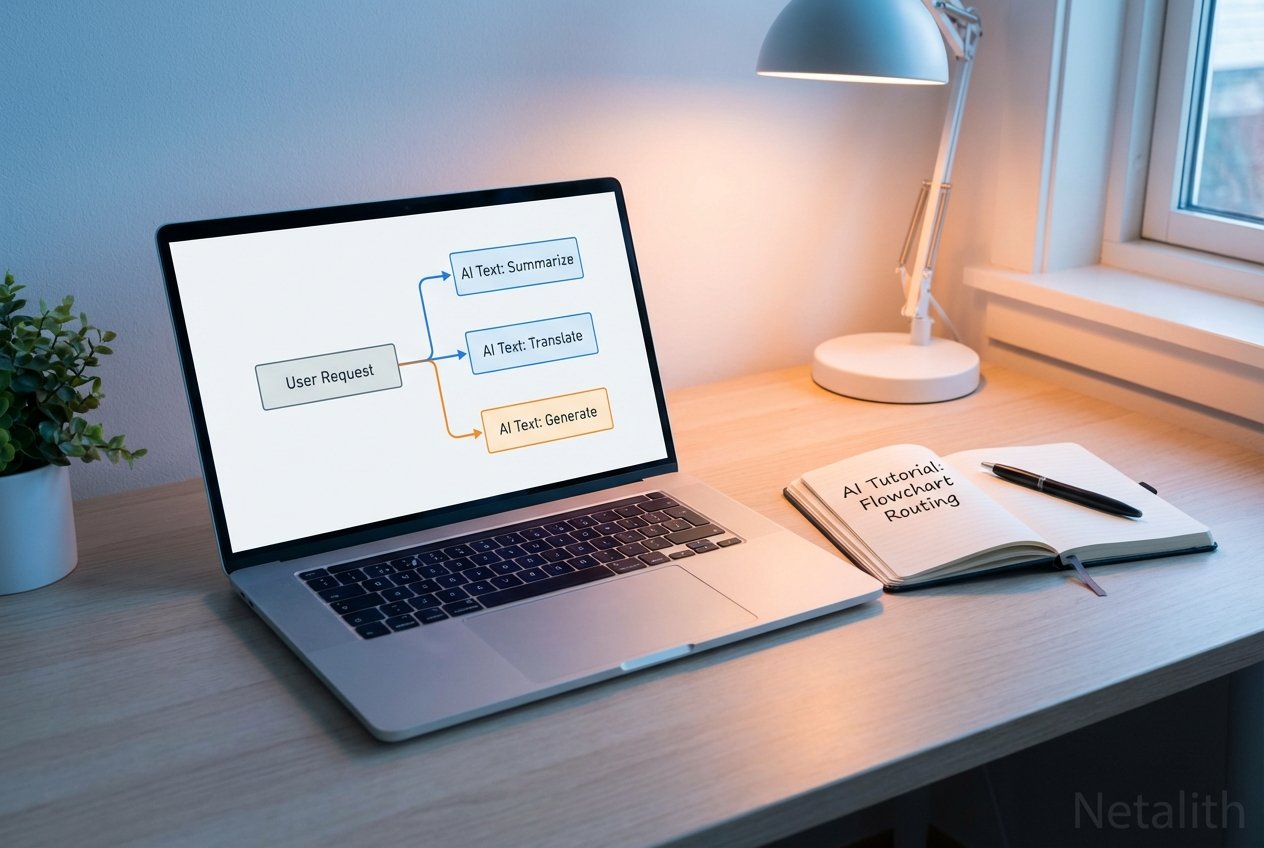
With APIs successfully integrated, you must configure intelligent model routing. This involves writing logic that evaluates prompt characteristics (length, complexity, media type) and instantly sends it to the most capable or economical model.
Coupled with latency optimization AI, dynamic routing ensures your application feels exceptionally responsive. Effective API orchestration at this level might involve semantic caching—serving previously generated answers for identical prompts—or executing parallel fallback requests if a primary model is lagging. Just as advanced developers might study Github Copilot advanced features to speed up their coding execution, implementing latency optimization AI speeds up your end-user experience.
Multi-Model Cost Management Strategies
Running a fleet of diverse models demands strict and proactive multi-model cost management. Without a clear strategy, multi-llm api workflows for complex application development can become prohibitively expensive at scale. Developers must look beyond the initial prompt and evaluate the cost per thousand tokens for both input and output across all integrated vendors.
We recommend establishing token-tracking middleware. This approach ensures sustainable vendor-neutral AI development, empowering your application to route simpler, high-volume tasks to cheaper, smaller models (like GPT-4o-mini or Claude Haiku), reserving premium models exclusively for heavy computational lifting. Applying these financial best practices ensures your AI infrastructure scales profitably.
Conclusion: Next Steps in Your Multi-LLM Workflow Tutorial
Wrapping up this Multi-LLM workflow tutorial, it is evident that the future of software engineering lies in flexible, diverse integrations. By actively adopting the hybrid AI architectures required by the current market, you insulate your digital products from unexpected provider outages, policy changes, and pricing hikes.
Treat this guide as your foundational AI productivity tools tutorial. We encourage you to continue experimenting with semantic caching, asynchronous fallback chains, and unified logging. For more advanced tutorials on scaling your architecture, explore our other Netalith AI guides. We hope this Multi-LLM workflow tutorial empowers you to build smarter, faster, and more resilient software.
Frequently Asked Questions
What is a multi-LLM workflow?
A multi-LLM workflow is a software architecture that connects and coordinates multiple Large Language Models (like ChatGPT, Claude, and Gemini) to handle various user requests based on the specific strengths, cost, or availability of each model.
Why should I integrate ChatGPT, Claude, and Gemini into a single application?
Integrating all three allows you to harness ChatGPT's logic, Claude's context window, and Gemini's multimodal capabilities, ensuring high availability and specialized performance for different tasks. In summary, a strong Multi-LLM workflow tutorial strategy should stay useful long after publication.