How to Do a No-Spend Challenge: 7 Simple Rules That Work
Learn how to do a no spend challenge with clear rules, a printable tracker, subscription audits, and savings steps for lasting progress.

Long Nguyen
Lập trình viên Fullstack · Kỹ sư AI · Nhà nghiên cứu
How to Do a No-Spend Challenge
Learning how to do a no-spend challenge starts with choosing a defined period—a weekend, week, or month—when you pause non-essential spending. The goal is not to stop paying for everything, but to create a clear boundary that helps you notice and change spending habits.
Continue paying essential expenses such as rent, bills, groceries, medication, and necessary transportation. Each day without non-essential spending becomes a visible streak. Marking that streak turns “spend less” into a daily win and helps build delayed gratification, making it easier to wait before an impulse purchase.
1. Choose a Realistic Challenge Length
Choose a time frame you can complete rather than automatically starting with the longest challenge. If impulse spending is a frequent problem, a short challenge gives you a manageable first success and useful information about your triggers.
| Challenge | Best for | Suggested approach |
|---|---|---|
| Weekend budgeting challenge | Beginners or busy schedules | Practice avoiding non-essential spending for two or three days. |
| One week | Building a consistent routine | Plan meals, free activities, and transportation in advance. |
| 30 days | People ready for a deeper reset | Use written rules and review progress weekly. |
- Start with a weekend if you regularly make unplanned purchases.
- Move to one week after completing a shorter challenge successfully.
- Choose consistency over an ambitious length you are unlikely to finish.
2. Define Essential and Non-Essential Spending
Write your rules before the challenge begins so you do not renegotiate them at the checkout. Essential expenses are necessary for housing, health, work, and daily needs; non-essential expenses are purchases you can reasonably delay.
| Continue paying | Pause during the challenge |
|---|---|
| Rent, utilities, and required bills | Takeout, delivery, and convenience purchases |
| Planned groceries and medication | Clothing, hobby items, and impulse shopping |
| Required transportation | App purchases and optional entertainment |
- List essential expenses such as housing, utilities, groceries, medication, and required transportation.
- Identify non-essential spending, including takeout, shopping, app purchases, and optional entertainment.
- Write an exception list for genuine emergencies or pre-planned obligations.
3. Use a Printable No-Spend Tracker
A tracker turns an abstract savings goal into a daily behavior. Mark every successful no-spend day immediately, recording the date and protecting the growing streak.
Note any urge, situation, or trigger that appeared. If you spend on a challenge day, record it honestly and continue instead of abandoning the entire attempt. Reviewing those notes can reveal recurring impulse spending patterns, such as shopping after work or ordering food when you are tired.

4. Build a Plan for Impulse Spending
Decide what you will do when an urge appears instead of relying on willpower in the moment. Delayed gratification is a skill: each pause makes the next pause easier.
- Use a 24- or 48-hour pause before any non-essential purchase, especially after the challenge ends.
- Remove shopping apps, saved payment details, and promotional emails that trigger spending.
- Replace the purchase with a free alternative, such as cooking at home, using entertainment you already own, or taking a walk.
- Write down the item and revisit it after the pause; the urge may have passed.
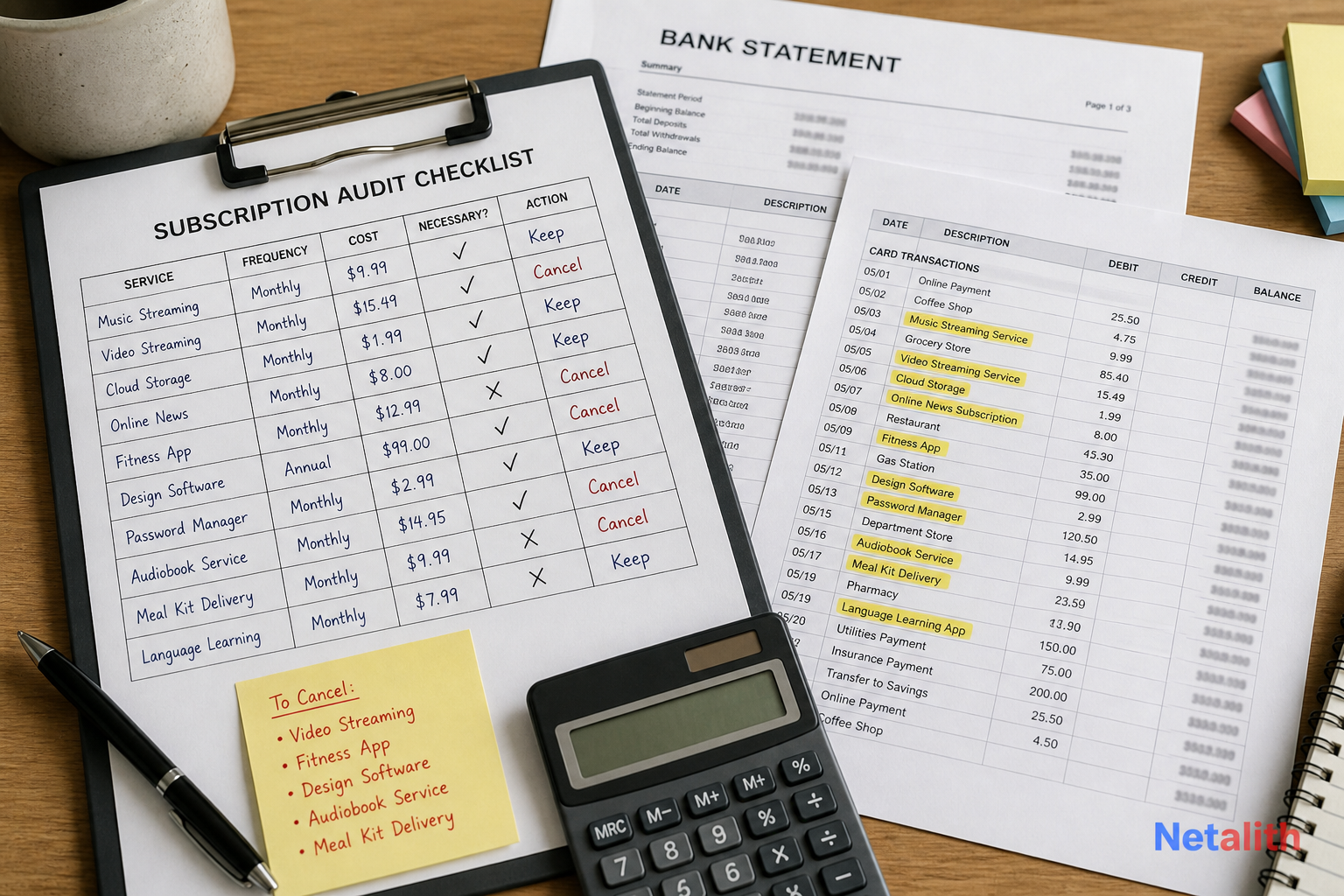
5. Complete a Subscription Audit
A subscription audit can turn a temporary spending reduction into recurring savings. Review bank and credit card statements rather than relying on memory, and list every automatic charge.
- Separate services you use regularly from unused, duplicate, or rarely used memberships.
- Check cancellation terms, renewal dates, and any required notice period.
- Cancel unnecessary services and confirm the final billing date or cancellation email.
- Look for family, annual, trial, and app-based subscriptions that may appear under unfamiliar billing names.
Canceling even two unnecessary subscriptions can create monthly savings that continue long after the no-spend challenge ends.
Once you've cancelled what you don't use, the real challenge is catching new subscriptions before they quietly creep back in. The Printable Budget Planner Bundle includes dedicated bill and subscription trackers among its 20+ finance trackers, so every recurring charge stays visible on paper instead of buried in a bank statement you only check once a year.
6. Reduce Your Biggest Variable Spending Categories
Review the last few months of spending to find where the challenge can have the greatest effect. Focus on takeout, shopping, entertainment, and other variable spending categories instead of making only tiny daily cuts.
- Compare recent totals for dining out, delivery, shopping, entertainment, and convenience purchases.
- Choose one or two categories to reduce with a clear weekly limit.
- Review larger negotiable bills, including insurance, internet, and phone plans, as separate savings opportunities.
- Compare available plans or request a better rate, then check that any change still meets your needs.
One review of a large recurring bill may save more than many small daily sacrifices, so include both everyday habits and major bills in your plan.
7. Give the Saved Money a Specific Job
Calculate the challenge result by comparing what you actually spent with what you typically spend during the same period. Then redirect the difference to a named savings goal rather than leaving it in an untracked account balance.
- Send the saved money to an emergency fund, debt payment, or upcoming planned expense.
- Use envelope-style caps for your worst variable categories, based on real three-month averages.
- Automate a transfer when possible so the result becomes a repeatable habit.
- Track the goal’s progress so you can see the asset created by your spending changes.
A named goal gives the money a visible purpose. The challenge then produces more than a temporary absence of spending; it creates lasting personal finance progress.
No-Spend Challenge Rules at a Glance
Use these seven rules as a quick reference. The goal is awareness and repeatable spending habits, not perfection. If one day is broken, record it, learn from it, and continue.
| Rule | Action |
|---|---|
| 1. Choose a length | Start with a realistic weekend, week, or month. |
| 2. Define essentials | Write down what continues and what pauses. |
| 3. Track days | Mark successful days and note spending triggers. |
| 4. Plan for urges | Use a pause and free alternatives for impulse spending. |
| 5. Audit subscriptions | Cancel unused or duplicate recurring services. |
| 6. Reduce large categories | Review variable spending and negotiable bills. |
| 7. Assign saved money | Send the result to a named savings goal. |
- Keep the rules visible throughout the challenge.
- Measure progress by learning and consistency, not by a flawless streak.
- Continue after a broken day rather than treating it as failure.
CÂU HỎI THƯỜNG GẶP
Câu hỏi thường gặp
What counts as an essential expense during a no-spend challenge?
Essential expenses are payments necessary for housing, utilities, required bills, groceries, medication, and necessary transportation. Define your own list in writing before starting, and add exceptions only for genuine emergencies or obligations you planned in advance.
Can groceries and transportation be included in a no-spend challenge?
Yes. Planned groceries and required transportation can remain part of the budget. The challenge usually pauses optional versions of these expenses, such as convenience-store purchases, delivery, unnecessary trips, or premium upgrades.
What should you do if you spend money on a challenge day?
Record the purchase honestly, identify the trigger, and continue the challenge the next day. One broken day does not erase the progress you have made or the information you gained about your spending habits.
Is a weekend or 30-day no-spend challenge better for beginners?
A weekend challenge is usually easier for beginners because it provides a short, manageable starting point. A 30-day challenge can offer a deeper reset, but it works best after you understand your essential expenses, triggers, and likely exceptions.
What should you do with the money you did not spend?
Calculate the difference between your challenge spending and a typical period, then transfer the savings to a named goal. Suitable options include an emergency fund, debt payment, or upcoming expense. Giving the money a specific job makes the result easier to track and maintain.