How to Stop Living Paycheck to Paycheck: 5 Practical Steps
Learn how to stop living paycheck to paycheck with a real-number budget, recurring expense cuts, an emergency fund, and automated savings.

Long Nguyen
Lập trình viên Fullstack · Kỹ sư AI · Nhà nghiên cứu
How to Stop Living Paycheck to Paycheck: The Five-Step Order
Learning how to stop living paycheck to paycheck starts with a sequence, not a collection of isolated money-saving tips. The cycle often combines limited cash flow, surprise expenses, and recurring debt payments. A structured plan helps you see where money goes, create room in future paychecks, and protect that room from unexpected costs.
The five-step order is simple: gain visibility, cut recurring expenses, build a starter emergency fund, automate savings, and assign every dollar a job. Adapt each step to your actual take-home pay rather than an idealized income or budget percentage.
- Build a budget using real income and tracked spending.
- Reduce recurring expenses to create monthly breathing room.
- Direct the savings toward a starter emergency fund.
- Automate a fixed savings amount.
- Choose a budget framework that fits your circumstances.
Step 1: Build a Budget With Real Numbers
Begin with take-home pay: the amount deposited after taxes, insurance, retirement contributions, and other deductions. Gross salary can make your available money look larger than it really is, so your budget should be based on the amount that actually reaches your account.
Next, review one or two months of bank and credit card statements. Tracked spending reveals irregular purchases, forgotten charges, and categories that estimates often miss. Use that information to create a realistic plan instead of a budget based on what you hope to spend.
Separate your expenses into essential costs, flexible spending, debt payments, and savings goals. If your income or expenses vary, a zero-based budget can help: assign every dollar of expected income to a specific job until income minus planned spending, debt payments, and savings equals zero.
- Record monthly take-home pay.
- Review actual spending from recent statements.
- Group costs into essentials, flexible spending, debt, and savings.
- Use conservative estimates for irregular bills and surprise expenses.
- Assign any remaining money to a defined goal rather than leaving it unplanned.

Step 2: Cut Recurring Expenses for Monthly Breathing Room
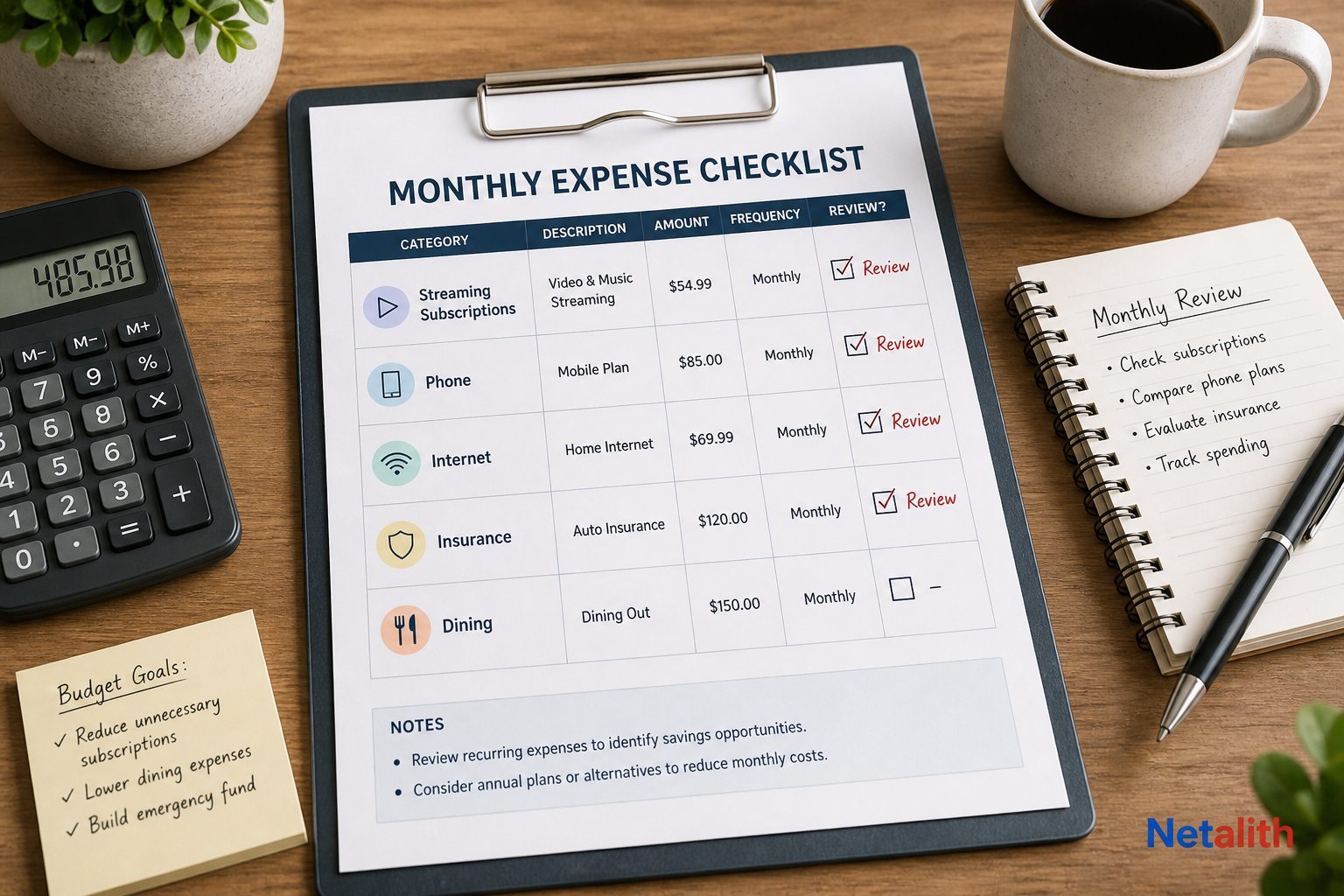
One-time savings can help once, but recurring reductions improve every future paycheck. Start with a subscription audit. Cancel services that are unused, duplicated, or no longer worth the cost, and check whether annual or monthly charges are still active.
Review dining out and other flexible categories without imposing an unrealistic ban. A sustainable reduction is more valuable than a strict rule that lasts only a week. Then review negotiable bills, including auto insurance, internet, and phone plans. Compare options, ask about discounts, and reshop rates when contracts or promotions change.
Direct the money you free up toward your emergency fund. Otherwise, recurring savings can quietly become new spending and leave the paycheck cycle unchanged.
- Audit subscriptions and remove unused or duplicate services.
- Set a realistic dining-out limit.
- Review auto insurance, internet, and phone plans.
- Track the monthly amount saved from each change.
- Send those savings to your emergency fund instead of absorbing them into spending.
Step 3: Build a Starter Emergency Fund
A starter emergency fund creates a small buffer between your budget and surprise expenses. Begin with an achievable fixed contribution, even $10–$20 per month if that is what your current cash flow allows. The first goal is consistency, not a perfect reserve.
Use the fund for genuine emergencies such as a car repair or an urgent bill. Paying those costs from savings can prevent them from landing on a credit card. Avoiding that new balance also prevents another monthly payment from tightening your budget.
Think of the starter fund as an initial milestone, not the final size of your emergency reserve. Once it is established and your cash flow improves, you can work toward a larger cushion.
- Choose a fixed monthly contribution you can maintain.
- Keep the money separate from everyday spending when possible.
- Use it for true surprise expenses, not routine purchases.
- Replace money withdrawn for an emergency before increasing discretionary spending.
- Expand the fund after reaching the starter milestone.
Step 4: Make Fixed Savings Automatic
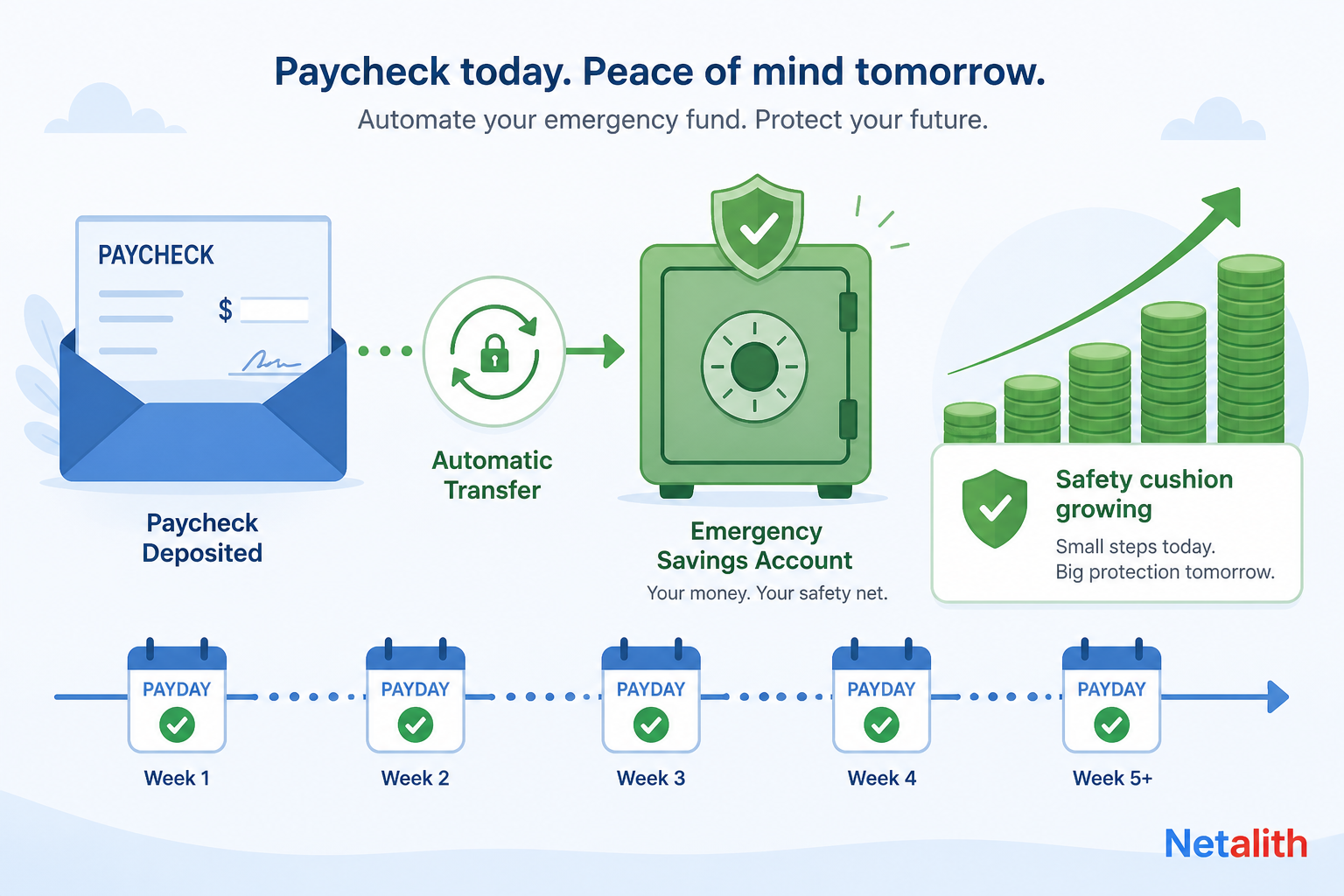
Saving becomes more reliable when it is part of the spending plan rather than whatever remains at the end of the month. Classify savings as a required budget expense that is paid first, alongside other planned obligations.
Set an automatic transfer for each payday or immediately after income arrives. Start with an amount that can survive ordinary months, then increase it after recurring expenses fall. A guideline such as 10% of income may be useful, but it should not override essential needs or force additional borrowing.
- Choose a fixed savings amount in your budget.
- Schedule the transfer around payday.
- Check that the timing does not cause an overdraft before bills clear.
- Increase the transfer only when your normal cash flow supports it.
- Send raises, refunds, or freed recurring costs toward a defined goal when practical.
Step 5: Choose the Budget Framework That Fits Your Income
The 50/30/20 budget divides income among needs, wants, and savings or debt repayment. It can provide a useful starting point, but it is not realistic for every household. When essential costs consume most of your take-home pay, forcing expenses into those percentages can create an unrealistic plan.
A zero-based budget is often more flexible because it gives every dollar a specific job based on actual expenses and goals. The best framework is the one that covers necessities, debt, and savings without repeated overdrafts or credit card borrowing.
| Framework | How it works | When it may fit |
|---|---|---|
| 50/30/20 | Allocates income to needs, wants, and savings or debt repayment. | Useful when essential costs leave room for flexible spending and goals. |
| Zero-based budget | Assigns every dollar to expenses, debt, savings, or another planned purpose. | Helpful when income varies or needs do not fit standard percentages. |
Whichever framework fits your income, having pre-built sheets for both makes it easier to test one out than starting from a blank page. The Printable Budget Planner Bundle includes a dedicated 50/30/20 sheet and a paycheck-based budget sheet alongside monthly and weekly trackers, so you can try a framework for a month and switch without rebuilding your whole system.
Keep the Plan Working Each Month
A budget is a working system, not a document you create once. Check it against real spending at least weekly during the first month. Frequent reviews help you catch overspending while there is still time to adjust.
Review recurring charges and negotiable bills whenever a contract or promotional rate changes. When a bill falls or a subscription is canceled, reallocate the freed money deliberately toward the emergency fund, credit card debt, or fixed savings.
An overspent month is information, not proof that budgeting failed. Adjust categories, investigate what changed, and revise the plan for the next month instead of abandoning it.
- Compare planned and actual spending weekly.
- Check recurring charges after rate or contract changes.
- Redirect freed money to a specific financial priority.
- Adjust unrealistic categories after an overspent month.
CÂU HỎI THƯỜNG GẶP
Câu hỏi thường gặp
Should I build an emergency fund while carrying credit card debt?
Usually, build a small starter emergency fund while making required credit card payments. Even a modest buffer can help you handle a car repair or urgent bill without adding to the card balance. After reaching that initial milestone, direct additional money toward high-interest debt while continuing a sustainable savings habit.
What should I do if my income changes from month to month?
Base your plan on a conservative estimate of reliable income, then prioritize essentials, minimum debt payments, and a small savings contribution. In higher-income months, assign the extra money deliberately to irregular bills, the emergency fund, or debt rather than treating it as permanently available spending.
Are subscription cancellations enough to stop living paycheck to paycheck?
Usually not by themselves. Subscription cuts can create useful recurring savings, but the full solution also requires tracking spending, reviewing larger negotiable bills, managing debt payments, and assigning the freed money to savings or another priority.
How do I choose an automatic savings amount when my budget has little surplus?
Choose an amount that can survive an ordinary month without causing an overdraft, even if it is only $10 or $20. Schedule it after income arrives, monitor the first few transfers, and increase it only after your actual spending shows that the budget has room.
What should I do if a surprise expense happens before my starter fund is complete?
First review the expense and use available cash or temporarily reduce nonessential spending if possible. If borrowing is unavoidable, borrow only what is needed and include repayment in the next budget. Then restart the fixed savings contribution so the same type of expense is less likely to create a new debt cycle.