BFF Pattern Microservices: Tailoring Backend Design for Modern Frontend Performance
An expert guide on the BFF pattern microservices architecture, covering its benefits for mobile and web apps, implementation in Node.js/Go, and comparison with API Gateways.

Long Nguyen
Fullstack Developer · AI Engineer · Researcher
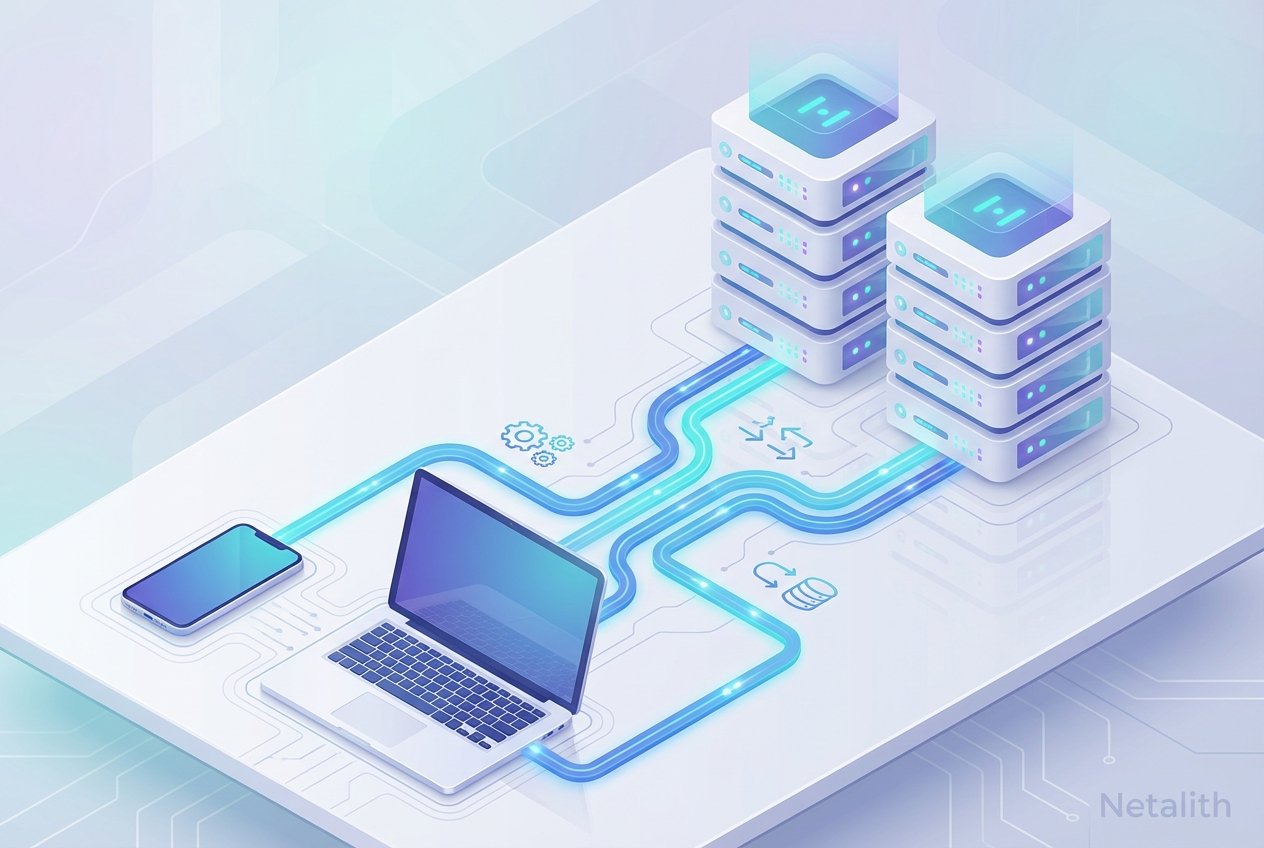
As organizations continue to scale their digital ecosystems, building resilient and highly adaptable architectures is more critical than ever. While backend engineers often focus on core distributed systems design—debating cloud-native architecture patterns such as the saga pattern vs. event sourcing, or consulting a CQRS implementation guide—the connectivity between these complex backends and diverse frontend clients is frequently neglected. This gap is exactly where bff pattern microservices provide a robust architectural solution.
Modern applications must serve a multitude of clients: desktop web browsers, native iOS and Android apps, smartwatches, and even IoT devices. Each of these clients has entirely different constraints regarding screen size, processing power, and network reliability. A one-size-fits-all API approach inevitably leads to over-fetching, under-fetching, and tightly coupled frontend-backend lifecycles. By adopting the Backend for Frontend (BFF) pattern, architectural teams can tailor API responses specifically for each client, driving better performance and accelerating delivery.
What is the Backend for Frontend (BFF) Pattern?
The backend for frontend pattern is an architectural model where a dedicated backend service is created specifically to serve a single frontend application or interface. Rather than forcing a mobile app and a web app to consume the exact same general-purpose API, the BFF pattern provisions an intermediary layer customized for the user interface.
In the context of bff pattern microservices, this dedicated layer acts as an adapter between the client UI and the downstream domain microservices. It aggregates data, formats responses, and trims unnecessary fields to provide strictly frontend optimized endpoints. This model perfectly aligns with ui driven development, as frontend teams can dictate the API contract they need without waiting for core backend teams to modify underlying domain services. By owning the BFF, frontend developers gain autonomy, bridging the traditional gap between UI and backend logic.
BFF vs. API Gateway: Key Differences in Modern Architecture
One of the most common architectural debates revolves around api gateway vs bff. While they might appear similar structurally—both sit between the client and downstream services—their responsibilities and ownership differ significantly in current distributed systems.
An API Gateway is a single point of entry for all clients. It is typically owned by the platform or infrastructure team and focuses on cross-cutting concerns such as routing, rate limiting, SSL termination, and global authentication. Because it serves all clients, an API Gateway remains highly generalized.
Conversely, bff pattern microservices are narrowly focused. A BFF is often referred to as an experience api pattern because it is designed to optimize a specific user experience. It handles complex api orchestration—calling a pricing service, an inventory service, and a user profile service simultaneously—and merges that data into a single, cohesive JSON response formatted specifically for that one client interface. Many modern cloud-native architecture patterns advocate for using both: an API Gateway handles edge security and routing, passing the request to the appropriate client-specific BFF, which then orchestrates the underlying domain microservices.
Why Use BFF Pattern Microservices? Core Strategic Benefits
Adopting the backend for frontend pattern for mobile and web apps unlocks multiple strategic advantages for agile development teams. At its core, the bff architecture champions the creation of client-specific backend services, which heavily reduces the friction caused by divergent client requirements.
- Team Autonomy: Frontend teams can iterate rapidly by updating the BFF themselves, decoupling their release cycles from core backend teams.
- Tailored Experiences: Web applications can request heavy, detailed datasets, while mobile apps can request lightweight, summarized data.
- Resilience Patterns in Microservices: The BFF can implement circuit breakers and fallback caches specifically tailored to what the UI should display if a downstream service fails.
Optimizing Mobile API Performance with BFF
When dealing with cellular networks, optimizing mobile api performance with bff becomes a game-changer. Mobile applications suffer greatly from mobile app latency when forced to make multiple round-trip requests to fetch necessary data. By leveraging a BFF, the client makes one single request. The BFF, residing securely within the high-speed backend network, executes the multiple downstream calls, aggregates the results, and returns a unified response. This approach fundamentally relies on reduced payload size patterns, ensuring the mobile device only downloads the exact bytes required to render the screen, thereby dramatically improving battery life and rendering speeds.
Enhancing Security and Reducing Payload Size
The security benefits of bff architecture are equally compelling. A BFF can hide the internal complexities and URLs of downstream domain microservices from the public internet. Furthermore, the BFF can handle token translation—accepting a secure, short-lived session cookie from the browser or mobile client, and translating it into a complex JWT or mutual TLS certificate to communicate with downstream internal services. This prevents sensitive internal infrastructure details from leaking to the frontend.
Implementing BFF Pattern with Node.js or Go
When building frontend-specific backends, the choice of technology stack is crucial. Implementing bff pattern with nodejs or go has emerged as the standard approach for modern cloud-native ecosystems.
Node.js is highly favored for ui driven development because it allows frontend developers to write their backend orchestration logic in TypeScript or JavaScript. The async, event-driven nature of Node.js makes it inherently excellent at handling concurrent API requests and merging JSON payloads, which are the primary tasks of api design patterns like the BFF.
Go (Golang), on the other hand, is increasingly adopted when performance, minimal memory footprints, and high concurrency are paramount. Go’s goroutines make aggressive parallel API orchestration effortless and safe. If your BFF is handling immense throughput or dealing with highly CPU-bound data transformation, Go provides an incredibly robust foundation.
Best Practices and Conclusion for BFF Pattern Microservices
To maximize the efficiency of bff pattern microservices, software architects must enforce strict boundaries:
- No Core Business Logic: The BFF should exclusively handle presentation logic, formatting, and orchestration. Core business rules (e.g., tax calculation, inventory deduction) must remain in the downstream domain microservices.
- One BFF per Interface: Avoid the temptation to reuse a single BFF for drastically different clients (e.g., merging a Smart TV BFF with a Mobile App BFF), as this recreates the monolithic API bottleneck you originally set out to solve.
- Embrace Observability: Because the BFF is orchestrating multiple services, comprehensive distributed tracing (like OpenTelemetry) is mandatory to identify latency bottlenecks immediately.
In conclusion, the bff pattern microservices approach is no longer just an option but a necessity for organizations aiming to provide a high-quality user experience across multiple devices. By decoupling the frontend needs from the core backend logic, teams can achieve faster iteration cycles, better security, and superior performance. As you refine your digital strategy, ensure that your architecture is built to serve the client first.