Microservices Design Patterns: The Comprehensive Architectural Guide
Discover the essential microservices design patterns for 2026. Learn about Saga, CQRS, Event Sourcing, and resilience strategies for modern cloud-native architectures.

Long Nguyen
Fullstack Developer · AI Engineer · Researcher
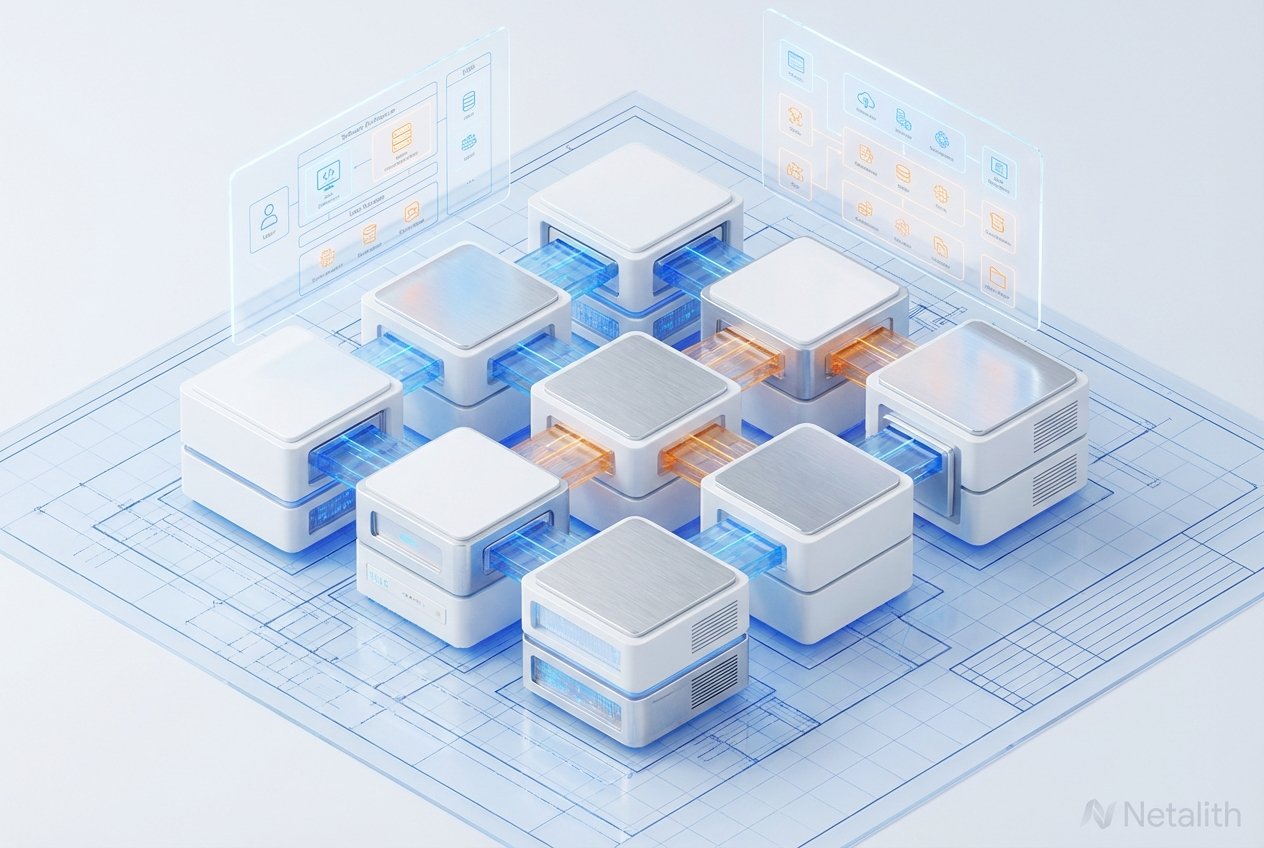
microservices design patterns 2026: Introduction to Microservices Design Patterns in
As organizations continue to scale their digital infrastructure, mastering microservices design patterns 2026 has become an absolute necessity for engineering teams. The complexities of cloud environments have pushed the boundaries of how we build, deploy, and maintain robust applications. Today, implementing these patterns is less about basic functionality and more about extreme scalability, security, and fault tolerance in a distributed world.
In the fast-paced landscape of distributed systems design, architects need reliable strategies to handle data consistency, service discovery, and network latency. This comprehensive guide to microservice architecture patterns serves as your ultimate blueprint. By exploring advanced cloud-native patterns and proven microservices patterns, software architects and cloud engineers will learn how to build architectures that are truly resilient and future-proof.
"The successful adoption of microservices design patterns 2026 relies on understanding not just the code, but the operational realities of distributed systems."
The Evolution of Microservices Architecture in
The evolution of microservices architecture in 2026 represents a paradigm shift from complex, highly fragmented systems toward intelligent, optimized deployments. Early iterations of microservices often led to "distributed monoliths"—systems that suffered from heavy network overhead and tangled dependencies. Modern cloud architecture has matured to solve these exact pain points through better observability and automation.
Today, applying modern distributed system design principles means recognizing that not every function needs to be an isolated microservice. Instead, there is a strong emphasis on smart consolidation, edge computing, and optimized service meshes. This evolution directly impacts scalability in cloud computing, enabling organizations to dial back unnecessary network hops while preserving the agility of service-oriented architecture patterns. Understanding the evolution of microservices architecture in 2026 is critical for any team looking to refactor legacy systems into high-performing cloud environments.
Core Microservices Patterns Every Software Architect Must Know
Selecting the right microservice architecture patterns dictates the success or failure of your deployment. When evaluating the best microservices patterns for software architects, the focus must always be on maintaining loosely coupled services while ensuring high availability. We have categorized these software design patterns into actionable strategies that form the backbone of modern distributed systems.
Saga Pattern and Event Sourcing
When handling distributed transactions, a major point of discussion is the saga pattern vs event sourcing. In traditional monolithic applications, ACID transactions guarantee data integrity. In distributed architecture templates, however, relying on two-phase commits often leads to severe locking issues. The Saga pattern solves this by breaking a transaction into a sequence of local transactions, publishing events to trigger subsequent steps.
Event sourcing takes a different approach by storing the state of a system as a sequence of state-changing events. When comparing the saga pattern vs event sourcing, it's vital to remember that they are highly complementary decoupling strategies. Sagas manage the workflow and compensations, while event sourcing guarantees an immutable audit log of inter-service communication.
CQRS Implementation Guide
Command Query Responsibility Segregation (CQRS) is an architectural pattern that separates read and update operations for a data store. Any definitive CQRS implementation guide will emphasize that this pattern is essential for systems where the read-to-write ratio is heavily skewed.
// Conceptual CQRS Separation
public interface ICommandService {
    void CreateOrder(OrderCommand cmd);
}

public interface IQueryService {
    OrderDto GetOrderDetails(Guid orderId);
}
By splitting the models, teams can apply different optimization and scaling strategies to the read and write sides independently. Using this software design pattern promotes loosely coupled services and aligns perfectly with modern service-oriented architecture patterns.
Domain Driven Design and Bounded Contexts
Technical patterns alone cannot fix poorly defined business domains. Domain driven design (DDD) is the philosophy of modeling software to match complex business requirements. Within DDD, defining bounded contexts is arguably the most crucial step for modern architectural integrity.
A bounded context represents a distinct boundary within which a specific domain model applies. By aligning microservices with bounded contexts, engineers naturally achieve powerful decoupling strategies. This prevents the classic "spaghetti architecture" where services inappropriately share databases and business logic.
Monolithic vs Microservices Architecture: What's New?
The debate around monolithic vs microservices architecture has taken a sophisticated turn. In the past, the industry treated microservices as the inevitable destination for all projects. However, evaluating monolithic vs microservices architecture in 2026 reveals a resurgence of the "modular monolith."
For many teams, building a highly cohesive modular monolith provides the benefits of service-oriented architecture patterns—such as clear logical boundaries—without the operational nightmare of immediate distributed deployment. When scalability in cloud computing becomes a bottleneck, teams can then extract carefully chosen modules into loosely coupled services.
Inter-Service Communication and Decoupling Strategies
Effective inter-service communication is the lifeblood of any distributed system. Synchronous communication (like HTTP REST or gRPC) tightly couples services in terms of availability; if the receiving service goes down, the calling service fails. Therefore, modern distributed systems design heavily favors asynchronous communication.
Using message brokers and event buses provides robust decoupling strategies. By publishing events to a broker, the upstream service does not need to know about the downstream consumers. This approach ensures loosely coupled services that can be updated, scaled, or replaced independently without triggering cascading failures across your infrastructure.
Resilience Patterns in Microservices
Network failures are inevitable. Implementing robust resilience patterns in microservices ensures that transient errors do not crash your entire platform. Core cloud-native architecture patterns include Circuit Breakers, Bulkheads, and Retry mechanisms.
- Circuit Breaker: Prevents an application from repeatedly trying to execute an operation that is likely to fail, giving the failing service time to recover.
- Bulkhead Pattern: Isolates elements of an application into pools so that if one fails, the others will continue to function.
- Retry Pattern: Transparently retries failed operations that are expected to be transient.
Integrating these resilience patterns in microservices is critical for mastering scalability in cloud computing and ensuring high availability under extreme loads.
Conclusion
Mastering microservices design patterns 2026 is an ongoing journey of balancing technical debt with architectural agility. As we have seen in this comprehensive guide to microservices design patterns 2026, the shift is moving toward more resilient, loosely coupled services that leverage modern distributed system design principles. Whether you are choosing between the saga pattern vs event sourcing or refining your inter-service communication, the goal remains the same: building systems that are scalable, maintainable, and robust in the face of inevitable change.