Transactional Outbox Pattern: A Guide to Reliable Messaging and Data Integrity
A comprehensive guide to the transactional outbox pattern. Learn how to ensure data integrity, avoid the dual write problem, and implement reliable messaging in microservices.

Long Nguyen
Fullstack Developer · AI Engineer · Researcher
Introduction to Distributed Consistency
In modern distributed systems design, ensuring data consistency while communicating across network boundaries is a paramount challenge. When services need to update a local database and simultaneously publish an event to a message broker, sudden application failures or network drops can lead to severe data anomalies. To address this exact vulnerability, software architects and cloud engineers rely on the transactional outbox pattern. By providing a foolproof method for safe event broadcasting, this architectural approach acts as a cornerstone for maintaining system-wide accuracy. Whether you are exploring resilience patterns in microservices or evaluating the saga pattern vs event sourcing, mastering the transactional outbox pattern is an essential step toward building robust applications.
What is the Transactional Outbox Pattern?
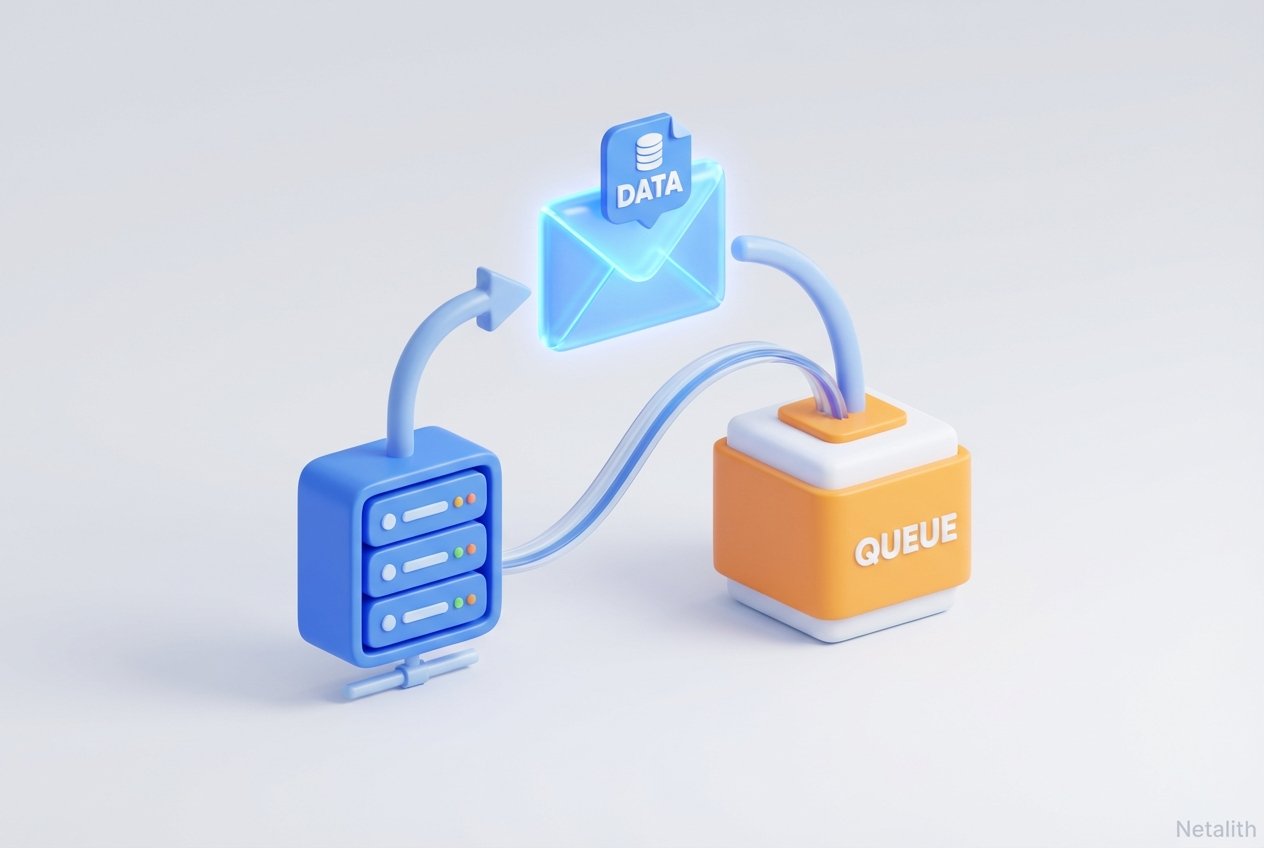
The outbox pattern guide is a vital transactional messaging pattern used extensively to stabilize any event-driven architecture. Instead of attempting to coordinate a complex, two-phase distributed transaction between a database and a message broker—a notoriously error-prone and unscalable process—the outbox pattern dictates that a microservice should update its business data and insert a message into an "outbox" table within the same database transaction.
Because both actions occur inside a single, local ACID transaction, they either commit successfully together or fail together. A separate background process subsequently reads this outbox table and dispatches the pending messages to the broker. This outbox pattern guide highlights how standardizing on this methodology guarantees reliable event publication across disparate software boundaries.
Understanding and Avoiding the Dual Write Problem in Distributed Systems
A fundamental hurdle developers face when building cloud-native architecture patterns is the "dual write" dilemma. This scenario occurs when an application attempts to write data to two separate systems—such as persisting a new user in a relational database and sending a welcome event to a message queue—without a unified transactional mechanism.
If the database commits but the application crashes milliseconds before sending the message, the system is left in a fractured, inconsistent state. Avoiding dual write problem in distributed systems requires replacing these flawed, non-transactional operations with atomic operations in microservices. By binding the database update and the event payload creation into a single atomic unit, you completely eliminate the risk of partial failures, thereby securing distributed data integrity.
The Importance of Guaranteed Message Delivery in Microservices
As enterprise architectures expand in complexity, establishing guaranteed message delivery in microservices is a top priority for engineering teams. Relying on transient, in-memory states to handle cross-service communication simply cannot sustain mission-critical workloads. Implementing reliable messaging ensures that downstream services stay perfectly synchronized with upstream state changes.
When leveraging effective modern microservices patterns, architects must enforce at-least-once delivery semantics and strict message sequencing. This guarantees that business transactions are never silently dropped or processed out of their intended chronological order, maintaining the high standards expected by Netalith clients.
How to Implement the Transactional Outbox Pattern for Reliable Messaging
Figuring out how to implement outbox pattern guide for reliable messaging boils down to dividing your application's workflow into two distinct, decoupled phases: the local atomic transaction and the subsequent message relay service.
- Phase 1: Local Transaction: The application performs its core business logic. Within a single database transaction context, it saves the business entity (e.g., creating an Order) and simultaneously inserts a serialized event payload into a dedicated
outboxtable. Once the transaction commits, the event is safely durably stored alongside the business data. - Phase 2: Message Relay: An independent worker process takes over. This message relay service continuously monitors the outbox table, extracts the un-published events, publishes them to the message broker, and finally marks them as processed or deletes them from the table.
This separation effectively bridges the gap between local database commits and reliable event publication.
Database Polling vs Log Tailing Techniques
When engineering your relay service, you will generally choose between database polling vs log tailing. Each technique has specific operational trade-offs.
Database polling involves running a periodic SQL query (e.g., SELECT * FROM outbox WHERE processed = false) to fetch unsent messages. While significantly simpler to implement and debug, aggressive polling can introduce minor latency and tax database compute resources.
Conversely, log tailing—often referred to as Change Data Capture (CDC)—reads the database's internal transaction log (such as the MySQL binlog or PostgreSQL WAL). Dedicated tools like Debezium monitor these logs and push changes directly to the broker instantly. Log tailing provides near real-time propagation and minimizes database CPU overhead, serving as the optimal solution for enforcing atomic operations in microservices and distributed data integrity at an enterprise scale.
Using Outbox Pattern with Kafka or RabbitMQ
When using outbox pattern with kafka or rabbitmq, developers unlock a highly scalable event-driven architecture. Kafka's durable, partitioned append-only log structure pairs beautifully with the outbox technique, especially when seamlessly integrated with CDC frameworks. RabbitMQ, renowned for its flexible routing capabilities, similarly thrives on the reliability of pre-committed database events.
However, because message relay networks generally guarantee at-least-once delivery, there is always a nominal risk of a network timeout causing a message to be published or delivered more than once. Consequently, configuring idempotent consumers on the receiving services is absolutely mandatory. An idempotent consumer can safely process the exact same message multiple times without altering the final business state, effectively neutralizing duplicate deliveries. Much like any thorough CQRS implementation guide will advise, deploying idempotent consumers ensures your system remains resilient regardless of retry loops.
Conclusion: Mastering the Transactional Outbox Pattern
The outbox pattern guide is more than just a workaround; it is a fundamental design choice for any developer committed to data reliability. By decoupling the act of data persistence from event notification, you protect your system from the catastrophic dual write problem. Whether you choose log tailing or polling, implementing this pattern is a critical step toward achieving true resilience in modern software architecture.
Frequently Asked Questions
What is the transactional outbox pattern?
The transactional outbox pattern is an architectural technique used to reliably publish events in a distributed system. It involves saving business data and a corresponding event message into the same database using a single local transaction, ensuring both actions succeed or fail together.
How does the outbox pattern avoid the dual write problem?
It circumvents the dual write problem by removing the need to simultaneously write to a database and a remote message broker. Instead, both the state change and the event message are written to the local database atomically. A separate background process then safely forwards the message to the broker.
What is the difference between database polling and log tailing?
Database polling repeatedly runs queries against the outbox table to find new messages, which is easy to set up but can create database load. Log tailing (CDC) listens to the database's internal transaction logs to capture changes in real time, offering lower latency and reduced database overhead.
Why are idempotent consumers necessary with the outbox pattern?
Because the outbox pattern typically provides at-least-once delivery, transient network issues might result in a message being sent twice. Idempotent consumers ensure that processing a duplicate message does not negatively impact the system state. In summary, a strong transactional outbox pattern strategy should stay useful long after publication.