Sophos và SentinelOne: Nền tảng bảo mật endpoint nào tốt hơn năm 2026?
So sánh Sophos và SentinelOne về khả năng phát hiện MITRE ATT&CK, chi phí cho 50 endpoint và mức độ phù hợp với doanh nghiệp nhỏ, MSP.

Long Nguyen
Lập trình viên Fullstack · Kỹ sư AI · Nhà nghiên cứu
Sophos và SentinelOne: kết luận nhanh
Sophos và SentinelOne tiếp cận bảo mật endpoint từ hai hướng đối lập. Sophos phát triển từ một hệ sinh thái kết nối gồm endpoint, firewall và SOC được quản lý nội bộ (Sophos MDR), trong đó các thành phần chia sẻ dữ liệu telemetry và có thể phản ứng dựa trên phát hiện của nhau. SentinelOne lại xây dựng từ một agent tự động duy nhất, có thể đưa ra quyết định ngăn chặn ngay trên endpoint mà không cần chờ máy chủ đám mây phản hồi. Cả hai hiện đều là Leaders trong Gartner Magic Quadrant dành cho Endpoint Protection Platforms và đều được vinh danh là Champions trong Omdia's 2026 Cybersecurity MSP Ecosystems Leadership Matrix.
| Tiêu chí | Sophos Intercept X / XDR | SentinelOne Singularity |
|---|---|---|
| Kiến trúc cốt lõi | Phòng ngừa nhiều lớp + hệ sinh thái kết nối (endpoint, firewall, MDR chia sẻ telemetry) | Agent nhẹ duy nhất, AI trên thiết bị đưa ra quyết định phản ứng cục bộ |
| Phản ứng với ransomware | CryptoGuard khôi phục tệp bị mã hóa | Khôi phục dựa trên Storyline (Windows & macOS) |
| Phát hiện được quản lý | Sophos MDR — SOC nội bộ, tích hợp sẵn | Vigilance MDR — tiện ích bổ sung phải mua riêng |
| Bài kiểm thử độc lập mới nhất | MITRE ATT&CK Enterprise 2025 — phát hiện 100% | Không tham gia năm 2025; MITRE ATT&CK Enterprise 2024 — phát hiện 100%, ít hơn 88% cảnh báo so với trung vị |
| Giá công bố | Không có bảng giá công khai; giá thị trường khoảng $28–$70+/endpoint/năm tùy gói | Không có bảng giá công khai; giá thị trường khoảng $70–$230/endpoint/năm tùy gói |
| Phù hợp nhất với | Doanh nghiệp nhỏ và vừa, hoặc doanh nghiệp quy mô trung bình muốn có firewall, endpoint và SOC quản lý từ một nhà cung cấp | Các đội ngũ muốn một lõi EDR gọn nhẹ, tự động cao nhất và không ngại mua MDR riêng |
Nếu chỉ đọc một phần, hãy đọc phần này: hai nền tảng khá tương đồng về chất lượng phát hiện thô. Khác biệt thực sự nằm ở cách mỗi nền tảng vận hành khi bạn bổ sung thêm các sản phẩm khác trong hệ sinh thái của nhà cung cấp — đây là nội dung được phân tích trong phần còn lại của hướng dẫn.
Sophos và SentinelOne phát hiện, ngăn chặn mối đe dọa như thế nào?
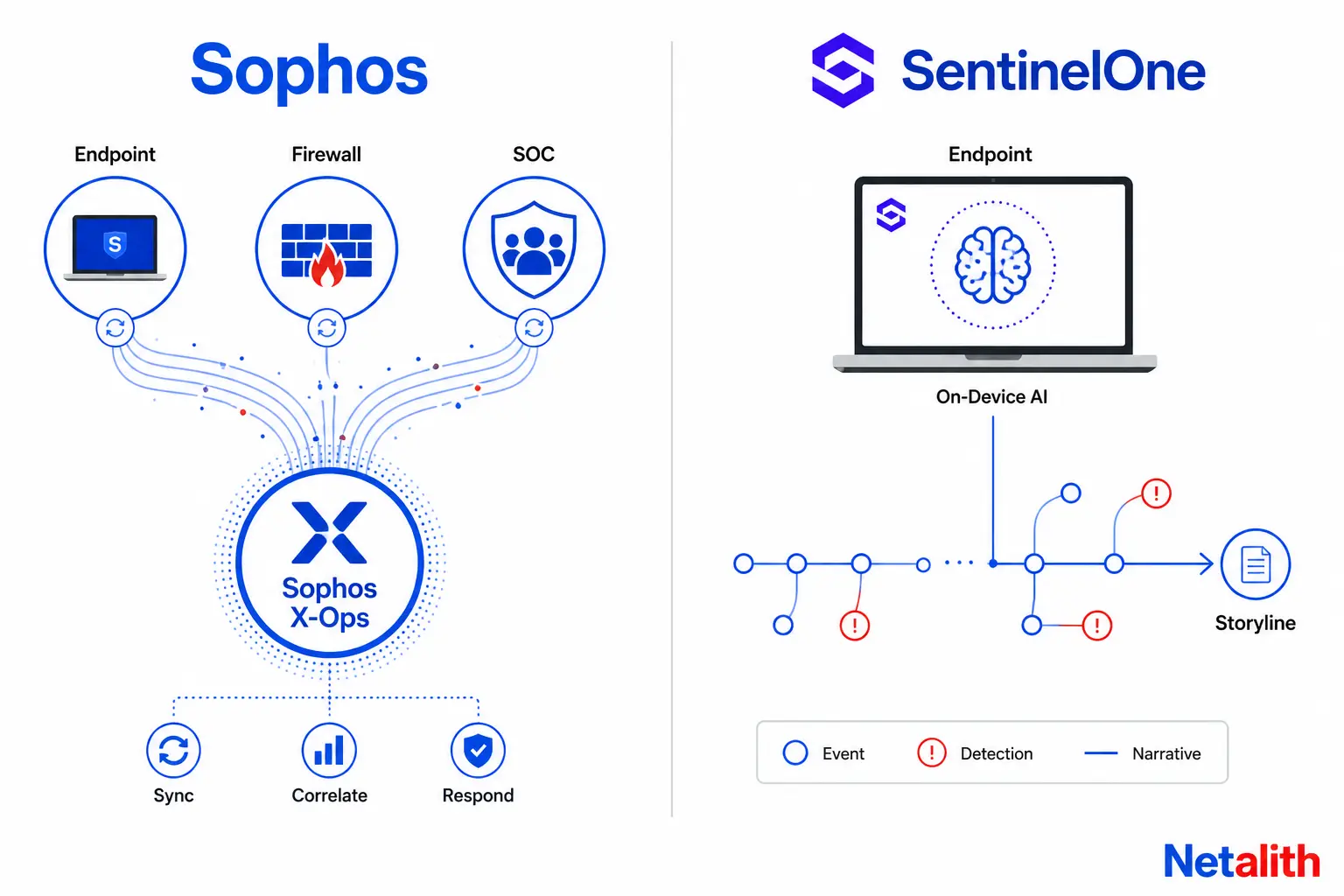
Sophos Endpoint ưu tiên giảm bề mặt tấn công: kiểm soát web và ứng dụng theo danh mục, ngăn chặn khai thác lỗ hổng và CryptoGuard. Tính năng này theo dõi hành vi mã hóa tệp mà ransomware thường sử dụng rồi khôi phục các tệp bị ảnh hưởng mà không cần khôi phục toàn bộ hệ thống. Dữ liệu phát hiện và tình trạng hoạt động được truyền qua Sophos X-Ops, vì vậy tín hiệu từ firewall hoặc cổng email có thể kích hoạt phản ứng phối hợp trên endpoint — Sophos gọi đây là bảo mật đồng bộ. Sophos MDR được xây dựng như một dịch vụ quản lý nội bộ trên cùng hệ thống telemetry, thay vì là tiện ích của bên thứ ba được gắn thêm sau này.
Agent Singularity của SentinelOne chạy các mô hình phát hiện và phản ứng ngay trên endpoint. Vì vậy, các hành động ngăn chặn như cô lập, cách ly, dừng tiến trình và khóa mạng không phải chờ quyết định từ đám mây. Mọi sự kiện trên một máy được ghép thành một câu chuyện tấn công duy nhất (Storyline). Nhờ đó, chuyên viên phân tích có thể xem toàn bộ sự cố thay vì một loạt cảnh báo rời rạc, đồng thời thực hiện khôi phục bằng một cú nhấp chuột về trạng thái trước cuộc tấn công trên Windows và macOS. Khả năng phát hiện được quản lý nằm ở lớp phía trên dưới dạng Vigilance MDR và phải mua riêng với giấy phép endpoint.
Góc nhìn thực tế: với đội ngũ không có SOC nội bộ, MDR tích hợp của Sophos giúp loại bỏ một quyết định mua sắm — bạn chỉ cần làm việc với một đối tác thay vì ghép một nhà cung cấp EDR với một nhà cung cấp MDR riêng. Với đội ngũ đã có hoặc đang xây dựng năng lực kỹ thuật phát hiện, thiết kế agent duy nhất và lượng cảnh báo thấp của SentinelOne thường tạo ra ít nhiễu hơn để xử lý. Điều này càng quan trọng khi chính bạn là người phải thường xuyên theo dõi bảng điều khiển.
Tỷ lệ phát hiện của Sophos và SentinelOne: MITRE ATT&CK thực sự cho thấy điều gì?
MITRE ATT&CK Enterprise Evaluations là hình thức gần nhất với một bài kiểm thử độc lập, công bằng giữa các sản phẩm trong lĩnh vực bảo mật endpoint. Các nhà nghiên cứu MITRE mô phỏng chiến thuật của một tác nhân đe dọa thực tế trên từng sản phẩm tham gia và chấm điểm mức độ sản phẩm phát hiện được bao nhiêu phần của chuỗi tấn công. Mười một nhà cung cấp đã tham gia vòng đánh giá năm 2025. Đây cũng là lần đầu bài đánh giá bao gồm một chuỗi tấn công tập trung vào đám mây (mô phỏng Scattered Spider) bên cạnh chuỗi gián điệp được tài trợ bởi nhà nước (mô phỏng Mustang Panda) — gồm 16 bước tấn công và 90 bước phụ trên Windows, Linux và AWS. Sophos tham gia và công bố khả năng phát hiện 100% ở mọi bước và bước phụ, trong đó phát hiện ở cấp kỹ thuật (mức độ chi tiết cao nhất) đối với 86 trên 90 hoạt động của đối thủ.
SentinelOne không tham gia vòng Enterprise năm 2025. Kết quả được công bố gần nhất của hãng đến từ đánh giá Enterprise năm 2024, trong đó SentinelOne phát hiện 100% trong số 80 bước phụ được kiểm thử trên Windows, Linux và macOS, không có độ trễ phát hiện và tạo ra ít hơn 88% cảnh báo so với trung vị của tất cả nhà cung cấp được đánh giá.
| Vòng đánh giá | Nhà cung cấp | Kết quả |
|---|---|---|
| Enterprise 2025 (11 nhà cung cấp) | Sophos | Phát hiện 100% — 16/16 bước, 90/90 bước phụ; cấp kỹ thuật ở 86/90 |
| Enterprise 2025 | SentinelOne | Không tham gia |
| Enterprise 2024 | SentinelOne | Phát hiện 100% — 80/80 bước phụ; ít hơn 88% cảnh báo so với trung vị |
Cách đọc kết quả công bằng: trong bất kỳ vòng đánh giá nào, điểm phát hiện 100% đã trở thành mức cơ bản đối với các nhà cung cấp EDR hàng đầu. Tín hiệu thực sự nằm ở các chi tiết. Kết quả năm 2025 của Sophos là dữ liệu độc lập mới nhất hiện có giữa hai nhà cung cấp, đồng thời bao gồm kịch bản tấn công đám mây mới, đặc biệt phù hợp nếu bạn vận hành khối lượng công việc trên AWS. Kết quả ít cảnh báo của SentinelOne năm 2024 vẫn đáng chú ý sau hai vòng, vì tỷ lệ giữa cảnh báo hữu ích và nhiễu là đặc tính của kiến trúc (cách agent tương quan các sự kiện), chứ không phải yếu tố được thiết lập lại sau mỗi chu kỳ đánh giá. Việc bỏ qua một vòng không tự động là dấu hiệu đáng lo — các nhà cung cấp có thể không tham gia vì lý do lộ trình sản phẩm — nhưng điều đó có nghĩa là bạn đang so sánh một con số hiện tại với một con số đã 18 tháng tuổi, chứ không phải hai kết quả được đo cùng thời điểm.
Giá Sophos và SentinelOne
Không nhà cung cấp nào công bố bảng giá đầy đủ cho công chúng. Cả hai đều bán thông qua đối tác và báo giá theo từng thương vụ, dựa trên số lượng endpoint, thời hạn hợp đồng và các tiện ích bổ sung (XDR, MDR, bảo vệ danh tính) mà bạn lựa chọn. Các mức dưới đây là khoảng giá thị trường ước tính được tổng hợp từ trang giá của đối tác và đại lý, cập nhật trong năm 2026, không phải bảng giá chính thức. Hãy xem đây là cơ sở lập ngân sách ban đầu, sau đó yêu cầu báo giá theo phạm vi cụ thể.
| Gói | Sophos Intercept X | Giá ước tính USD/endpoint/năm |
|---|---|---|
| Khởi điểm (Advanced) | NGAV, EDR cơ bản, CryptoGuard, kiểm soát web/ứng dụng | ~$28 |
| Trung cấp (Advanced with XDR) | Bổ sung điều tra XDR liên sản phẩm | ~$48 |
| Quản lý (Sophos MDR) | SOC do con người vận hành 24/7 trên telemetry của Sophos | ~$70–80+ |
| Gói | SentinelOne Singularity | Giá ước tính USD/endpoint/năm |
|---|---|---|
| Core | NGAV/EDR hỗ trợ AI, lưu giữ dữ liệu 14 ngày, AI Security Assistant | ~$70–100 |
| Complete | Bổ sung phát hiện và phản ứng với danh tính, lưu giữ dữ liệu 90 ngày, Managed Threat Hunting | ~$180 |
| Commercial / Enterprise | Bổ sung phân loại SOC theo agent, điều tra pháp chứng đầy đủ, săn tìm mối đe dọa được quản lý 24/7 | ~$230, các gói Enterprise cao hơn sẽ báo giá theo yêu cầu |
Các gói của Sophos có mức khởi điểm thấp hơn, nhưng khi nâng lên SOC được quản lý hoàn toàn (Sophos MDR), chi phí vẫn rơi vào khoảng tương đương gói trung cấp của SentinelOne. Các gói SentinelOne có giá mở đầu cao hơn, nhưng Core đã bao gồm trợ lý AI và phản ứng theo thời gian thực. Chi phí tăng thêm chủ yếu đến từ bảo vệ danh tính, thời gian lưu giữ dài hơn và dịch vụ săn tìm mối đe dọa được quản lý; đây là những hạng mục có thể tùy chọn tùy vào mức độ trưởng thành của hoạt động bảo mật hiện tại.
Tổng chi phí sở hữu: ví dụ với 50 endpoint
Để cụ thể hóa các khoảng giá trên, dưới đây là so sánh minh họa cho năm đầu tiên của một doanh nghiệp nhỏ có 50 endpoint, lựa chọn gói trung cấp từ mỗi nhà cung cấp — cấp độ mà phần lớn doanh nghiệp nhỏ sẽ chọn khi cần điều tra ở mức EDR thay vì chỉ dùng antivirus.
| Hạng mục | Sophos (Advanced with XDR, ~$48/endpoint) | SentinelOne (Core, ~$85/endpoint) |
|---|---|---|
| Giấy phép hằng năm (50 endpoint) | ~$2.400 | ~$4.250 |
| Phát hiện được quản lý, nếu bổ sung | Sophos MDR, cùng nhà cung cấp, tích hợp sẵn | Vigilance MDR, tính thành hạng mục bổ sung riêng |
| Công sức triển khai ban đầu | Bảng điều khiển đám mây, triển khai dựa trên agent | Bảng điều khiển đám mây, triển khai dựa trên agent |
| Khoảng chi phí minh họa năm đầu | ~$2.400–$4.000 (chỉ giấy phép đến giấy phép + MDR) | ~$4.250–$9.000 (chỉ giấy phép đến giấy phép + Vigilance) |
Đây là phác thảo ngân sách, không phải báo giá. Chi phí thực tế trên hóa đơn có thể thay đổi theo cơ cấu hệ điều hành (máy chủ thường có giá mỗi thiết bị cao hơn máy trạm), thời hạn hợp đồng và mức chiết khấu thương lượng từ MSP hoặc đại lý. Cả hai nhà cung cấp thường đưa ra mức chiết khấu linh hoạt hơn khi gia hạn hoặc vào cuối quý. Với 50 endpoint, chênh lệch chi phí giấy phép giữa hai nền tảng là có thật, nhưng thường nhỏ hơn tác động của quyết định sử dụng dịch vụ phát hiện được quản lý đối với tổng ngân sách.
Sophos và SentinelOne cho doanh nghiệp nhỏ
Sophos đã giành giải Small Business Endpoint (Windows) và Small Business Security Development tại SE Labs Awards 2026. Đây cũng là lựa chọn sẵn sàng vận hành hơn cho doanh nghiệp nhỏ không có nhân sự bảo mật chuyên trách: gói endpoint khởi điểm, firewall và Sophos MDR đều nằm trong cùng một mối quan hệ với nhà cung cấp, một bảng điều khiển và một đường dây hỗ trợ. Nếu email lừa đảo vượt qua hệ thống, chính đội ngũ MDR của Sophos sẽ theo dõi sự cố — bạn không phải phối hợp giữa một nhà cung cấp EDR và một nhà cung cấp MDR riêng trong lúc xử lý.
Gói Core của SentinelOne tự thân là một lớp phòng ngừa và phát hiện mạnh, nhưng việc điều tra và phản ứng sẽ do người theo dõi bảng điều khiển đảm nhiệm. Không có SOC do con người vận hành đi kèm cho đến khi bạn bổ sung Vigilance MDR. Đây là lựa chọn phù hợp với doanh nghiệp nhỏ đã có năng lực IT nội bộ nhất định, dù chỉ bán thời gian, và muốn giữ giấy phép cơ bản ở mức gọn nhẹ; hoặc doanh nghiệp dự định bổ sung dịch vụ săn tìm mối đe dọa được quản lý khi đủ lớn để biện minh cho khoản đầu tư. Nếu đội ngũ của bạn thực sự có thể để cảnh báo không được đọc, hãy lập ngân sách cho MDR ngay từ đầu với cả hai nền tảng — chỉ mua giấy phép không thể tạo thành một chương trình bảo mật.
Sophos và SentinelOne cho MSP
Cả hai nhà cung cấp đều được vinh danh là Champions trong Omdia's 2026 Cybersecurity MSP Ecosystems Leadership Matrix nhờ kiến trúc đa tenant và khả năng tích hợp PSA/RMM. Việc một MSP vận hành cả hai như các lựa chọn dành cho khách hàng thay vì tiêu chuẩn hóa chỉ một nền tảng cũng khá phổ biến — một số MSP cho biết đây là lựa chọn có chủ đích, không phải vì không thể xác định bên chiến thắng. Những khác biệt thực tế có thể khiến MSP nghiêng về một bên gồm:
- Dấu chân agent: agent nhẹ duy nhất của SentinelOne thường tạo ra ít gánh nặng hơn trên đội thiết bị đa dạng của khách hàng, điều quan trọng khi bạn phải hỗ trợ những máy mà khách hàng đã sở hữu.
- Khả năng bán thêm: Sophos cung cấp firewall, endpoint, email và MDR cho MSP thông qua một mối quan hệ với nhà cung cấp. Điều này giúp đơn giản hóa việc lập hóa đơn và giảm số lần phải chuyển yêu cầu hỗ trợ giữa các nhà cung cấp cho từng khách hàng.
- Lượng cảnh báo ở quy mô lớn: một nền tảng tạo ra ít cảnh báo hơn nhưng có độ tin cậy cao hơn trên mỗi endpoint sẽ mang lại lợi thế tích lũy khi bạn phải xử lý hàng chục khách hàng thay vì một môi trường duy nhất — đây là lúc kết quả MITRE ít nhiễu của SentinelOne đặc biệt đáng chú ý với MSP.
Dù chọn phương án nào, bảng điều khiển và agent endpoint mới chỉ là một nửa hệ thống. Phần lớn MSP cuối cùng đều phải tự xây dựng hoặc mua thêm một số thành phần kết nối tùy chỉnh — chẳng hạn script đối chiếu số lượng endpoint với PSA để lập hóa đơn, bảng điều khiển tổng hợp phát hiện trên mọi tenant khách hàng, hoặc webhook đẩy cảnh báo mức độ nghiêm trọng cao vào hàng đợi ticket. Nếu đó là khoảng trống bạn đang gặp phải, thì đây chính là loại dịch vụ tích hợp PSA/RMM và báo cáo tùy chỉnh mà Netalith xây dựng cho MSP, trên nền tảng EDR mà bạn đã tiêu chuẩn hóa.
Sophos hay SentinelOne tốt hơn?
Không lựa chọn nào là sai — cả hai đều là Leaders hiện tại trong Gartner Magic Quadrant và đều có kết quả phát hiện MITRE 100% gần đây. Quyết định phụ thuộc vào những gì bạn muốn mua cùng agent endpoint:
- Chọn Sophos nếu bạn muốn một nhà cung cấp duy nhất cho endpoint, firewall và SOC được quản lý; bạn là doanh nghiệp nhỏ không có nhân sự bảo mật chuyên trách; hoặc bạn đã vận hành Sophos Firewall và muốn đồng bộ phát hiện trên cả hai hệ thống.
- Chọn SentinelOne nếu bạn muốn một lõi EDR gọn nhẹ, tạo ít cảnh báo nhất và cảm thấy thoải mái khi mua riêng dịch vụ săn tìm mối đe dọa được quản lý; bạn là MSP muốn tối ưu dấu chân agent trên đội thiết bị đa dạng của khách hàng; hoặc khối lượng công việc của bạn phân bổ đồng đều trên Windows, Linux và macOS, đồng thời bạn muốn một kiến trúc agent duy nhất cho cả ba hệ điều hành.
- Chạy thử cả hai nếu bạn là MSP đang xây dựng dịch vụ hỗ trợ hai nền tảng: triển khai mỗi nền tảng trên cùng 10–20 endpoint thử nghiệm trong 30 ngày, sau đó so sánh lượng cảnh báo thực tế và tỷ lệ dương tính giả trong môi trường của bạn, thay vì chỉ dựa vào các con số tiếp thị của nhà cung cấp.
Dù chọn nền tảng nào, công cụ bảo mật chỉ hiệu quả tương đương với hệ thống vận hành kết nối xung quanh nó. Nếu bạn đang cân nhắc quyết định này cùng các nhu cầu công nghệ khác như dashboard cho khách hàng, tích hợp marketplace hoặc hiện diện web sẵn sàng cho AI, đội ngũ Netalith có thể xác định phạm vi nhu cầu về phần mềm, thương mại điện tử và khả năng hiển thị trên công cụ tìm kiếm AI trong cùng một cuộc trao đổi.
Nhận báo giá theo phạm vi từ Netalith và cho chúng tôi biết bạn đang xây dựng những gì xung quanh hệ thống bảo mật của mình.
CÂU HỎI THƯỜNG GẶP
Câu hỏi thường gặp
Sophos hay SentinelOne tốt hơn?
Không nền tảng nào hoàn toàn vượt trội — cả hai đều là Leaders hiện tại trong Gartner Magic Quadrant và đều đạt tỷ lệ phát hiện 100% trong lần đánh giá MITRE ATT&CK Enterprise gần nhất của mình. Sophos phù hợp hơn với doanh nghiệp nhỏ muốn có endpoint, firewall và dịch vụ phát hiện được quản lý từ một nhà cung cấp; SentinelOne phù hợp hơn với các đội ngũ muốn lõi EDR gọn nhẹ, tạo ít cảnh báo và sẵn sàng mua riêng dịch vụ săn tìm mối đe dọa được quản lý.
Sophos và SentinelOne có giá bao nhiêu cho mỗi endpoint?
Không nền tảng nào công bố bảng giá chính thức cho công chúng. Giá thị trường do các đối tác báo cáo trong năm 2026 vào khoảng $28–$70+ cho mỗi endpoint mỗi năm đối với Sophos Intercept X, qua các gói Advanced, Advanced with XDR và MDR; còn SentinelOne Singularity vào khoảng $70–$230 cho mỗi endpoint mỗi năm, qua các gói Core, Complete và Commercial. Bạn luôn nên yêu cầu báo giá theo phạm vi cụ thể vì giá thực tế phụ thuộc vào số lượng, thời hạn hợp đồng và mức chiết khấu của đại lý.
50 endpoint sẽ có chi phí bao nhiêu trên mỗi nền tảng?
Theo ước tính minh họa cho năm đầu ở các gói trung cấp, Sophos Advanced with XDR có chi phí khoảng $2.400/năm cho 50 endpoint (chỉ tính giấy phép), còn SentinelOne Core khoảng $4.250/năm cho 50 endpoint (chỉ tính giấy phép). Khi bổ sung dịch vụ phát hiện được quản lý — Sophos MDR hoặc Vigilance MDR của SentinelOne — cả hai mức chi phí sẽ tăng lên. Hãy yêu cầu báo giá dựa trên cơ cấu hệ điều hành và thời hạn hợp đồng cụ thể của bạn.
Các MSP thường ưu tiên nền tảng nào, Sophos hay SentinelOne?
Cả hai đều được vinh danh là Champions trong Omdia's 2026 Cybersecurity MSP Ecosystems Leadership Matrix nhờ kiến trúc đa tenant và khả năng tích hợp PSA/RMM. Nhiều MSP cung cấp cả hai thay vì tiêu chuẩn hóa chỉ một nền tảng. Agent nhẹ duy nhất của SentinelOne thường có dấu chân thấp hơn trên đội thiết bị đa dạng của khách hàng, trong khi hệ sinh thái firewall-endpoint-MDR tích hợp của Sophos giúp MSP đơn giản hóa việc quản lý nhà cung cấp và lập hóa đơn.
Sophos hay SentinelOne đạt điểm cao hơn trong đánh giá MITRE ATT&CK mới nhất?
Sophos tham gia MITRE ATT&CK Enterprise Evaluation năm 2025 và công bố khả năng phát hiện 100% trên toàn bộ 16 bước tấn công và 90 bước phụ. SentinelOne không tham gia vòng đánh giá năm 2025; kết quả được công bố gần nhất của hãng là từ năm 2024, khi hãng cũng đạt 100% (80/80 bước phụ) và tạo ra ít hơn 88% cảnh báo so với nhà cung cấp trung vị được đánh giá trong năm đó.