Huntress và CrowdStrike 2026: So sánh giá, EDR và ITDR
So sánh Huntress và CrowdStrike về giá công bố, EDR, ITDR, dữ liệu MITRE và lựa chọn phù hợp cho 50 endpoint, SMB hoặc MSP.

Long Nguyen
Lập trình viên Fullstack · Kỹ sư AI · Nhà nghiên cứu
Tìm kiếm huntress vs crowdstrike, bạn sẽ thấy hai dạng bài: bài so sánh do một trong hai nhà cung cấp viết và các bài tổng hợp trích dẫn “giá niêm yết công bố” của Huntress, dù Huntress không công bố mức giá đó ở bất kỳ đâu. Bài so sánh này chỉ sử dụng thông tin mỗi công ty nêu trên trang chính thức của mình, cùng dữ liệu do MITRE công bố, được kiểm tra vào .
Tóm tắt ngắn gọn: hai sản phẩm này không cạnh tranh trên cùng một trục. CrowdStrike bán một nền tảng do bạn vận hành, còn phiên bản được quản lý có mức giá riêng. Huntress bán một kết quả bảo mật, trong đó đội ngũ vận hành đã được tích hợp sẵn vào chi phí. Hầu hết bất đồng khi đánh giá crowdstrike vs huntress đều quay lại khác biệt này.
Huntress và CrowdStrike thực sự đang bán gì?
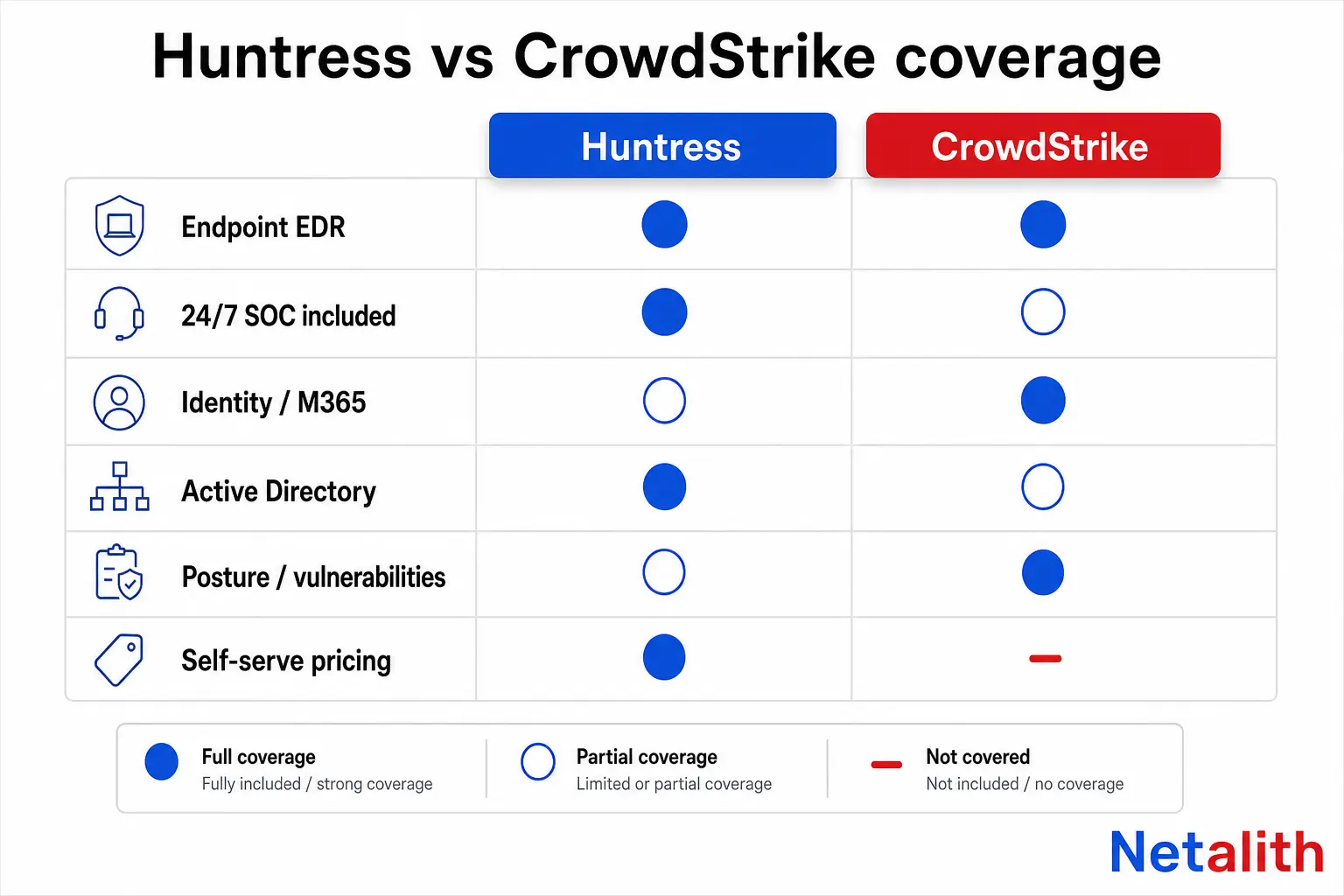
Trước khi xem bất kỳ bảng tính năng nào, hãy làm rõ mô hình kinh doanh, vì đây là yếu tố quyết định sản phẩm nào tạo cảm giác rẻ hoặc đắt.
| Huntress | CrowdStrike | |
|---|---|---|
| Mô hình cốt lõi | Dịch vụ được quản lý. SOC 24/7 đi kèm trong mọi sản phẩm, không cần mua thêm gói dịch vụ quản lý | Nền tảng cộng các module. Dịch vụ quản lý (Falcon Complete) là một cấp riêng, báo giá theo yêu cầu |
| Cách mua | Chỉ qua đăng ký demo và nhận báo giá. Gói Managed EDR tiêu chuẩn yêu cầu cam kết tối thiểu 50 agent | Có thể thanh toán tự phục vụ bằng thẻ cho Go, Pro và Enterprise. Elite, Complete và Falcon Flex cần trao đổi với bộ phận kinh doanh |
| Bộ sản phẩm | Managed EDR, ITDR, SIEM, SAT, cùng các sản phẩm quản lý tư thế mới hơn là ISPM và ESPM | Các gói kết hợp và danh mục module lớn, bao phủ endpoint, danh tính, đám mây, quản lý mức độ phơi nhiễm và next-gen SIEM |
| Được thiết kế cho | Hệ thống Windows và Microsoft 365 tại các SMB, cũng như MSP quản lý nhiều hệ thống tương tự | Môi trường doanh nghiệp vừa và lớn có đội ngũ bảo mật cùng hạ tầng đa dạng |
| Người vận hành được giả định | Nhân sự IT tổng quát hoặc kỹ thuật viên MSP | Chuyên viên phân tích bảo mật thường xuyên làm việc trên một console |
Hệ quả rất đáng chú ý: bất kỳ bài so sánh huntress vs crowdstrike nào chỉ lập checklist tính năng cũng sẽ nghiêng phần thắng về CrowdStrike, vì CrowdStrike có nhiều module hơn đáng kể. Kết luận đó dễ gây hiểu lầm nếu bảng so sánh không tính luôn ai sẽ vận hành chúng lúc 3 giờ sáng Chủ nhật.
Giá Huntress và CrowdStrike: chỉ một bên công bố con số
Đây là khác biệt thực tế rõ ràng nhất trong toàn bộ bài so sánh, và phần lớn các bài viết lại trình bày ngược.
CrowdStrike công bố bảng giá và cho phép mua bằng thẻ tín dụng. Dưới đây là mức giá niêm yết trên các trang giá chính thức của hãng:
| Gói | Hằng năm, mỗi thiết bị | Hằng tháng, mỗi thiết bị | Có EDR | Ghi chú |
|---|---|---|---|---|
| Falcon Go | $59.99 | $7.99 | Không | Antivirus thế hệ mới, kiểm soát thiết bị, bảo vệ di động, Express Support. Giới hạn tối đa 100 thiết bị |
| Falcon Pro | $99.99 | $14.99 | Không | Bổ sung quản lý tường lửa tập trung trên máy chủ |
| Falcon Enterprise | $184.99 | $19.99 | Có | Cấp đầu tiên có endpoint detection and response, cùng threat intelligence và hunting |
| Falcon Elite | Liên hệ bộ phận kinh doanh | — | Có | Bổ sung vệ sinh IT và bảo vệ danh tính |
| Falcon Complete | Báo giá | — | Có | Các chuyên viên phân tích của CrowdStrike trực tiếp vận hành cho bạn |
Huntress hoàn toàn không công bố giá theo đơn vị. Trang giá Managed EDR của hãng là biểu mẫu yêu cầu demo. Điều trang này công bố là cấu trúc giá: cấp phép tính theo endpoint trên cơ sở thuê bao, giá dựa trên số lượng nên đơn giá mỗi endpoint giảm khi số lượng cam kết tăng, không có tier hay add-on, và gói tiêu chuẩn bắt đầu từ mức cam kết tối thiểu 50 agent.
Vì vậy, khi một trang so sánh trích dẫn “giá niêm yết Huntress là $8.99 mỗi endpoint”, hãy xem đó là mức giá do kênh phân phối báo lại chứ không phải giá công bố. Con số này có thể chính xác với một số cấu trúc hợp đồng. Tuy nhiên, đó không phải mức giá Huntress xác nhận trên trang của mình, nghĩa là bạn không thể đối chiếu báo giá Huntress với bất kỳ thứ gì ngoài một báo giá Huntress khác.
Điều ngược lại cũng đúng với CrowdStrike. Giá công bố của hãng là mức sàn, không phải tổng chi phí. Bảo vệ danh tính, quản lý mức độ phơi nhiễm, next-gen SIEM và dịch vụ quản lý Complete đều là các dòng phí riêng, vì vậy mức niêm yết $184.99 là điểm bắt đầu của báo giá thực tế chứ không phải mức cuối cùng.
So sánh EDR: thực tế bạn nhận được gì?
Hiểu lầm tốn kém nhất trong bài so sánh huntress vs crowdstrike edr là: Falcon Go và Falcon Pro không bao gồm EDR. Bảng so sánh gói của CrowdStrike cho thấy endpoint detection and response chỉ có từ Falcon Enterprise trở lên. Go và Pro là các sản phẩm phòng ngừa — đều rất tốt, nhưng chỉ là phòng ngừa.
Điều này trở nên quan trọng ngay khi bảng câu hỏi bảo hiểm an ninh mạng hoặc một framework tuân thủ hỏi bạn đã triển khai EDR hay chưa. Một công ty 40 người chạy Falcon Go với giá $59.99 mỗi thiết bị có antivirus, không phải EDR; và việc trả lời trung thực câu hỏi đó sẽ khiến họ phải chi thêm $125 mỗi thiết bị mỗi năm để khắc phục.
| Năng lực | Huntress Managed EDR | CrowdStrike |
|---|---|---|
| Endpoint detection and response | Đã bao gồm; đây chính là sản phẩm | Falcon Enterprise trở lên |
| Con người giám sát cảnh báo 24/7 | Đã bao gồm trong giá, áp dụng cho mọi khách hàng | Threat hunting từ Enterprise trở lên; phân loại và xử lý đầy đủ cảnh báo là Falcon Complete, được báo giá riêng |
| Ai quyết định cô lập | SOC của Huntress, theo cài đặt phê duyệt của bạn | Bạn, trừ khi mua Complete |
| Quản lý Microsoft Defender Antivirus | Được quản lý miễn phí cùng với Managed EDR | Không áp dụng; Falcon thay thế lớp AV |
| Tích hợp Defender for Endpoint | Tiếp nhận cảnh báo và telemetry của MDE nếu MDE đã được cấp phép và triển khai | Không áp dụng |
| Phân tầng và add-on | Không có; mỗi sản phẩm có một mức giá | Các tier gói cộng danh mục module lớn, có thể mua riêng lẻ |
Nếu tổ chức của bạn sử dụng nhiều sản phẩm Microsoft và đã trả phí cho Defender, việc Huntress quản lý Defender AV miễn phí là một lập luận chi phí thực sự, không chỉ là điểm nhấn marketing — ngân sách endpoint có thể tiếp tục dành cho Microsoft, trong khi bạn mua thêm chuyên môn thay vì xây dựng một chồng agent thứ hai.
Tỷ lệ phát hiện của Huntress và CrowdStrike: kiểm thử độc lập cho thấy gì?
Những người tìm kiếm “tỷ lệ phát hiện huntress vs crowdstrike” muốn có một tỷ lệ phần trăm cho mỗi bên. Không có con số như vậy, và đó là câu trả lời trung thực.
MITRE công bố ATT&CK Evaluations 2025 dành cho các giải pháp doanh nghiệp vào tháng 12 năm 2025. Có 11 nhà cung cấp tham gia: Acronis, AhnLab, CrowdStrike, Cyberani, Cybereason, Cynet, ESET, Sophos, Trend Micro, WatchGuard và WithSecure. Vòng đánh giá mô phỏng nhóm tội phạm tài chính đứng sau các vụ xâm nhập Scattered Spider và kỹ thuật của nhóm được nhà nước bảo trợ Mustang Panda, đồng thời bao gồm lần mô phỏng đối thủ trên đám mây đầu tiên của MITRE. CrowdStrike tham gia và báo cáo tỷ lệ phát hiện 100%, tỷ lệ bảo vệ 100% cùng không có false positive trong vòng này. Huntress không nằm trong danh sách tham gia.
Hai điểm bối cảnh giúp kết quả trên không trở thành đòn kết liễu:
- MITRE nêu rõ các bài đánh giá không xếp hạng nhà cung cấp — họ công bố bằng chứng chứ không đưa ra bảng điểm. Tuyên bố “100%” là cách diễn giải của nhà cung cấp về một bộ dữ liệu công khai mà bạn có thể tự kiểm tra.
- Số lượng đơn vị tham gia đã giảm từ khoảng 30 nhà cung cấp ở các vòng trước xuống còn 11. Microsoft, SentinelOne và Palo Alto Networks cũng không tham gia. Việc vắng mặt trong danh sách là bằng chứng yếu về sản phẩm, nhưng là bằng chứng mạnh cho thấy hoạt động này đã trở nên tốn kém đến mức nào.
Thay vì kết quả phòng lab, Huntress công bố các chỉ số vận hành: tỷ lệ false positive dưới 1%, thời gian trung bình phản hồi đối với Managed EDR là 8 phút và MTTR đối với Managed ITDR là 3 phút. Đây là các số liệu do hãng tự báo cáo và chưa được kiểm toán, nhưng chúng đo lường một điều mà bài kiểm thử phòng lab không thể đo — con người thực tế đã hành động nhanh đến đâu.
Cách hiểu thực tế là: bạn đang so sánh hai loại bằng chứng khác nhau, không phải hai điểm số. Nếu quy trình mua sắm yêu cầu dữ liệu phát hiện được bên thứ ba xác thực, CrowdStrike có thể cung cấp còn Huntress hiện chưa thể. Nếu rủi ro thực tế của bạn là một cảnh báo không ai mở trong sáu giờ, con số từ phòng lab vốn cũng không thể trả lời vấn đề đó.
ITDR và bảo mật Microsoft 365: hai kiến trúc khác nhau
Cả hai nhà cung cấp đều bán giải pháp identity threat detection and response, nhưng hai sản phẩm gần như không chồng lấn. Đây là phần mà hầu hết các bài so sánh huntress vs crowdstrike itdr bỏ qua.
| Huntress Managed ITDR | CrowdStrike Falcon Identity Protection | |
|---|---|---|
| Giám sát gì | Danh tính và email trên Microsoft 365 và Google Workspace | Lưu lượng xác thực trực tiếp trong Active Directory tại chỗ, cùng Entra ID, Okta và Ping |
| Cách triển khai | Tích hợp tenant, cấp phép theo danh tính | Cài sensor trên domain controller; vùng phủ Entra ID thông qua External Authentication Method của Microsoft, hoạt động trực tiếp trong luồng đăng nhập |
| Các dạng phát hiện đặc trưng | Rogue Apps (cấp quyền OAuth độc hại), Unwanted Access (đánh cắp session token, đánh cắp thông tin xác thực, AiTM), Shadow Workflows (quy tắc hộp thư đến và chuyển tiếp độc hại) | Phát hiện tấn công Kerberos và NTLM, di chuyển ngang, quyền truy cập có điều kiện dựa trên rủi ro, chặn hoặc phát hiện MFA injection khi đăng nhập |
| Phản hồi | SOC điều tra và xử lý các vụ xâm phạm danh tính đã xác nhận | Đưa ra quyết định thực thi theo thời gian thực trước khi token được cấp |
Quy tắc lựa chọn ở đây đặc biệt rõ ràng. Một công ty 60 người không có domain controller, mọi thứ nằm trên Microsoft 365, sẽ không tận dụng được phần lớn giá trị khiến module danh tính của CrowdStrike đáng tiền — module này được xây dựng để đọc lưu lượng xác thực mà công ty đó không tạo ra. Ngược lại, một môi trường hybrid có Active Directory thực tế và nguy cơ di chuyển ngang sẽ không nhận được gì từ Huntress ITDR ở khía cạnh này, vì Huntress ITDR hoàn toàn không quan sát AD.
Đối với bảo mật Microsoft 365 thuần túy — xâm phạm email doanh nghiệp, đánh cắp token, lừa đảo chấp thuận thông qua ứng dụng OAuth — Huntress nhắm trực tiếp vào các kiểu tấn công mà SMB thường gặp, còn tính năng Rogue Apps xử lý một khoảng trống mà phần lớn công cụ danh tính bỏ qua.
Quản lý lỗ hổng: dữ liệu gốc hay phụ thuộc vào Defender?
Một bài so sánh huntress vs crowdstrike về quản lý lỗ hổng có câu trả lời rõ ràng về mặt cấu trúc.
Falcon Spotlight của CrowdStrike đánh giá lỗ hổng bằng sensor đã cài sẵn — không cần scanner, không cần khung thời gian quét, không cần agent thứ hai — và hiện nằm trong Falcon Exposure Management cùng Falcon Surface cho bề mặt tấn công bên ngoài và Falcon Discover cho việc phát hiện tài sản, ứng dụng. Đây là module trả phí, không nằm trong Go, Pro hoặc Enterprise.
Huntress tham gia nhóm sản phẩm này vào tháng 3 năm 2026 với Managed ESPM, kết hợp kiểm soát ứng dụng (chặn công cụ RMM giả mạo và phần mềm chưa được phê duyệt), dashboard tuân thủ và ưu tiên xử lý lỗ hổng. Điểm cần lưu ý là khả năng hiển thị lỗ hổng của ESPM đến thông qua tích hợp với Microsoft Defender for Endpoint. Nếu bạn không được cấp phép và không vận hành MDE, phần này của sản phẩm sẽ không có nguồn dữ liệu. Sản phẩm cùng nhóm là Managed ISPM thực hiện nhiệm vụ tương đương cho danh tính — đánh giá Entra ID và Conditional Access theo chính sách do chuyên gia xây dựng, đồng thời khôi phục các thay đổi trái phép.
Vì vậy: CrowdStrike cung cấp dữ liệu lỗ hổng từ hệ thống của chính hãng, nhưng bạn phải trả thêm một module trên hóa đơn. Huntress cung cấp lớp quản lý trên nền dữ liệu lỗ hổng mà bạn đã trả tiền cho Microsoft; cách này rẻ hơn nếu bạn có Defender và hoàn toàn không có dữ liệu nếu bạn không có.
Huntress và CrowdStrike cho 50 endpoint và doanh nghiệp nhỏ
50 endpoint là quy mô khiến quyết định này trở nên thú vị, vì nó vừa đúng mức tối thiểu của Huntress vừa nằm trong phạm vi tự mua của CrowdStrike. Chỉ sử dụng giá niêm yết đã công bố:
| Lựa chọn cho 50 thiết bị | Chi phí niêm yết hằng năm | Bạn nhận được gì |
|---|---|---|
| Falcon Go | $2,999.50 | Next-gen AV và kiểm soát thiết bị. Không có EDR. Bạn tự giám sát |
| Falcon Pro | $4,999.50 | Bổ sung quản lý tường lửa. Vẫn không có EDR |
| Falcon Enterprise | $9,249.50 | EDR cộng threat hunting. Bạn vẫn chịu trách nhiệm phân loại và phản hồi |
| Falcon Complete | Báo giá | CrowdStrike vận hành cho bạn |
| Huntress Managed EDR | Báo giá, theo mức sàn 50 agent | EDR cộng phân loại và phản hồi từ SOC 24/7 trong một mức giá |
So sánh tổng chi phí sở hữu một cách trung thực ở quy mô này không phải là giấy phép với giấy phép. Đó là Falcon Enterprise cộng số giờ làm việc của một người nào đó so với báo giá Huntress, hoặc Falcon Complete so với báo giá Huntress. So sánh Go với Huntress là đặt antivirus cạnh dịch vụ được quản lý, nên không cho bạn thông tin có ý nghĩa.
Hai lưu ý thực tế dành cho người mua thuộc doanh nghiệp nhỏ. Falcon Go giới hạn ở 100 thiết bị, nên đây là gói bạn sẽ nhanh chóng vượt qua thay vì có thể mở rộng lâu dài. Và với dưới 50 endpoint, Huntress yêu cầu trao đổi trực tiếp — phần lớn doanh nghiệp quy mô này tiếp cận Huntress thông qua MSP, đúng với thiết kế của hãng.
Huntress và CrowdStrike dành cho MSP
Cả hai nhà cung cấp đều muốn phát triển kênh phân phối và đều xây dựng công cụ multi-tenant cho kênh này, nhưng chúng được tối ưu cho những danh mục khách hàng khác nhau.
Huntress ngay từ đầu đã ưu tiên kênh phân phối. Mỗi sản phẩm có mức tối thiểu 50 đơn vị, nhưng MSP được cộng gộp trên toàn bộ cơ sở khách hàng thay vì tính riêng từng khách hàng; SOC cũng đã bao gồm, nghĩa là MSP bán một kết quả bảo mật thay vì phải tự xây dựng đội ngũ. Mô hình này phù hợp khi danh mục có 30 khách hàng, mỗi khách hàng trung bình 20 chỗ.
CrowdStrike vận hành chương trình CrowdStrike Powered Service Provider, với mô hình tenant cha và tenant con thực sự để cập nhật chính sách lan truyền mà không cần truy cập từng console khách hàng, cùng Falcon Complete for Service Providers cho phép đối tác white-label hoặc đồng thương hiệu dịch vụ MDR của CrowdStrike. Mô hình này phù hợp khi danh mục có ít khách hàng hơn nhưng quy mô lớn, chịu yêu cầu tuân thủ và sẵn sàng trả tiền cho thương hiệu.
Câu hỏi quyết định không phải nền tảng nào mạnh hơn. Đó là liệu cơ cấu quy mô khách hàng của bạn có đủ khả năng chi trả mức giá premium mỗi endpoint và gánh phần công việc báo giá đi kèm hay không. Hàng chục khách hàng nhỏ và mức giá mỗi chỗ được thiết kế cho thị trường vừa không thể dễ dàng tồn tại cùng nhau.
Lựa chọn nào tốt hơn trong 2026?
Không có một câu trả lời duy nhất cho câu hỏi huntress vs crowdstrike bên nào tốt hơn, nhưng có những câu trả lời khá rõ cho từng tình huống.
| Tình huống của bạn | Lựa chọn phù hợp |
|---|---|
| Dưới 200 endpoint, Microsoft 365, không có nhân sự bảo mật | Huntress. SOC chính là thứ bạn thực sự cần và đã nằm trong giá |
| Bạn có đội ngũ bảo mật và một console họ sử dụng hằng ngày | CrowdStrike. Trả tiền cho SOC được quản lý mà bạn sẽ can thiệp lại là lãng phí |
| Active Directory tại chỗ cùng nguy cơ di chuyển ngang | CrowdStrike Falcon Identity Protection. Huntress ITDR không bao phủ AD |
| Xâm phạm email doanh nghiệp và lừa đảo chấp thuận OAuth là mối đe dọa chính | Huntress Managed ITDR, được nhắm trực tiếp vào kiểu tấn công này |
| Quy trình mua sắm yêu cầu bằng chứng phát hiện được bên thứ ba xác thực | CrowdStrike, vì hãng tham gia các bài đánh giá của MITRE |
| MSP có nhiều khách hàng nhỏ | Huntress. MSP có ít khách hàng lớn chịu quản lý chặt chẽ: CrowdStrike |
| Cần triển khai EDR ngay trong chiều nay bằng thẻ | Falcon Enterprise. Đây là lựa chọn duy nhất trong hai bên có thể mua mà không cần gọi cho bộ phận kinh doanh |
Có một điểm cần chỉnh lại trong cách bài so sánh này thường được diễn giải: Huntress không phải là “CrowdStrike dành cho những người không đủ khả năng mua CrowdStrike”. Đây là một kiểu mua khác. Bạn đang mua thời gian của chuyên viên phân tích cùng phần mềm đi kèm, và phần mềm được cố ý thu hẹp để các chuyên viên có thể đưa ra quyết định dứt khoát. Khi mua CrowdStrike, bạn đang mua bề rộng và chiều sâu của telemetry, với giả định rằng sẽ có người đủ năng lực sử dụng chúng.
Một lưu ý cuối dành cho MSP và nhà cung cấp dịch vụ IT đang thực hiện đánh giá này: những khách hàng trước đây tìm đến bạn qua ô tìm kiếm ngày càng hỏi trợ lý AI xem nên thuê nhà cung cấp nào, và các trợ lý đó thường trích dẫn những trang so sánh có cấu trúc, giàu dữ kiện thay vì nội dung brochure. Nếu sự thay đổi này quan trọng với kênh tiếp thị của bạn, đó chính là vấn đề mà dịch vụ SEO, AEO và GEO cho doanh nghiệp dịch vụ của chúng tôi được xây dựng để giải quyết.
Nguồn tham khảo
- Giá và so sánh gói CrowdStrike Falcon Go — giá niêm yết mỗi thiết bị được công bố và ma trận tính năng giữa Go, Pro và Enterprise
- Trang giá Huntress Managed EDR — mức cam kết tối thiểu, cấu trúc theo số lượng và các tính năng đi kèm
- Thông cáo của MITRE về ATT&CK Evaluations 2025 — phạm vi, kịch bản và phương pháp đánh giá
- Trang sản phẩm Huntress Managed ITDR và CrowdStrike Falcon Identity Protection — phạm vi bảo vệ danh tính và mô hình triển khai
- Huntress Managed ESPM và CrowdStrike Falcon Spotlight — phạm vi quản lý tư thế bảo mật và lỗ hổng
CÂU HỎI THƯỜNG GẶP
Câu hỏi thường gặp
Huntress có rẻ hơn CrowdStrike không?
Không thể trả lời chỉ dựa trên giá công bố, vì chỉ CrowdStrike công bố giá. CrowdStrike niêm yết Falcon Go ở mức $59.99, Falcon Pro $99.99 và Falcon Enterprise $184.99 mỗi thiết bị mỗi năm; Huntress báo giá theo từng môi trường thông qua biểu mẫu demo và chỉ cho biết giá dựa trên số lượng, với mức cam kết tối thiểu 50 agent cho gói Managed EDR tiêu chuẩn. So sánh có ý nghĩa là Huntress Managed EDR với Falcon Enterprise cộng chi phí nhân sự, hoặc với Falcon Complete, vì Huntress đã bao gồm SOC 24/7 trong giá còn CrowdStrike bán riêng dịch vụ này.
CrowStrike Falcon Go có bao gồm EDR không?
Không. Bảng so sánh gói chính thức của CrowdStrike cho thấy endpoint detection and response bắt đầu từ Falcon Enterprise. Falcon Go bao gồm antivirus thế hệ mới, kiểm soát thiết bị và bảo vệ thiết bị di động; Falcon Pro bổ sung quản lý tường lửa trên máy chủ. Falcon Go cũng giới hạn ở 100 thiết bị. Nếu framework tuân thủ hoặc bảng câu hỏi bảo hiểm hỏi bạn đã triển khai EDR hay chưa, Go và Pro không đáp ứng yêu cầu đó.
Huntress hay CrowdStrike có tỷ lệ phát hiện tốt hơn?
Không có con số hoàn toàn tương đương để so sánh trực tiếp. CrowdStrike tham gia ATT&CK Evaluations 2025 của MITRE dành cho các giải pháp doanh nghiệp, cùng 10 nhà cung cấp khác, và báo cáo khả năng phát hiện và bảo vệ đầy đủ trong vòng đánh giá đó; Huntress không nằm trong danh sách tham gia. Chính MITRE cũng nêu rõ các bài đánh giá không xếp hạng nhà cung cấp. Thay vào đó, Huntress công bố các chỉ số vận hành, gồm tỷ lệ false positive dưới 1% và thời gian trung bình phản hồi là 8 phút; đây là các số liệu do hãng tự báo cáo. Bạn đang so sánh hai loại bằng chứng chứ không phải hai điểm số.
Huntress và CrowdStrike có thể chạy cùng nhau không?
Về kỹ thuật là có, và một số MSP sử dụng sensor CrowdStrike để phát hiện cùng một lớp dịch vụ quản lý riêng. Tuy nhiên, trả tiền hai lần cho telemetry endpoint hiếm khi hợp lý. Cách kết hợp phổ biến và có ý nghĩa hơn là dùng Huntress Managed EDR cùng Microsoft Defender, vì Huntress quản lý Defender Antivirus miễn phí và có thể tiếp nhận cảnh báo từ Defender for Endpoint khi sản phẩm này đã được cấp phép và triển khai.
Sản phẩm nào tốt hơn cho bảo mật Microsoft 365?
Huntress Managed ITDR được xây dựng riêng cho các mối đe dọa liên quan đến danh tính và email trên Microsoft 365 và Google Workspace: ứng dụng OAuth độc hại, đánh cắp session token, tấn công adversary-in-the-middle và quy tắc hộp thư ẩn. CrowdStrike Falcon Identity Protection tập trung vào lưu lượng xác thực trong Active Directory và Entra ID, được triển khai thông qua sensor trên domain controller. Với tổ chức không có thư mục tại chỗ, phần lớn giá trị bảo vệ danh tính của CrowdStrike không phù hợp.
Lựa chọn nào tốt hơn cho MSP?
Điều này phụ thuộc vào cơ cấu quy mô khách hàng chứ không phải chất lượng sản phẩm. Huntress ưu tiên kênh phân phối, với mức tối thiểu được cộng gộp trên toàn bộ danh mục khách hàng và SOC đã bao gồm, phù hợp với nhiều khách hàng nhỏ. CrowdStrike cung cấp multi-tenancy tenant cha và tenant con thông qua chương trình Powered Service Provider, cùng tùy chọn white-label qua Falcon Complete for Service Providers; mô hình này phù hợp với ít khách hàng hơn nhưng quy mô lớn, chịu yêu cầu tuân thủ và sẵn sàng trả mức phí premium cho mỗi endpoint.
Quản lý lỗ hổng thì sao?
Falcon Spotlight của CrowdStrike đánh giá lỗ hổng từ sensor đã cài sẵn, không cần scanner hoặc khung thời gian quét, và hiện là một phần của Falcon Exposure Management; đây là module trả phí, không nằm trong các gói Go, Pro hoặc Enterprise. Huntress Managed ESPM, được cung cấp rộng rãi từ tháng 3 năm 2026, bổ sung kiểm soát ứng dụng, báo cáo tuân thủ và ưu tiên xử lý lỗ hổng, nhưng lấy dữ liệu lỗ hổng thông qua tích hợp với Microsoft Defender for Endpoint. Vì vậy, sản phẩm phụ thuộc vào việc bạn cấp phép và vận hành MDE.