Average Wedding Cost Breakdown by Category: 2026 Guide
See the average wedding cost breakdown by category, from venue and catering to photography, decor, fees, and contingency planning. Build a realistic budget.

Long Nguyen
Développeur fullstack · Ingénieur IA · Chercheur
Average Wedding Cost Benchmarks for 2026
The average wedding cost breakdown by category starts with a useful national benchmark. The Knot’s 2026 Real Weddings Study, based on 10,474 U.S. couples married in 2025, reports an average wedding cost of $34,200. Zola’s 2026 estimate is approximately $36,000.
Those figures are averages, not typical totals for every couple. The estimated median is considerably lower, at roughly $10,000–$18,000, because a relatively small number of weddings costing $100,000 or more pull the average upward.
Your actual wedding budget will depend on guest count, location, season, vendor choices, venue requirements, and confirmed family contributions. Use national figures as a starting point, then replace them with local quotes and your own priorities.
| Benchmark | Estimated amount | How to interpret it |
|---|---|---|
| The Knot 2026 average | $34,200 | National average based on recent U.S. weddings |
| Zola 2026 average | Approximately $36,000 | Another national planning benchmark |
| Estimated median | $10,000–$18,000 | A more representative midpoint for many couples |
Average Wedding Cost Breakdown by Category
A percentage-based wedding budget helps turn one large total into manageable spending limits. Using a sample total of $34,200, venue and catering together may account for approximately $13,680–$17,100, while photography, decor, entertainment, attire, and contingency planning receive their own target amounts.
Venue costs and catering costs commonly consume 40%–50% of the budget combined because they are closely tied to guest count and reception requirements. These ranges are planning targets rather than fixed rules. If photography is a top priority, for example, you can spend more there by reducing flowers, decor, or another lower-priority category.
| Category | Planning percentage | Example amount from $34,200 |
|---|---|---|
| Venue and catering | 40%–50% | $13,680–$17,100 |
| Photography and videography | 10%–12% | $3,420–$4,104 |
| Flowers and decor | 8%–10% | $2,736–$3,420 |
| Entertainment | 5%–10% | $1,710–$3,420 |
| Attire | 5%–8% | $1,710–$2,736 |
| Contingency buffer | 5%–10% | $1,710–$3,420 |

Venue and Catering Costs
Reception expenses are usually the largest part of wedding costs. Zola reports average venue costs of $8,573, while The Knot reports reception venues averaging $12,900. Cited catering estimates average about $6,927, with some planning figures near $80 per guest.
The final bill can change substantially based on the number of guests, meal style, bar service, rentals, minimum spends, and what the venue package includes. Before booking, clarify whether tables, chairs, linens, staffing, glassware, setup, cleanup, and food-service fees are included.
- Compare plated meals, buffets, family-style service, and stations.
- Ask whether bar packages include bartenders, mixers, glassware, and service time.
- Confirm food and beverage minimums, rental charges, and overtime policies.
- Check whether venue packages include ceremony space or require a separate fee.
Photography and Videography Costs
Photography and videography generally represent about 10%–12% of the total wedding budget. As planning references, cited estimates place photography at roughly $3,000 and videography at approximately $2,300.
Pricing depends on hours of coverage, the number of photographers or videographers, second shooters, engagement sessions, editing, albums, delivery format, and turnaround time. Decide which moments must be documented before comparing packages, since longer coverage or a faster delivery timeline may increase the total.
Flowers, Decor, and Entertainment
Flowers and decor average approximately $6,345 in the cited category data and commonly receive 8%–10% of the budget. Entertainment often receives 5%–10%, depending on whether you hire a DJ, live band, or multiple acts.
Decor estimates should include more than centerpieces. Rentals, lighting, ceremony arrangements, linens, signage, setup, breakdown, and delivery can all affect the final amount.
- Request separate prices for floral design, rental items, delivery, and installation.
- Ask whether lighting and sound equipment are included with entertainment.
- Compare a DJ, band, or combination of acts based on coverage and reception priorities.
- Confirm who handles setup and breakdown so those labor costs are not missed.
Attire, Ceremony, and Other Core Costs
Reserve roughly 5%–8% for attire. That allowance should cover alterations, accessories, shoes, and formalwear for the wedding party rather than only the initial clothing price.
Also account for ceremony-specific expenses and smaller purchases. Individually modest charges can materially affect the total when combined.
- Officiant fees and the marriage license
- Transportation for the couple or wedding party
- Invitations, stationery, postage, and day-of paper goods
- Wedding rings, favors, and ceremony items
How Location Changes Wedding Costs
A national average cannot predict every couple’s actual budget because local event costs vary widely. One cited comparison places a 150-guest wedding at approximately $85,000 in San Francisco versus $43,000 in Milwaukee—nearly twice as much for the same headcount.
Labor rates, venue demand, real estate costs, taxes, vendor availability, and local expectations all contribute to regional differences. A high-demand market may charge more for the same services, while a smaller market may offer lower venue and staffing rates.
Research local vendor quotes before setting final spending limits. Use the national average as context, but base your wedding budget on actual proposals from venues, caterers, photographers, rental companies, and other vendors in your area.
| Location | Guest count | Approximate total |
|---|---|---|
| San Francisco | 150 guests | $85,000 |
| Milwaukee | 150 guests | $43,000 |

How to Build a Realistic Wedding Budget
Start with one total budget rather than booking vendors first and adding costs afterward. Include only confirmed family contributions in that starting total. Treat unconfirmed help as uncertain until the contributor agrees to an amount and payment timing.
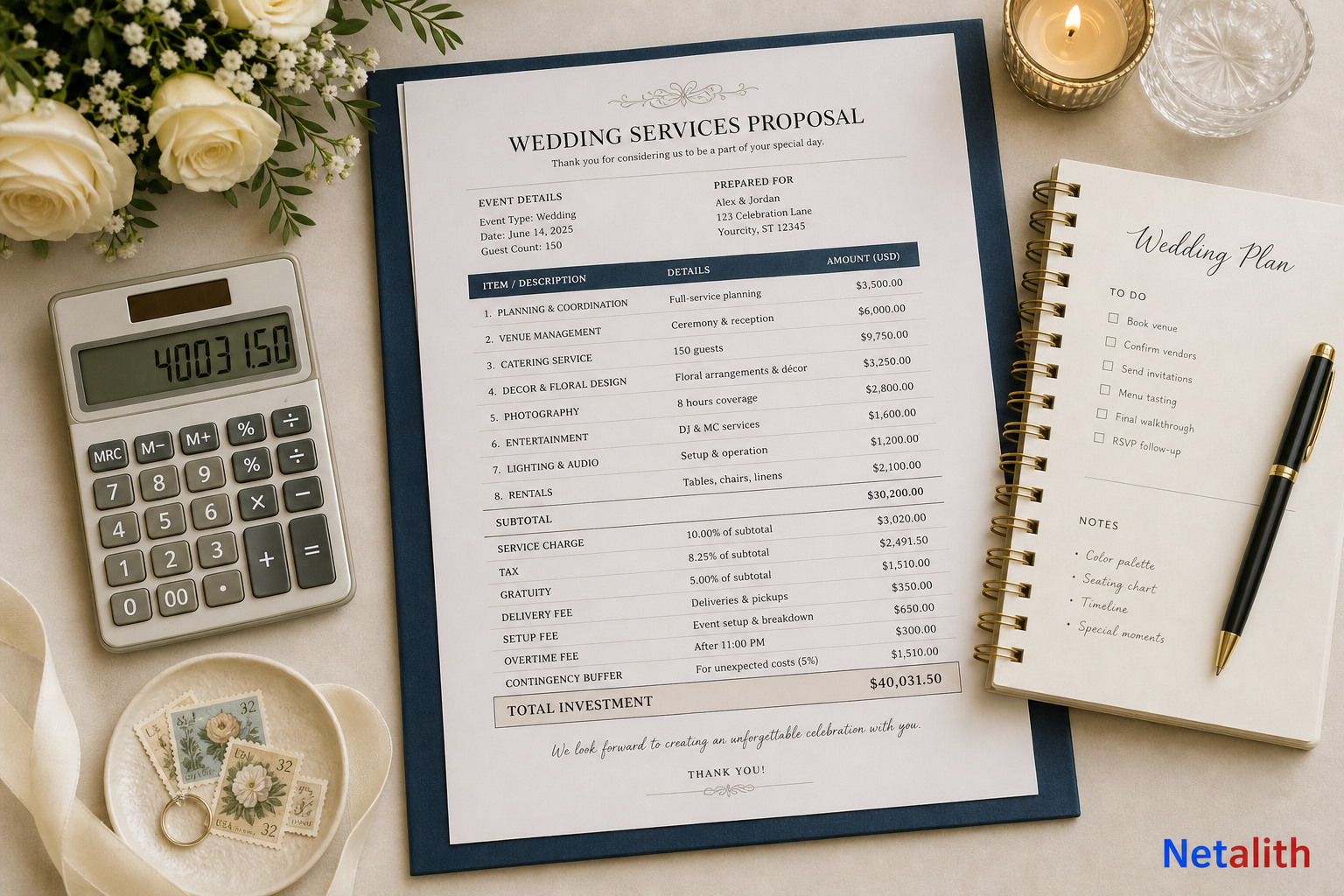
Next, apply category percentages to create dollar caps and compare those caps with actual local quotes. The process makes trade-offs visible: increasing photography means reducing another category, such as flowers or decor, if the total budget stays fixed.
- Set a total spending limit based on available funds and confirmed contributions.
- Allocate target percentages to major categories and convert them into dollar caps.
- Collect local quotes and update the caps when real prices differ from benchmarks.
- Rank your priorities so you know where to spend more and where to simplify.
- Keep a 5%–10% contingency buffer for price changes, unexpected needs, and late fees.
Turning percentages into dollar caps is easier with a template built for exactly this breakdown. The Wedding Budget Planner Printable includes wedding budget and category sheets for venue, catering, photography, flowers, and the rest of the categories above, plus savings goal pages for building your contingency buffer before vendors get booked.
Wedding Planning Budget Tips for Different Guest Counts
Guest count is one of the strongest drivers of wedding costs. It affects catering, bar service, rentals, invitations, favors, and the size and requirements of the venue. Adding guests can also increase staffing, transportation, and setup needs.
For a 150-guest wedding, the San Francisco and Milwaukee examples show why headcount alone cannot determine the total. The same number of guests can produce very different budgets depending on location, season, service level, and vendor pricing.
- Calculate the added per-guest cost for food, drinks, rentals, stationery, and favors before extending the guest list.
- Compare the cost of inviting more people with upgrading a priority vendor or guest experience.
- Ask venues how guest-count changes affect minimum spends, room layouts, and staffing.
- Use a smaller guest list strategically if it allows meaningful investment in your highest-priority categories.
Frequently Asked Questions About Wedding Costs
Wedding averages are useful for orientation, but your final wedding budget should reflect your location, guest count, priorities, and confirmed funding. The following answers summarize the main planning benchmarks.
Use the category ranges as flexible targets, request itemized quotes, and keep room for service charges, taxes, gratuities, and unexpected expenses before committing to vendors.
FAQ
Questions fréquentes
What is the average wedding cost in 2026?
The reported U.S. average is approximately $34,200–$36,000 in 2026. The median is estimated at about $10,000–$18,000 because a smaller number of weddings costing more than $100,000 raise the average.
What percentage of a wedding budget should go to the venue and catering?
Venue and catering commonly receive 40%–50% of the total wedding budget combined. The appropriate allocation can vary with guest count, location, meal style, bar service, and venue packages.
How much should couples budget for hidden wedding fees?
Reserve a 5%–10% contingency buffer for unexpected needs, price changes, and late fees. Cited data also suggests miscellaneous and last-minute fees may add roughly 9%—about $3,314 for the average couple—so review service charges, taxes, gratuities, overtime, and delivery fees carefully.
How much does a 150-guest wedding cost?
A cited comparison estimates approximately $43,000 in Milwaukee and $85,000 in San Francisco for 150 guests. The difference shows how location, labor rates, venue demand, taxes, and local vendor pricing can change the total substantially.
Should family contributions be included in the wedding budget?
Yes, but include only contributions that have been confirmed with a specific amount and payment timing. Build the initial budget around reliable funds, and treat uncertain family support as extra rather than money you must spend.