Top Low-Code Testing Tools: Accelerating Automation and QA Efficiency
A comprehensive guide on how low-code testing tools are revolutionizing quality assurance by democratizing automation and reducing maintenance overhead in modern QA environments.

Long Nguyen
Fullstack Developer · AI Engineer · Researcher
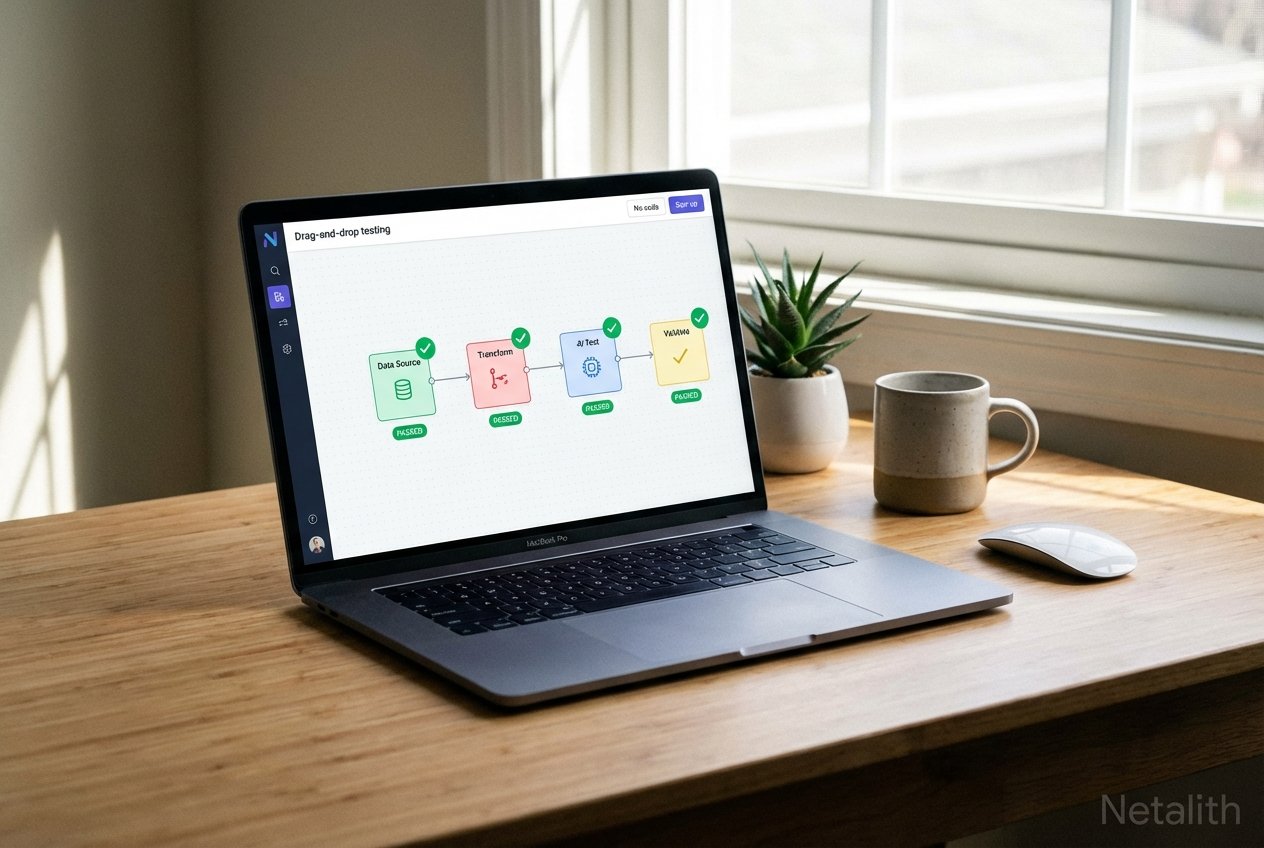
As software development cycles continue to accelerate, quality assurance teams face immense pressure to keep pace without sacrificing reliability. The demand for rapid, flawless releases has made traditional, heavily scripted testing frameworks a potential bottleneck for many organizations. Enter low-code testing tools—the transformative solution reshaping how teams approach automated testing. By enabling both technical and non-technical stakeholders to build, execute, and maintain tests with minimal programming, these platforms are tearing down the historical barriers to robust quality assurance.
In this comprehensive guide, we will explore the surge in popularity of these innovative solutions, compare them to traditional scripted methods, and highlight how organizations are leveraging them to accelerate automation and streamline their delivery pipelines in the current market.
The Rise of Low-Code Testing Tools in
The landscape of software delivery is constantly evolving, and one of the most prominent software testing trends is the widespread adoption of code-free testing software 2026. Historically, creating scalable test suites required deep programming expertise, often limiting the testing capacity to a small pool of specialized automation engineers. However, the paradigm has shifted drastically toward more accessible solutions.
Today, advanced no-code testing solutions are fueling the citizen tester movement. This cultural and technological shift is fundamentally democratizing QA automation for business analysts, product managers, and manual testers who possess deep domain knowledge but lack formal coding skills. By empowering a broader range of professionals to contribute directly to the testing pipeline, organizations can achieve far greater test coverage and a substantially faster time-to-market.
Top Benefits of Code-Free Testing Software
The transition toward agile low-code QA offers compelling advantages for modern software development teams. Adopting code-free testing software goes well beyond merely avoiding code syntax; it fundamentally optimizes the entire software testing lifecycle.
- Speed and Efficiency: Agile teams are accelerating test creation with no-code suites, allowing them to construct comprehensive test scenarios in a fraction of the time it takes to write custom, line-by-line scripts.
- Intuitive Interfaces: Modern visual testing automation tools provide seamless drag-and-drop interfaces, flowcharts, and visual recorders, making test creation highly intuitive and less prone to human error.
- Reduced Maintenance Overhead: Traditional scripts frequently break when an application's user interface changes. Modern code-free testing software 2026 often feature self-healing capabilities powered by AI, drastically reducing the hours spent on tedious test maintenance.
Bridging the QA Skill Gap
One of the most pressing challenges in enterprise IT is the ongoing shortage of highly specialized software developers in test (SDETs). Bridging the skill gap with no-code testing automation is no longer just a theoretical concept; it is a vital operational strategy. By intentionally leveraging low-code and no-code testing tools for non-technical QA roles, organizations can unlock the full potential of their existing workforce.
This inclusive approach perfectly aligns with the expanding citizen tester movement, allowing subject matter experts to engage directly in the automation process. Furthermore, democratizing QA automation for business analysts ensures that automated tests remain tightly aligned with actual business requirements and authentic user journeys, ultimately leading to more meaningful software validation.
Low-Code vs. Coded Testing Comparison
When evaluating modern automation strategies, understanding the low-code vs coded testing comparison is essential. While traditional coded frameworks offer immense flexibility and granular control for highly complex backend systems, they demand significant programming expertise and high ongoing maintenance costs.
Conversely, simplified QA automation platforms focus on accessibility, collaboration, and speed. These scriptless test automation tools abstract the underlying code entirely, allowing users to define test logic visually or through plain natural language inputs.
// Example: Traditional coded testing requires finding and asserting locators manually
driver.findElement(By.id("submit-button")).click();
wait.until(ExpectedConditions.visibilityOfElementLocated(By.id("success-msg")));

// Low-code platforms abstract this code into a simple, visual "Click Submit -> Verify Success" block.
While coded testing remains relevant for highly complex, edge-case architectural scenarios, code-free testing software 2026 are now mature enough to handle up to 90% of standard enterprise test automation requirements, yielding a significantly faster return on investment.
Integrating Low-Code Testing Tools into Your Enterprise QA Strategy
Successfully incorporating low-code tools into enterprise QA strategy requires thoughtful planning and tight alignment with broader organizational goals. To maximize their intrinsic value, these tools must be seamlessly integrated into your existing CI/CD pipelines to support relentless continuous testing in DevOps.
Embracing proactive shift-left testing is a cornerstone of this integration. By equipping product owners and developers with AI-powered low-code QA platforms early in the cycle, teams can initiate testing much earlier in the software development lifecycle (SDLC). This methodology helps identify and resolve critical defects long before they ever reach the production environment, adhering directly to core software quality assurance best practices.
Best Low-Code Automated Testing Platforms
The global market for automated testing tools has expanded significantly. When curating a definitive list of platforms, several forward-thinking solutions stand out for their innovative feature sets, cloud scalability, and exceptional ease of use. These modern cloud-based testing platforms are setting entirely new standards for AI-driven QA:
- AI-Augmented Element Locators: Platforms that utilize intelligent machine learning algorithms to automatically generate and maintain reliable element locators, completely minimizing test flakiness.
- Visual Test Building Tools: Advanced solutions offering canvas-based interfaces where users can map out complex end-to-end user journeys simply by connecting visual action nodes.
- Cross-Browser and Device Execution: Leading providers now offer built-in access to extensive cloud device farms, allowing agile teams to execute their scripts across thousands of environment permutations instantly.
- Dynamic Self-Healing: Top-tier platforms autonomously update test pathways when developers make minor, unexpected changes to the application UI, eliminating manual intervention.
Conclusion: The Future of QA with Low-Code Testing Tools
As we move further into 2025, the role of low-code testing tools will only become more central to the software delivery process. By reducing the reliance on complex scripts and empowering a broader range of "citizen testers," organizations can achieve the speed and quality necessary for modern digital competition. While they may not entirely replace manual coding for every edge case, these platforms offer a scalable, efficient, and user-friendly path toward a more robust quality assurance future. Embracing these tools is no longer just an option for efficiency—it is a requirement for staying competitive in an increasingly fast-paced development landscape.