BigCommerce Headless Commerce: A Strategic Guide to Scalable, Modern Storefronts
Learn how to scale your storefront using BigCommerce headless commerce. This guide covers decoupled architecture, API integrations, and Next.js implementation for modern e-commerce.

Long Nguyen
Fullstack Developer · AI Engineer · Researcher
The Rise of Composable Commerce in the Modern Era
The e-commerce landscape is shifting rapidly. In today's digital market, rigid, monolithic architectures are being replaced by highly agile, composable commerce solutions. If you are exploring how to sell on BigCommerce or looking for a comprehensive BigCommerce store setup guide, understanding the sheer power of a decoupled architecture is essential. Welcome to the era of BigCommerce headless commerce, a paradigm where the frontend presentation layer is entirely separated from the backend commerce logic.
For entrepreneurs and IT professionals alike, this approach serves as an advanced BigCommerce beginners guide to modernizing your digital storefront. Setting up an online store with BigCommerce using these modern architectures delivers unparalleled page speed, massive scalability, and seamless user experiences. By adopting decoupled BigCommerce setup, forward-thinking brands partner with experts like Netalith to build bespoke shopping experiences that outpace the competition.
Understanding BigCommerce Headless Commerce Architecture
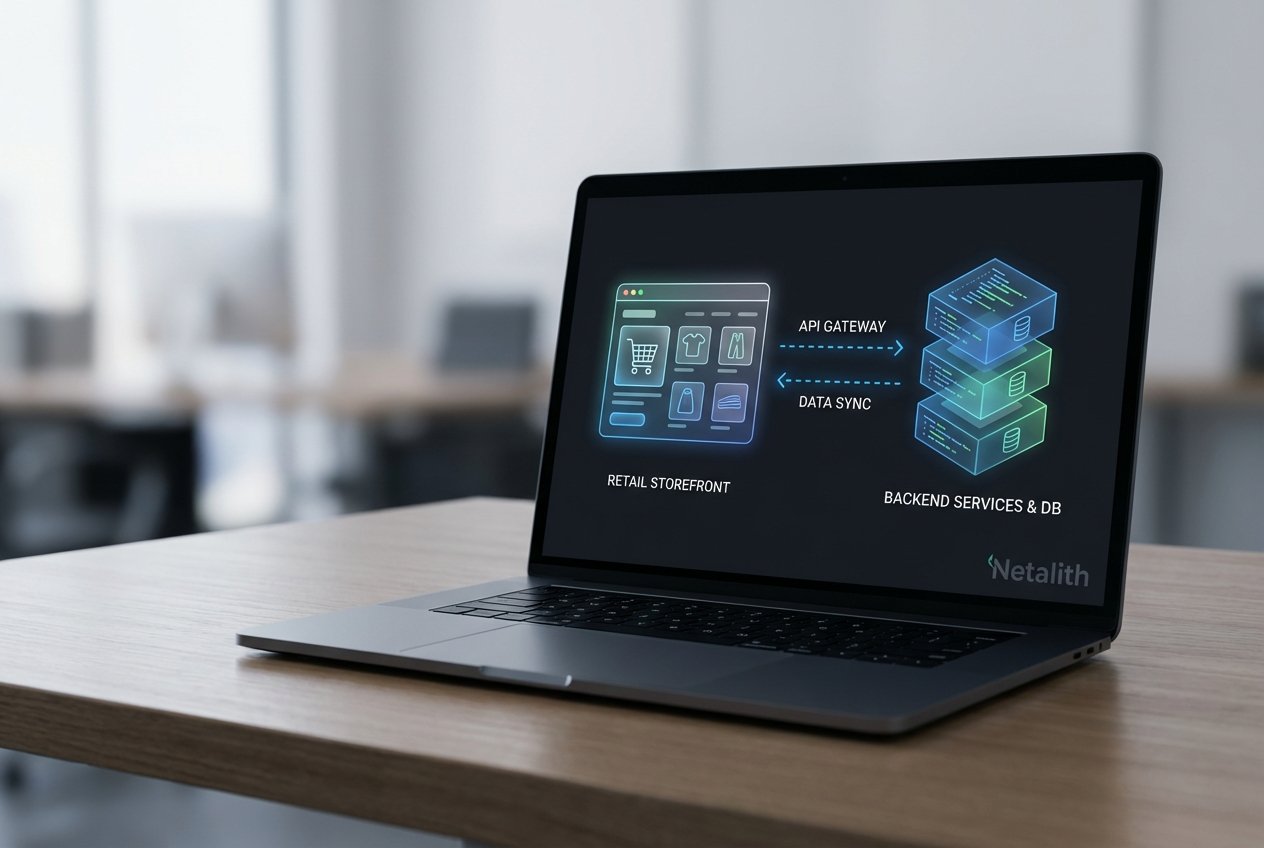
At its core, decoupled BigCommerce setup separates the user-facing frontend from the backend systems that manage pricing, inventory, and checkout. This separation is the foundation of headless BigCommerce and is what powers modern composable commerce ecosystems.
Unlike traditional platforms where the frontend template and backend database are tightly intertwined, decoupled BigCommerce setup operates on an API-first commerce model. This allows developers to utilize a microservices architecture, plugging in the best-in-class tools for search, content management, and payment processing without being locked into a single vendor's ecosystem.
By leveraging a decoupled BigCommerce setup strategy, businesses can completely swap out their frontend framework without disrupting the underlying backend infrastructure. It is the ultimate expression of technological freedom for growing retail operations.
The Benefits of a Decoupled BigCommerce Setup
Moving to a decoupled BigCommerce setup provides tangible business benefits that directly impact your bottom line. When evaluating BigCommerce features for sellers, the ability to decouple your systems stands out as a massive competitive advantage.
- Unmatched Speed: A decoupled BigCommerce setup paves the way for performance-led e-commerce. By removing heavy backend processing from the frontend load, page response times decrease, leading to better Core Web Vitals and higher conversion rates.
- Complete Creative Freedom: Building a custom frontend for bigcommerce store environments unlocks absolute frontend flexibility. Designers are no longer constrained by rigid template structures; they can craft pixel-perfect user journeys.
- Future-Proof Scaling: Headless retail with BigCommerce ensures that your store can scale infinitely. As traffic spikes during holiday seasons, the frontend and backend can scale independently.
Ultimately, a decoupled BigCommerce setup ensures that your business can rapidly adapt to changing consumer behaviors, making it an essential tactic for any long-term decoupled BigCommerce setup roadmap.
BigCommerce Headless Tutorial for Developers: Step-by-Step
If you are an IT professional looking for a technical BigCommerce cloud commerce tutorial, you must master the integration points between the backend and your chosen frontend framework. This bigcommerce headless tutorial for developers focuses on establishing a decoupled e-commerce architecture with bigcommerce api.
Mastering this workflow requires a solid understanding of API-first commerce principles. Everything from fetching product catalogs to processing user sessions relies entirely on robust API communication between your custom UI and the BigCommerce engine.
Connecting the BigCommerce API: REST vs GraphQL
The lifeblood of decoupled BigCommerce setup is the BigCommerce API. To execute an API-first commerce strategy efficiently, developers must understand when to use REST APIs versus the GraphQL storefront API.
The REST APIs are primarily designed for server-to-server communication. They are ideal for backend operations, such as syncing inventory with an ERP or managing bulk order exports. Conversely, the GraphQL storefront API is optimized for the frontend. GraphQL allows your custom storefront to query exact data requirements in a single network request, drastically reducing payload sizes and latency—a key component of performance-led e-commerce.
Implementing Headless Commerce with BigCommerce and Next.js
For modern developers, implementing headless commerce with bigcommerce and next.js is the gold standard for achieving high-speed, JAMstack e-commerce. Next.js provides hybrid static and server rendering, which is vital for both SEO and site performance.
When implementing these technologies, you maximize frontend flexibility. Below is a conceptual example of how a developer might fetch product data using the GraphQL storefront API within a Next.js environment:
// Conceptual Next.js Data Fetching Example
export async function getStaticProps() {
    const res = await fetch('https://your-store.mybigcommerce.com/graphql', {
        method: 'POST',
        headers: {
            'Content-Type': 'application/json',
            'Authorization': `Bearer ${process.env.BIGCOMMERCE_GRAPHQL_TOKEN}`
        },
        body: JSON.stringify({
            query: `
                query {
                    site {
                        products(first: 5) {
                            edges {
                                node {
                                    name
                                    prices {
                                        price {
                                            value
                                            currencyCode
                                        }
                                    }
                                }
                            }
                        }
                    }
                }
            `
        })
    });

    const data = await res.json();
    return {
        props: { products: data.data.site.products.edges },
        revalidate: 60, // Incremental Static Regeneration (ISR)
    };
}
This snippet demonstrates how BigCommerce headless commerce integrates with modern JavaScript frameworks to deliver lightning-fast static pages that remain dynamically updated.
Expanding with an Omnichannel Retail Architecture
The true value of BigCommerce headless commerce extends far beyond a standard website. A BigCommerce API-driven storefront serves as the central hub for an expansive omnichannel retail architecture.
With an API-first commerce foundation, the same backend catalog and logic can power native mobile applications, smartwatches, IoT devices, and even digital kiosks. This ultimate frontend flexibility ensures that whenever a new digital touchpoint emerges in the market, your infrastructure is already prepared to meet the consumer there.
Conclusion: The Future of BigCommerce Headless Commerce
As the digital landscape becomes increasingly fragmented, the need for speed and flexibility has never been greater. Embracing BigCommerce headless commerce allows your brand to break free from the limitations of traditional platforms. By utilizing a decoupled BigCommerce setup and an API-first commerce approach, you can create a truly performance-led e-commerce experience. Whether you are following a bigcommerce headless tutorial for developers or partnering with an agency like Netalith, the move toward a headless architecture is the most effective way to future-proof your online business and deliver the high-end shopping experiences that modern customers demand.