How to Sell on Reverb: The Ultimate Step-by-Step Guide for Musicians
Learn how to sell on Reverb with our complete step-by-step tutorial. Cover everything from account setup to listing optimization and shipping best practices.

Long Nguyen
Fullstack Developer · AI Engineer · Researcher
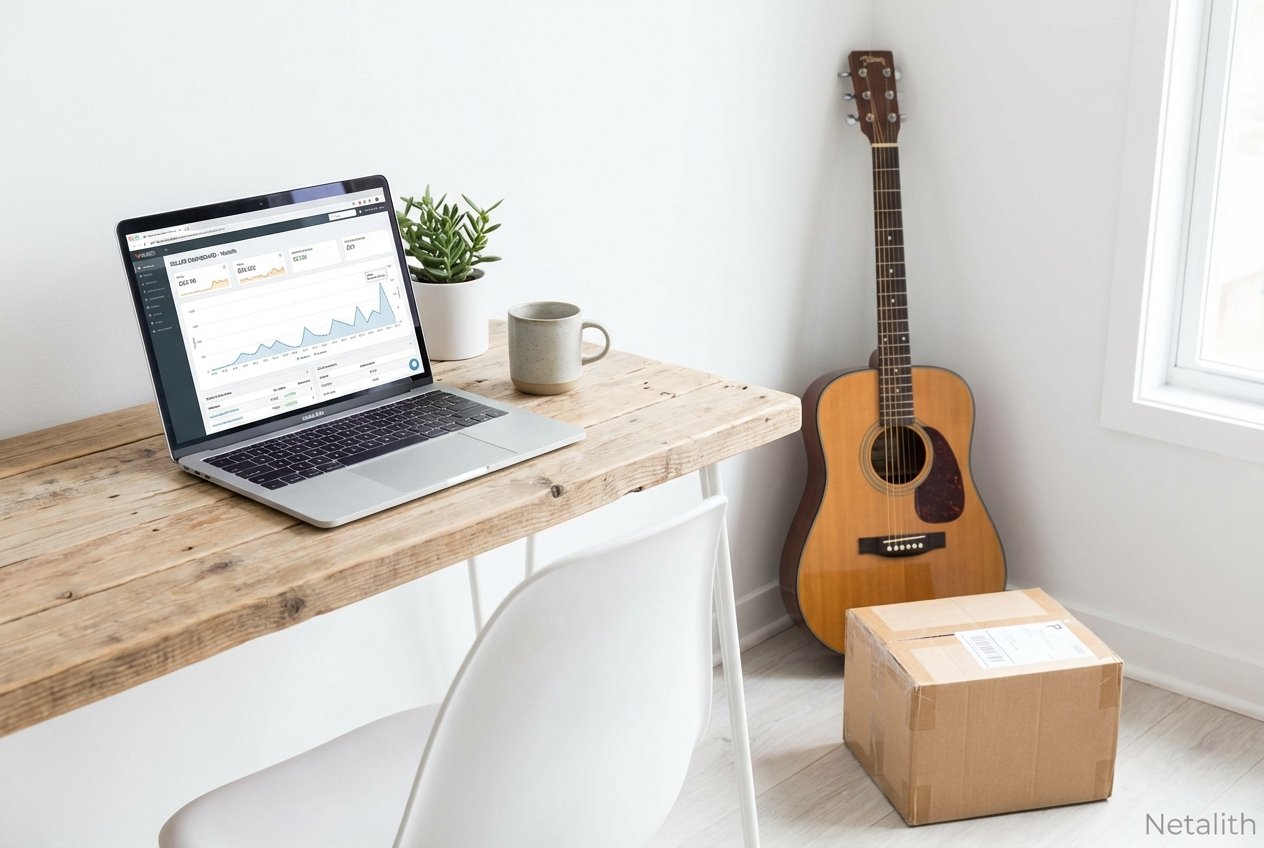
If you have an acoustic guitar gathering dust or a vintage synthesizer taking up valuable studio space, you might be wondering exactly how to sell on reverb. As the premier online marketplace dedicated strictly to musical instrument e-commerce, Reverb has revolutionized the way musicians and gear collectors buy and sell gear worldwide.
Learning listing on Reverb is easier than ever. Whether you are letting go of a single guitar pedal or launching a full-scale independent resale business, this platform connects you directly with a targeted audience of passionate buyers. In this comprehensive tutorial, we will walk you through the entire process. From learning how to set up a reverb seller account to mastering reverb listing optimization, this guide provides everything you need to start moving inventory today.
How to Set Up a Reverb Seller Account
Before you can start listing on the Reverb marketplace and diving into listing on Reverb effectively, your first task is mastering how to set up a reverb seller account. If you are selling gear on Reverb for the first time, you will find that the onboarding process is highly intuitive and explicitly tailored for musicians.
Start by visiting the Reverb website and clicking the sign-up button. Once you create your basic profile, navigate to the seller dashboard. This centralized hub is where you will eventually manage your active inventory, buyer messages, and sales metrics. For those truly serious about becoming a Reverb seller, filling out your profile completely is essential. Add a friendly profile picture and write a short, trustworthy bio about your musical background to build immediate credibility.
Next, you must establish your shop policies. Clear, professionally written shop policies protect both you and the buyer by explicitly stating your return window, shipping times, and refund conditions. Having airtight shop policies directly contributes to building trust, which is vital when you are just starting your online store.
Step-by-Step Guide: How to Sell on Reverb Like a Pro
Understanding listing on Reverb means following a proven workflow that drives conversions. This tutorial covers everything you need to know about creating a listing that actually sells. If you want to know how to start selling on Reverb for beginners, the secret lies in presenting your musical instrument e-commerce offerings as professionally as a high-end retail store.
When listing on Reverb, you are competing with thousands of other independent resellers and stores. Here is how you can make your gear stand out from the crowd.
Taking High-Quality Photos of Your Gear
Great photography is the undisputed backbone of reverb selling. Because buyers cannot physically touch or play the gear, your images must visually tell the whole story. Use soft, natural lighting whenever possible and capture shots from multiple angles. Be sure to photograph the serial numbers, any included accessories, and most importantly, any cosmetic blemishes. Honest, high-resolution photography prevents disputes later down the line.
Writing Accurate Condition Descriptions
One of the most critical aspects of learning listing on Reverb is mastering condition descriptions. Reverb has specific grading categories ranging from \"Mint\" to \"Non-Functioning.\" Always choose the condition conservatively. If a vintage amplifier has a few minor scuffs, list it as \"Very Good\" rather than \"Excellent.\" In the text body, write detailed descriptions covering the history of the item, any after-market modifications, and its current working state.
Pricing Strategies for Selling Gear
Pricing your gear accurately is crucial for a fast sale. Utilize Reverb's built-in Price Guide to review historical data on what similar items have actually sold for, rather than just what they are currently listed at. When selling musical instruments online, pricing competitively while leaving a small margin for negotiation (via the \"Make an Offer\" button) is a highly effective closing strategy.
Understanding Reverb Seller Fees and Payments
An essential part of knowing listing on Reverb is understanding the costs involved. Mastering the reverb seller fees structure is necessary for calculating your actual profit margins. Reverb typically charges a standard selling fee percentage on the final transaction total, which is capped at a maximum amount per item to protect sellers dealing in high-ticket boutique gear.
Beyond the primary selling fee, you must also account for standard payment processing fees. Reverb handles all financial transactions securely through Reverb Payments. This integrated system ensures vital buyer protection and safeguards sellers from fraudulent credit card chargebacks.
Once your item sells and is successfully shipped, Reverb Payments initiates the payout schedule. Typically, funds are cleared and deposited directly into your linked bank account within 1 to 3 business days after the shipping tracking number shows the package is in transit. This predictable, automated payout schedule makes financial planning seamless for your independent resale business.
Reverb Shipping Guide: Best Practices for Packing Gear
Learning listing on Reverb does not stop when the buyer clicks purchase; you still have to deliver the item safely. Following a solid reverb shipping guide is essential, especially when dealing with fragile musical instruments like acoustic guitars, drum shells, or vintage tube amps.
- Use Proper Outer Boxes: Always use double-walled corrugated boxes designed for heavy or fragile gear. Instrument-specific boxes are a great investment.
- Secure the Instrument: Loosen the string tension on guitars and basses before shipping to prevent neck snapping. Wrap the instrument securely in bubble wrap, ensuring there is zero movement inside its hardshell case or gig bag.
- Fill All Voids: Fill any empty spaces in the main shipping box with packing peanuts or crumpled heavy-duty kraft paper. The internal case should never shift inside the outer box during transit.
- Purchase Reverb Safe Shipping: When you purchase a shipping label directly through your seller dashboard, opt for Safe Shipping. It provides comprehensive, hassle-free coverage in the event the shipping carrier damages or loses the item.
Optimizing Your Listings with Reverb Bump
Once you grasp the fundamentals of how to sell on reverb, you should focus on reverb listing optimization. When vending on Reverb marketplace, gaining visibility over other sellers is half the battle. One of the absolute best built-in tools for achieving this is the Reverb Bump feature.
Reverb Bump allows you to allocate a customized fraction of your final sale price to promote your listing to the very top of search results and specific category pages. The best part? You only pay the Bump fee if the item actually sells through that promoted placement. This low-risk, high-reward marketing strategy is a cornerstone of modern reverb selling.
Additionally, maintaining a flawless feedback rating acts as passive listing optimization. Buyers naturally gravitate toward sellers boasting a 5-star feedback rating, as it clearly signals reliability, honesty, and excellent customer service. Always communicate promptly with buyers to keep your rating stellar and build a loyal customer base.
Conclusion: Success When You Sell on Reverb
Mastering how to sell on reverb is the key to turning your unused gear into cash or funding your next musical acquisition. By focusing on high-quality presentation, honest descriptions, and excellent customer service, you can build a reputable brand within the musical community. Now that you have the tools to navigate the seller dashboard, manage Reverb Payments, and utilize Reverb Bump, you are ready to start selling. Start your journey today and see how easy it is to connect with buyers who value your gear as much as you do.