Leading Cloud Commerce Trends: Why the Future of Retail is in the Cloud
Explore the most impactful cloud commerce trends for 2026, including serverless architecture, edge computing, and composable commerce for modern retail.

Long Nguyen
Fullstack Developer · AI Engineer · Researcher
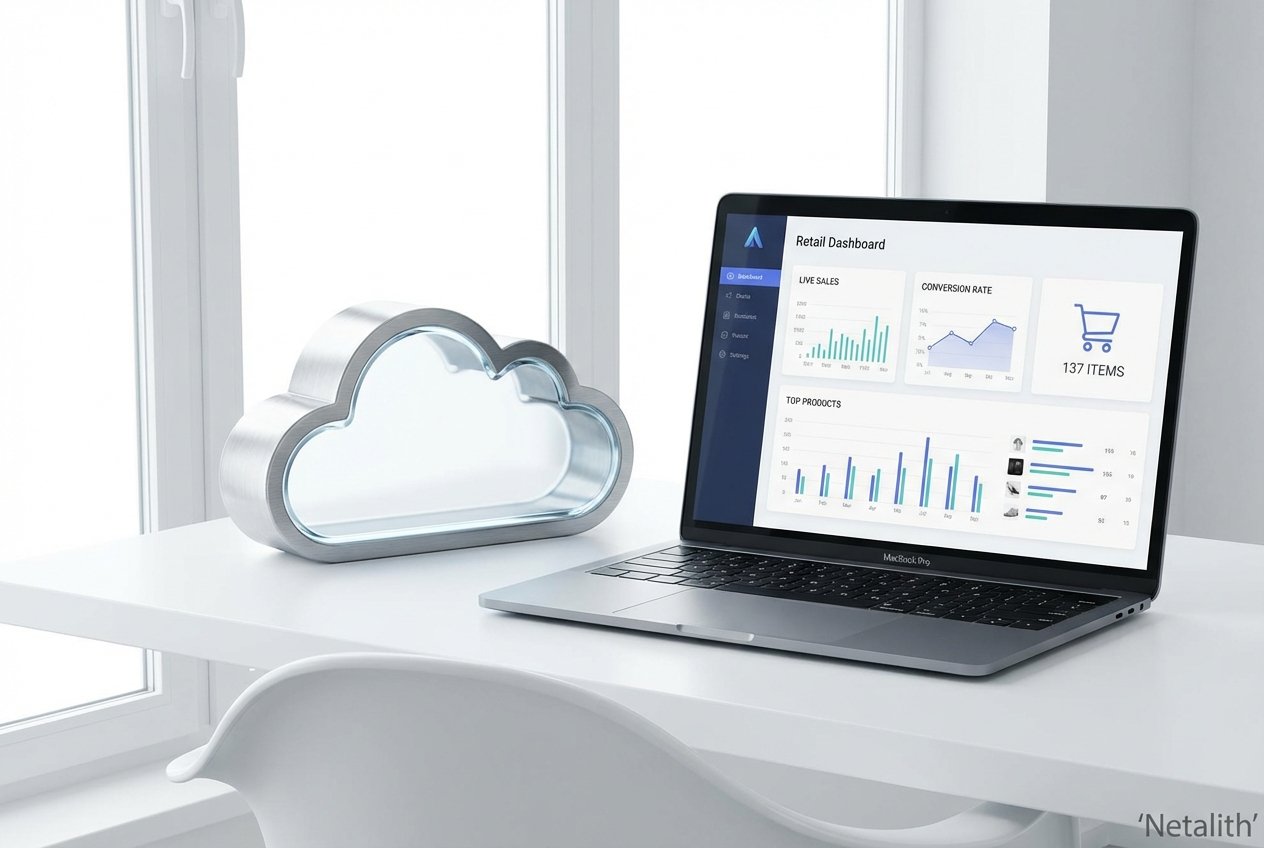
The landscape of retail has permanently shifted. In today's hyper-competitive digital marketplace, relying on outdated legacy systems is no longer a viable strategy for ambitious brands. To stay ahead of the curve, businesses are closely monitoring the latest cloud commerce trends. These emerging technological shifts dictate everything from backend scalability to front-end customer experiences. As we navigate the digital demands of the modern era, it is abundantly clear that agility, high performance, and rapid innovation are found exclusively in the cloud.
Cloud Commerce Trends: The Evolution of Cloud-Based Retail
The transformation of online shopping represents a fascinating cloud-based retail evolution. A decade ago, brands relied heavily on monolithic, on-premise servers that were difficult to scale and expensive to maintain. Today, those outdated architectures have been entirely superseded by agile, distributed systems. Building a robust digital infra 2026 heavily relies on deploying a scalable cloud infrastructure that can handle unpredictable traffic spikes without faltering.
Keeping a close eye on modern cloud-based retail evolution is the only way organizations can continuously adapt to consumer demands. By fully migrating retail operations to the cloud, merchants are unlocking unprecedented levels of personalization and operational efficiency, ensuring they remain competitive in the market for selling online 2026.
"To succeed in selling online, retailers must decouple their front-end experiences from their back-end logic, allowing for true operational agility and unmatched speed."
Top Cloud Commerce Trends Shaping 2026
Understanding the future of cloud-based retail evolution 2026 requires looking closely at how businesses curate, manage, and deliver online experiences. Several overarching SaaS commerce trends are defining the roadmap for top-tier merchants. As businesses distance themselves from rigid all-in-one suites, massive saas ecommerce shifts are occurring. Organizations are actively migrating toward specialized digital experience platforms DXPs powered by modern web commerce tech.
The Rise of Serverless Commerce Architecture
One of the most consequential shifts in cloud retail is the move away from traditional server provisioning. Tracking the serverless commerce architecture trends 2026 reveals that brands are increasingly adopting environments where backend infrastructure dynamically allocates machine resources on demand. By leveraging this scalable cloud infrastructure, businesses only pay for the exact compute time they consume, dramatically lowering overhead costs while virtually eliminating site crashes during peak shopping events.
Edge Computing for Low-Latency Shopping
To support next-generation digital infra 2026, industry leaders are pushing data processing power closer to the consumer. Implementing edge computing in online retail 2026 means caching data and executing scripts on localized edge servers globally. This approach results in low-latency shopping experiences, ensuring that regardless of a shopper's geographic location, product catalogs, personalized recommendations, and checkout flows load instantaneously. For those following current cloud-based retail evolution, speed directly correlates with conversion rates.
Transitioning to Composable Commerce and Microservices
The days of restrictive vendor lock-in are ending. A massive development is the rapid pivot toward composable commerce 2026. This modular approach allows businesses to select best-of-breed components—such as a specific search engine, a separate cart application, and an independent CMS—and connect them via APIs. This is one of the most vital cloud-based retail evolution for enterprises looking to scale.
By leveraging a robust microservices architecture ecommerce framework, development teams can adapt quickly to saas ecommerce shifts without having to rebuild their entire ecosystem. As you review the best ecommerce platforms 2026, you will notice that nearly all of them have adopted this modular, API-first philosophy. Here is a basic conceptual example of how a microservices payload might look in a modern decoupled architecture:
{
  "cart_id": "98765-cloud",
  "microservices": {
    "pricing_engine": "active",
    "inventory_service": "real-time",
    "tax_calculation": "edge-node-7"
  },
  "latency_ms": 12
}
Key Cloud-Native Ecommerce Benefits for Forward-Thinking Brands
Whether you are an enterprise architect or reading an ecommerce guide for beginners, the core advantages of modernizing your technology stack remain fundamentally the same. The cloud-native ecommerce benefits 2026 go far beyond mere hosting capabilities; they act as the catalyst for aggressive online business growth 2026.
- Unrestricted Scalability: From the initial digital storefront setup to handling Black Friday traffic surges, a scalable cloud infrastructure seamlessly expands and contracts to meet your exact resource demands.
- Rapid Feature Deployment: Because applications are decoupled, development teams can push updates multiple times a day without causing downtime, a hallmark of successful cloud commerce trends.
- Cost Optimization: Paying only for the compute and storage resources you actively use prevents the massive capital expenditures associated with legacy hosting.
Following these specific cloud-based retail evolution ensures your business is always operating efficiently, securely, and profitably in an increasingly digital storefront setup environment.
Overcoming Cloud Security Challenges in 2026
With incredible innovation comes the critical need for rigorous data protection. Cloud security for retail 2026 focuses heavily on Zero Trust architectures and automated threat detection. As hackers employ increasingly sophisticated AI-driven attacks, the cloud retail sector must remain vigilant. Modern digital experience platforms DXPs now come equipped with advanced bot-mitigation, automated compliance checks, and real-time encryption protocols.
Staying updated on these defensive cloud-based retail evolution guarantees that your customers’ sensitive payment information and personal data remain fiercely guarded against vulnerabilities.
Conclusion: Embracing the Future of Cloud Commerce Trends
The path forward for the retail sector is unequivocally digital. The future of cloud-based retail evolution highlights an industry defined by adaptability, headless architectures, and hyper-fast edge networks. By actively integrating modern web commerce tech, businesses can master the complex art of selling online 2026. Embracing these crucial cloud-based retail evolution is not merely an operational IT upgrade; it is an absolute necessity for survival and dominance in a rapidly changing global market.
Frequently Asked Questions (FAQ)
What are the top cloud commerce trends shaping online retail in 2026?
The primary trends include the widespread adoption of composable commerce, the transition to serverless architectures, the implementation of edge computing for faster page loads, and the heavy reliance on AI-driven digital experience platforms (DXPs).
How does edge computing improve ecommerce performance?
Edge computing places data processing nodes physically closer to the end-user. This reduction in physical distance lowers data travel time, significantly improving website speed and delivering highly sought-after low-latency shopping experiences.
Why is serverless commerce architecture becoming a standard?
Serverless architecture abstracts away the need for server management. Retailers no longer need to predict traffic capacity or manage operating systems, allowing applications to auto-scale infinitely while ensuring you only pay for compute resources used during execution.
What are the main benefits of transitioning to a cloud-native ecommerce platform?
Key benefits include unparalleled agility, the ability to deploy features faster via microservices, and reduced operational costs through auto-scaling scalable cloud infrastructure. These cloud-native ecommerce benefits 2026 help brands stay resilient against market fluctuations. In summary, a strong cloud commerce trends strategy should stay useful long after publication.