Core Web Vitals for Cloud SaaS: Technical SEO and UX Optimization Guide
Learn how to optimize Core Web Vitals for Cloud SaaS platforms, focusing on LCP, INP, and CLS for complex technical dashboards and web applications.

Long Nguyen
Fullstack Developer · AI Engineer · Researcher
Introduction to Core Web Vitals for Cloud SaaS Platforms
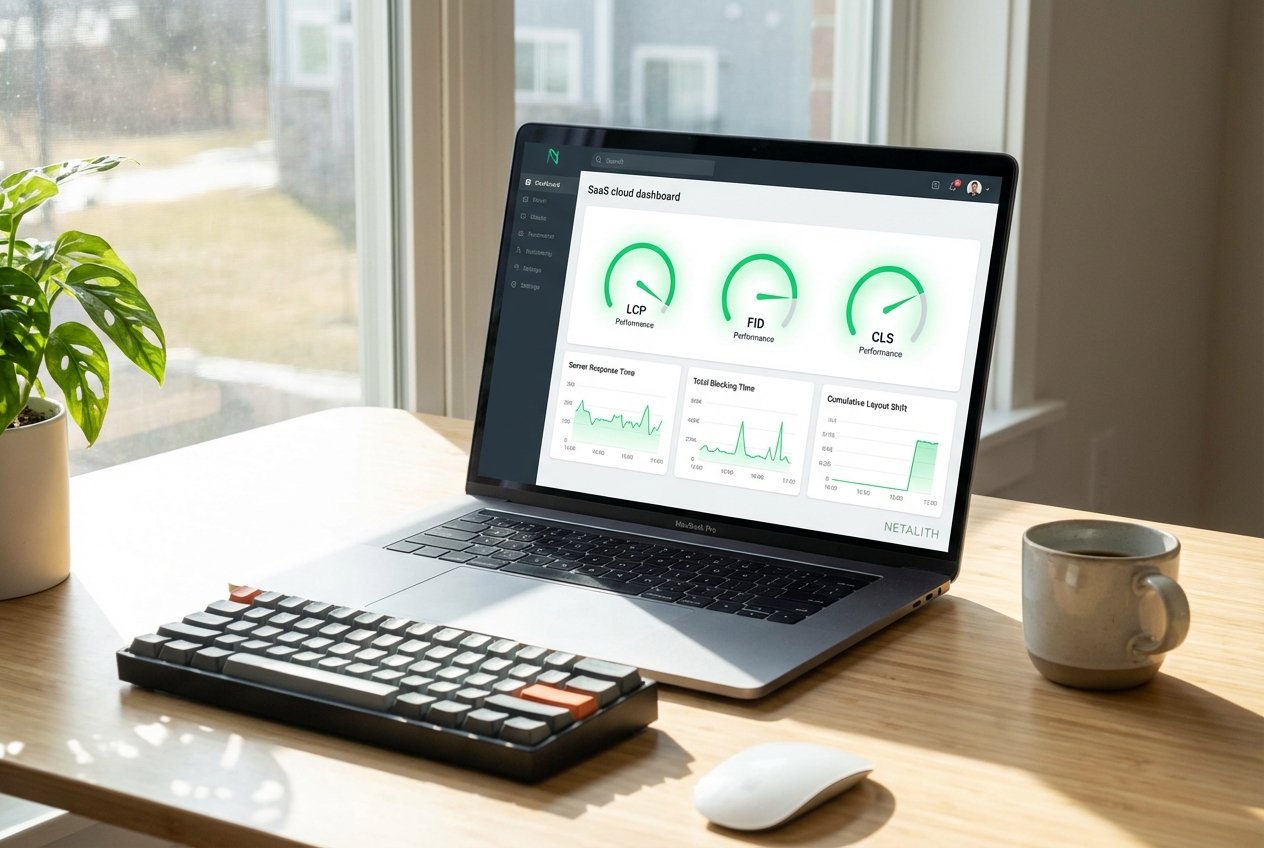
In the highly competitive and resource-intensive world of enterprise software, Core Web Vitals for Cloud SaaS have transitioned from basic performance guidelines into rigorous search and user retention standards. Unlike static content sites, modern web applications rely heavily on client-side rendering, massive API payloads, and dense visual reporting. This complexity makes mastering technical SEO for cloud sites an ongoing challenge for engineering teams tasked with maintaining a competitive edge.
In this comprehensive tech web vitals tutorial, we explore the nuances of auditing and optimizing specialized interfaces. Evaluating site performance metrics 2026 SEO requires a nuanced approach because traditional diagnostics often misinterpret dynamic application behavior. By examining essential site performance metrics SEO demands and tracking targeted user experience metrics, product teams can establish a technical baseline that satisfies both organic search algorithms and high-value enterprise users.
Why Web Vitals Matter for Modern Cloud Architectures
Optimizing web vitals for modern cloud architectures is vital because these platforms handle vast, dynamic datasets that standard static sites do not. Milliseconds of delay in interaction or visual loading lead directly to user frustration and increased churn rates. Achieving top-tier tech site speed is no longer just a matter of fast backend servers; it focuses heavily on perceived frontend performance inside the browser. As a UX search signals cloud guide, we prioritize the psychological impact of loading states on professional users.
To accurately gauge this, employing real user monitoring tech sites allows developers to collect granular field data rather than relying exclusively on sterile lab tests. Coupling these advanced performance monitoring strategies with a robust semantic search strategy ensures that your platform ranks well while delivering an exceptional, responsive user experience. Fundamentally, mastering site performance metrics 2026 SEO bridges the gap between discoverability and long-term usability.
Improving LCP for Complex Cloud Dashboards
Largest Contentful Paint (LCP) measures perceived loading speed, typically identifying when the main content of a page has rendered. When improving LCP for complex cloud dashboards, developers face a unique hurdle: the largest element is frequently a massive data grid, a multi-layered chart, or a dynamic reporting widget. To achieve optimal LCP cloud performance, engineering teams must rethink how initial application payloads are delivered.
One primary strategy is implementing strict web performance budgets cloud portals must adhere to before any code is merged into production. According to a technical on-page SEO guide, strategies like Server-Side Rendering (SSR) for the initial application shell and preloading critical API data alongside the HTML document are essential. By deferring heavy JavaScript execution until after the core visualization has painted, you dramatically enhance site performance metrics 2026 SEO environments, ensuring users aren't left staring at a spinning loader.
Interaction to Next Paint (INP) Optimization Tutorial for Tech Sites
Interaction to Next Paint (INP) has established itself as the dominant responsiveness metric for modern applications. This INP optimization tutorial tech teams can utilize focuses sharply on reducing main thread blocking time. When executing interaction to next paint optimization tech sites, the central goal is breaking up long, synchronous JavaScript tasks. Poor INP for cloud architectures frequently occurs when enormous JSON payloads are parsed and rendered simultaneously on the client side, causing the UI to freeze during user interactions.
By employing Web Workers for background data processing and deliberately yielding to the main thread using modern APIs, developers prevent input latency. Proper frontend optimization for tech seo ensures that even under heavy computational load—such as executing complex queries driven by AI search optimization—the interface remains snappy. Optimizing INP within your site performance metrics 2026 SEO strategy guarantees that multi-step configurations and data filtering feel instantaneous.
Solving CLS Issues in Tech Dashboards
Cumulative Layout Shift (CLS) evaluates the visual stability of a page. Addressing CLS issues in tech dashboards is notoriously difficult because these interfaces dynamically inject varying sizes of data widgets and notifications. In the realm of Web Vitals tech SEO, unexpected layout shifts are penalized heavily by search engines and despised by users who might accidentally click the wrong administrative control during a shift.
To resolve these shifts, developers must reserve structural space for asynchronous content using CSS aspect-ratio properties or predefined minimum heights. Avoid dynamically inserting banners above existing content without user interaction. Enhancing page speed cloud applications seo goes hand-in-hand with CLS prevention—if data arrives late and pushes actionable content down, the site performance metrics 2026 SEO score plummets alongside user trust.
Monitoring and Maintaining Page Speed for Cloud Applications
Performance optimization is not a one-time deployment; it is a continuous CI/CD cycle. Continuous tracking of page speed cloud applications seo is paramount to preventing regression. You cannot manage what you do not accurately measure, making the establishment of strict baselines for site performance metrics a fundamental workflow step.
By integrating real user monitoring tech sites can capture live field data, revealing how disparate devices and varying network conditions impact the real-world usage of your SaaS product. As detailed in any forward-looking SEO tutorial, combining lab data with field data from the Chrome UX Report (CrUX) creates a holistic view of technical health. This continuous surveillance ensures that your site performance metrics 2026 SEO remain in the "good" threshold through every update.
Conclusion: Mastering Core Web Vitals for Cloud SaaS with Netalith
In the evolving landscape of search and user experience, technical excellence is the foundation of growth. Mastering Core Web Vitals for Cloud SaaS is no longer optional for software companies looking to dominate their niche. By prioritizing LCP stability, INP responsiveness, and CLS predictability, you create a platform that users love and search engines reward. At Netalith, we believe that backlink building for tech blogs and content strategy must be supported by a high-performance infrastructure. As you implement this tech web vitals tutorial, remember that the goal is a seamless journey from the search results page to the final user conversion. Future-proofing your Core Web Vitals for Cloud SaaS ensures that your platform remains resilient, visible, and highly performant in an increasingly demanding digital economy.