Medallion Architecture Tutorial: A Step-by-Step Implementation Guide
A comprehensive medallion architecture tutorial covering the implementation of bronze, silver, and gold layers for modern cloud data engineering.

Long Nguyen
Fullstack Developer · AI Engineer · Researcher
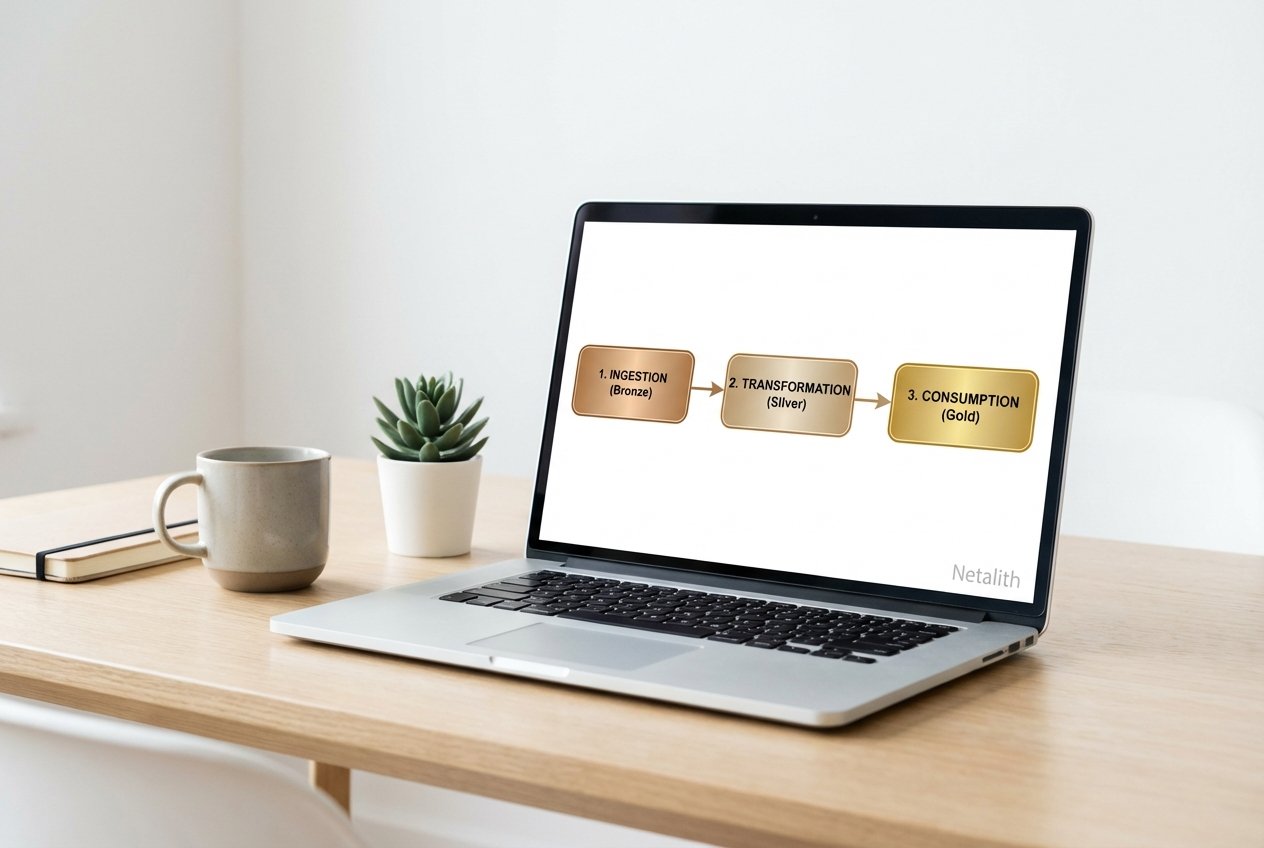
In the rapidly evolving landscape of data engineering, structuring robust, scalable, and resilient data pipelines is paramount. Whether you are migrating legacy systems or building modern infrastructure from scratch, adopting a multi-hop pipeline methodology ensures that data is systematically validated, transformed, and optimized for downstream consumption. In this comprehensive medallion architecture tutorial, we will explore the foundational principles, technical implementation, and governance frameworks required to master the bronze, silver, and gold layered model. By following this medallion architecture tutorial, data engineers, cloud architects, and IT professionals will gain actionable insights into designing enterprise-grade data platforms engineered for scale.
Introduction to the Medallion Architecture
At its core, the medallion architecture is a data design pattern used to logically organize data in a lakehouse or data warehouse. Before diving into the technical mechanics, it is critical to grasp standard data warehousing basics. Traditionally, pipelines operated in silos with rigid schemas. Modern architectures, however, rely on a flexible, tiered approach. A proper medallion architecture guide emphasizes moving data through multiple validation stages, incrementally improving data structure and quality.
For organizations navigating complex infrastructure choices, understanding the nuances of cloud data warehouse architecture is essential. This logical framework guarantees that raw data is never lost, processing errors are recoverable, and analytical queries run efficiently. By referencing a complete layered data architecture guide, data teams can future-proof their pipelines, ensuring strict adherence to ACID compliance and idempotent transformations.
Medallion Architecture Tutorial: Core Layers Explained
As the focal point of this medallion architecture tutorial, we must dissect the functional responsibilities of each tier within the bronze silver gold DWH paradigm. This tiered data refinement strategy provides a structured journey from raw ingestion to business-ready reporting. By utilizing a multi-hop architecture tutorial guide, engineers can effectively partition compute operations, isolating raw ingestion from complex joins and aggregations.
This approach significantly improves debugging and pipeline resilience. Every stage in a multi-hop data architecture tutorial operates as a distinct checkpoint, allowing data teams to restart failed tasks without reprocessing the entire pipeline. This modularity is a key reason why the medallion architecture has become the industry standard for modern data stacks.
Bronze Layer: Raw Data Ingestion
The Bronze layer represents the starting point of the pipeline. In any comprehensive ETL process guide, the ingestion phase prioritizes speed and fidelity over structure. Data is ingested from external source systems—such as RDBMS, APIs, or event streams—and saved in its original format (e.g., JSON, Parquet, or CSV) with appended metadata like load timestamps and source identifiers.
When executing a raw data processing into silver tables tutorial guide, the cardinal rule is to avoid modifying the raw payload. The Bronze layer serves as an immutable historical archive. This aligns perfectly with the principles of the modern data stack, where compute is decoupled from storage, allowing raw data lakes to scale infinitely without bottlenecking downstream processing.
Silver Layer: Filtering, Cleaning, and Augmenting
Moving from Bronze to Silver involves standardizing the dataset. Following the data quality stages in medallion architecture tutorial guide, the Silver layer focuses on deduplication, type casting, schema enforcement, and data validation. Unlike raw ingestion, Silver tables utilize advanced data modeling techniques to provide an enterprise-wide "single source of truth."
To master data refined layer strategies, engineers must build resilient pipelines that do not duplicate data upon failure. This requires the implementation of an idempotent data refinement tutorial guide framework, ensuring that rerunning a pipeline yields the exact same output. Below is an example of an idempotent UPSERT (Merge) operation often used in Silver layer processing:
-- Idempotent UPSERT to the Silver Table
MERGE INTO silver_customers AS target
USING raw_bronze_customers AS source
ON target.customer_id = source.customer_id
WHEN MATCHED AND source.updated_at > target.updated_at THEN
  UPDATE SET *
WHEN NOT MATCHED THEN
  INSERT *;
Gold Layer: Business-Level Aggregations
The Gold layer is designed for business-facing consumption. According to any curated data layer implementation tutorial guide, this tier contains highly refined, aggregated data tailored for specific BI dashboards, reporting tools, and ML models. Here, the focus shifts entirely to query performance and business logic.
The distinction between the Silver and Gold layers is fundamentally tied to the concepts of OLAP vs OLTP. While Silver maintains normalized, atomic records, Gold tables often adopt denormalized structures. Implementing a standard star schema tutorial approach—using Fact and Dimension tables—ensures that end-users experience minimal latency when querying complex business metrics.
How to Implement Medallion Architecture in Data Warehouses
Understanding how to implement medallion architecture in data warehouses involves translating logical layers into physical infrastructure. Whether you use Snowflake, BigQuery, or Amazon Redshift, the principles remain consistent. You isolate the layers using separate schemas, databases, or compute warehouses to manage access control and workload interference.
For teams seeking a detailed bronze silver gold data pipeline tutorial guide, the physical implementation typically involves scheduled DAGs (Directed Acyclic Graphs) using orchestration tools like Apache Airflow or dbt (data build tool). It is also highly beneficial to reference a databricks medallion architecture vs data warehouse tutorial guide. While Databricks natively champions the lakehouse paradigm using Delta Lake, traditional data warehouses handle the multi-hop approach using staging tables, materialized views, and stored procedures.
Benefits of Medallion Architecture in Cloud Warehouses
The shift toward this tiered model is driven by concrete technical advantages. If you consult a benefits of medallion architecture in cloud warehouses guide, several key outcomes emerge:
- Logical Decoupling: Isolating raw ingestion (Bronze) from complex business logic (Gold) prevents pipeline bottlenecks.
- Simplified Auditing: The Bronze layer retains raw historical data, enabling easy auditing and compliance checks.
- Cost Optimization: Leveraging an optimized multi-hop data architecture tutorial allows engineers to selectively run massive computations only when necessary.
- Reusability: Silver tables act as foundational assets that multiple Gold aggregations can query, eliminating duplicate processing.
Through careful medallion architecture design for data engineers tutorial planning, organizations significantly lower their technical debt and improve cross-functional data collaboration.
Best Practices for Data Quality and Governance
Establishing robust data governance within medallion layers guide is essential for maintaining trust in your data. Governance should not be an afterthought; it must be integrated into the data quality stages in medallion architecture tutorial guide. This includes implementing data lineage, monitoring for schema drift, and enforcing access controls at each layer.
Furthermore, utilizing an idempotent data refinement tutorial guide approach ensures that your governance records remain consistent even during retries. By automating these checks within your CI/CD pipelines, you ensure that only high-quality data reaches the Gold layer.
Conclusion
As stressed throughout this medallion architecture tutorial, the transition from raw data to actionable insights requires a disciplined, layered approach. By implementing the bronze, silver, and gold stages, data teams can create a resilient layered data architecture guide for their organization. Mastering these refinement stages allows for better scalability, easier debugging, and superior data governance. Whether you are using a lakehouse or a traditional warehouse, the principles found in this medallion architecture guide will provide the foundation for a modern, high-performance data platform.