Nmap vs. Masscan vs. RustScan: Comparing the Best Network Scanners
A comprehensive SEO-optimized guide comparing Nmap, Masscan, and RustScan. Learn the pros and cons of stateful vs. stateless scanning for modern cybersecurity.

Long Nguyen
Fullstack Developer · AI Engineer · Researcher
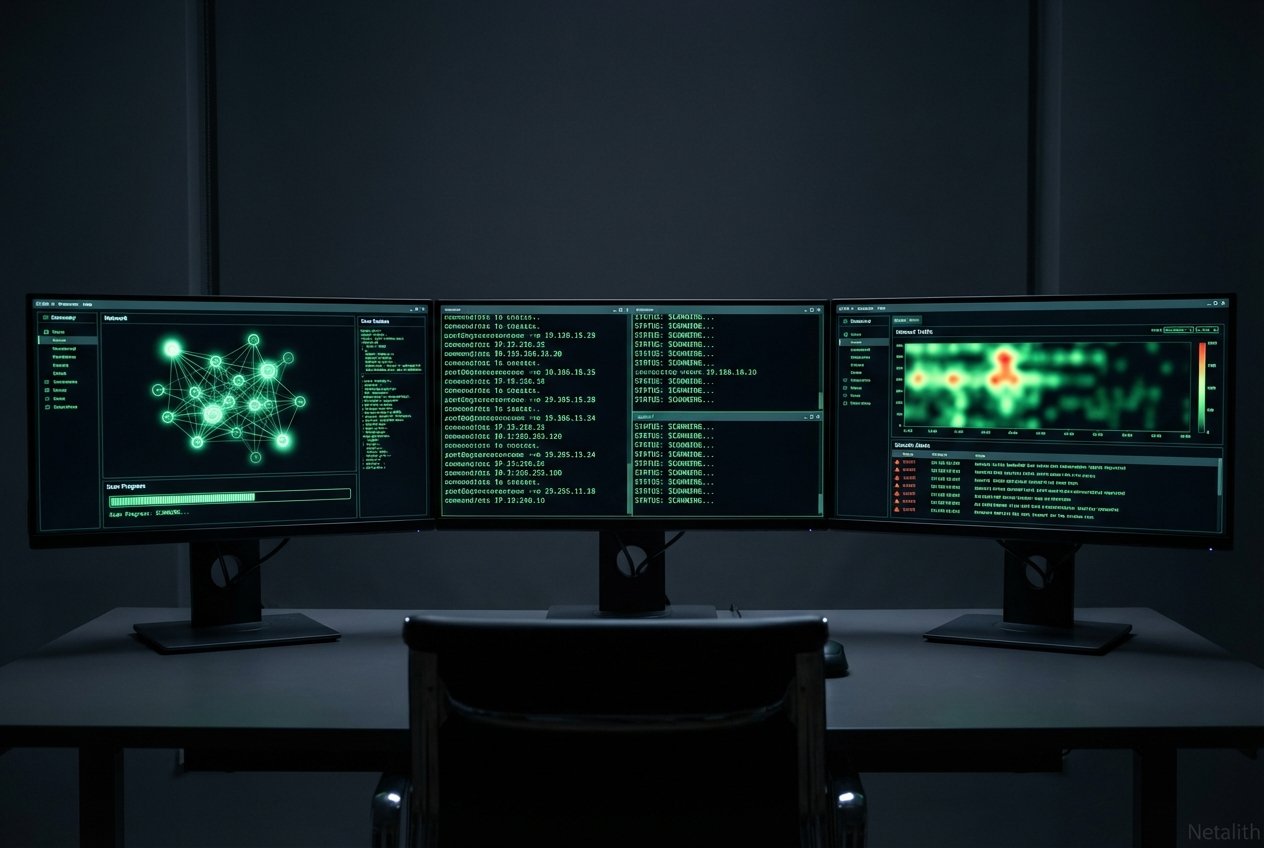
Evolution of Modern Network Scanners
In the rapidly evolving landscape of cybersecurity, selecting the right reconnaissance tools is critical for protecting infrastructure. For years, security professionals have debated nmap vs masscan when building their security pipelines. As enterprise environments expand into massive cloud architectures, the landscape of modern network scanners requires tools that can balance both blazing speed and deep analytical precision.
Reconnaissance is the foundational step in any penetration test or security audit. A well-rounded arsenal of open source security tools must encompass both speed and reliability. Whether you are mapping a localized corporate network or an expansive global infrastructure, modern security auditing tools offer diverse approaches to port scanning. In this guide, we will analyze the ongoing network scanner comparison debate, introduce RustScan as a powerful hybrid alternative, and help you determine which tool belongs in your current cybersecurity toolkit.
Nmap: The Industry Standard for Accuracy
When security teams evaluate tools, a common question arises: is nmap still the best network scanner in 2025? The answer is overwhelmingly yes, provided your primary requirement is depth and reliability. Originally released over two decades ago, Nmap (Network Mapper) remains the gold standard for comprehensive network discovery and vulnerability auditing.
Nmap operates primarily through stateful inspection. By tracking the state of network connections and ensuring fully established TCP handshakes, Nmap guarantees the highest scan accuracy levels possible. It mitigates the risk of dropped packets, false positives, and missed open ports that frequently plague purely asynchronous scanning tools.
Beyond simple port discovery, Nmap excels due to the nmap scripts (NSE). The Nmap Scripting Engine allows cybersecurity professionals to write and execute scripts to automate a wide variety of networking features, from advanced version detection to complex vulnerability identification.
Common Nmap Command Examples
# Comprehensive scan with OS detection, versioning, and default scripts
nmap -A -T4 192.168.1.0/24

# Quick scan of top 100 ports
nmap -F 10.0.0.1
Masscan: The Fastest Port Scanner for Large Subnets
When the scope involves massive IP ranges, Nmap's thoroughness becomes a bottleneck. This is where Masscan enters the picture. Widely recognized as the fastest port scanner available, Masscan was famously engineered to scan the entire IPv4 Internet in under six minutes, provided you have the requisite bandwidth.
Masscan achieves this remarkable feat through stateless scanning. Unlike Nmap, which waits for connection states to resolve, Masscan uses a custom TCP/IP stack to transmit SYN packets and listen for SYN-ACK responses asynchronously. This methodology completely removes OS-level connection overhead, making it the premier choice for scanning large subnets.
If you are tasked with auditing an entire /8 or /16 enterprise cloud environment, Masscan is unparalleled. However, this speed comes at the cost of deep fingerprinting. Masscan identifies open ports effectively, but it relies on security tool alternatives to provide context on what services are actually running.
RustScan: Bridging Speed and Nmap's Capabilities
As network perimeters expanded, security engineers sought a middle ground. Looking at nmap compared to modern async port scanners, the gap between raw speed and deep reconnaissance was obvious. RustScan, a modern scanner written in Rust, aims to offer the best of both worlds.
RustScan speed is derived from its own implementation of asynchronous scanning. It rapidly iterates through all 65,535 ports on a target machine, often finishing in seconds. However, instead of stopping at discovery, RustScan automatically pipes identified open ports into Nmap for targeted, deep analysis.
RustScan operates on a simple philosophy: "Find ports fast, then let Nmap do the heavy lifting."
This hybrid methodology drastically reduces the time Nmap spends probing closed ports, streamlining your workflow while maintaining access to advanced features like NSE scripts and OS fingerprinting.
Nmap vs Masscan: Key Differences and Performance Comparison
To truly understand the network scanner comparison debate, we must look at a direct tool comparison. Choosing between them dictates your entire reconnaissance strategy.
- Architecture: Nmap relies on the operating system's network stack (stateful), ensuring high reliability. Masscan uses a custom network stack (stateless), enabling unprecedented packet injection rates.
- Primary Use Case: In the nmap vs masscan breakdown, Nmap is for deep, targeted auditing of specific hosts. Masscan is for wide, shallow discovery across vast IP ranges.
- Feature Set: Nmap provides service versioning, OS fingerprinting, and script execution. Masscan focuses on raw port status.
In a standard performance comparison, Masscan can process millions of packets per second, while Nmap typically tops out at a few thousand. When reviewing port scanner benchmarks, professionals consistently find that using masscan for initial discovery, followed by targeted nmap scans, is the most efficient method for large scale scanning.
Benchmarks: Best Network Scanner for Speed vs Accuracy
Evaluating the best network scanner for speed vs accuracy requires observing how these tools perform under modern infrastructure conditions. The nmap vs masscan vs rustscan comparison highlights different strengths depending on the scope.
Scanning a /16 Subnet (65,536 IPs, Single Port)
- Masscan: Completes in seconds. Lowest system overhead, but lowest contextual scan accuracy levels (no banner grabbing by default).
- RustScan: Not optimized for broad subnet sweeping; better for deep scanning of single IPs or small clusters.
- Nmap: Takes several minutes to hours depending on timing templates. Highest accuracy but highest time cost.
Scanning a Single Host (All 65,535 Ports)
- RustScan: Discovers all open ports in ~3 seconds, then triggers Nmap for deep scanning (total time: ~15-45 seconds).
- Nmap: Takes several minutes to accurately probe all ports and return banner/version data.
- Masscan: Discovers open ports in less than a second, but requires manual follow-up for vulnerability data.
Final Thoughts on Nmap vs Masscan
Your choice in the nmap vs masscan paradigm heavily depends on your specific security goals. If you are conducting a targeted penetration test against critical servers, Nmap remains unchallenged. If you are an enterprise security administrator hunting for rogue assets across a global WAN, Masscan is your starting point. For bug bounty hunters and daily vulnerability assessments, RustScan perfectly bridges the gap. A modern network scanner comparison shows that the best strategy often involves using these tools in tandem to achieve both speed and precision.
Frequently Asked Questions (FAQ)
Is Masscan more accurate than Nmap?
No, Nmap is generally more accurate because it uses a stateful TCP stack. Masscan is designed for speed and may miss ports if the network is congested or if packets are dropped during stateless transmission.
Can RustScan replace Nmap?
RustScan is not a replacement but an accelerator. It finds ports quickly and then uses Nmap to perform the actual service and version detection. In summary, a strong nmap vs masscan strategy should stay useful long after publication.