AI-Driven Zero Trust: Automating Security Policies for the Modern Threat Landscape
Explore how AI-driven Zero Trust is revolutionizing security through automated policy generation, real-time threat detection, and AIOps for the modern threat landscape.

Long Nguyen
Fullstack Developer · AI Engineer · Researcher
Introduction to AI-Driven Zero Trust
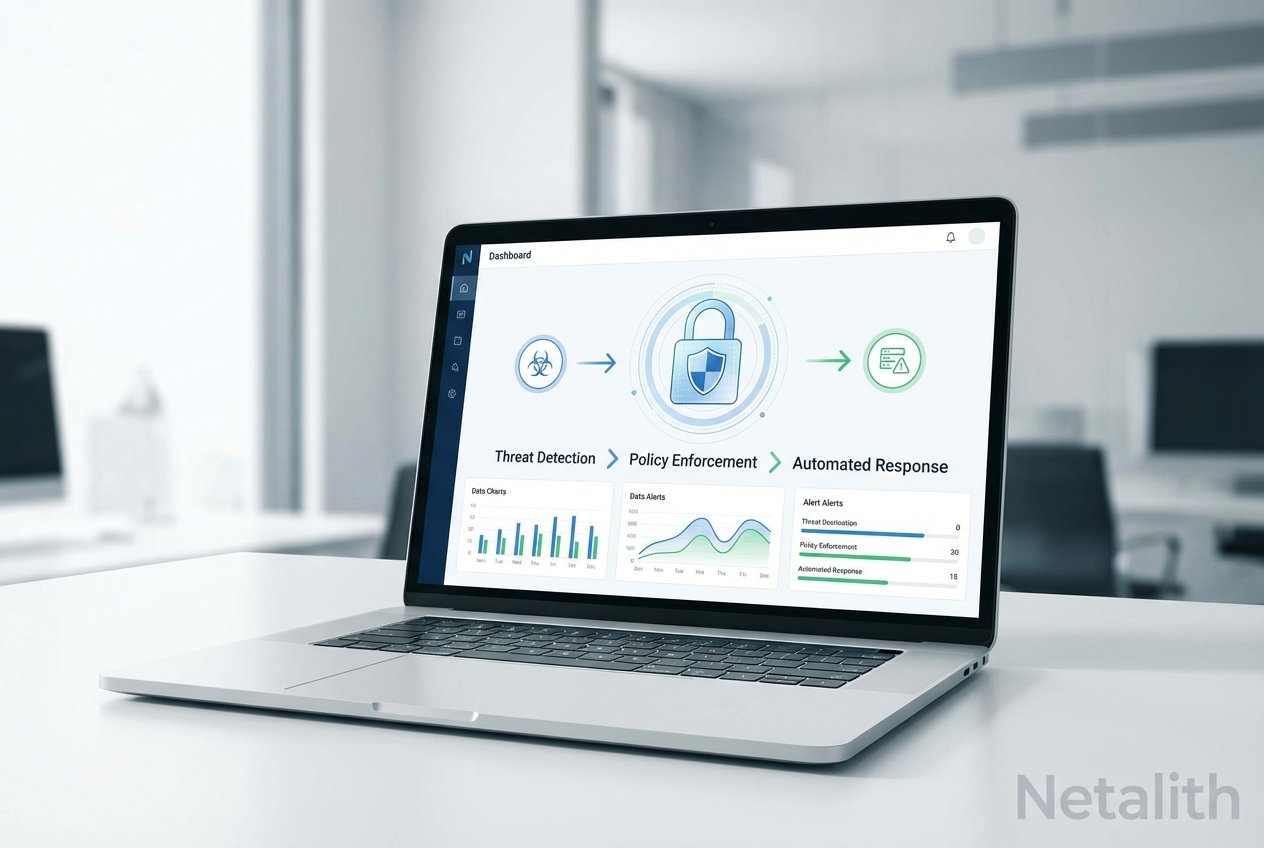
As organizations transition fully into decentralized, perimeter-less operations, legacy cybersecurity paradigms have proven inherently inadequate. In the highly sophisticated threat landscape of 2026, relying on static rulesets and manual interventions exposes enterprises to unacceptable risks. Enter AI-driven Zero Trust, a paradigm shift that integrates artificial intelligence deeply into security frameworks to ensure adaptive, real-time protection. By fusing artificial intelligence with strict access controls, modern enterprises are deploying automated Zero Trust security protocols that leave no room for lateral movement or undetected breaches.
The foundation of this evolution rests on Zero Trust Architecture (ZTA), which operates on the core mantra: "never trust, always verify." However, human-managed ZTA struggles with the sheer volume and velocity of modern cloud environments. By implementing robust AI security mechanisms, organizations can seamlessly analyze billions of telemetry points simultaneously. As we navigate the complex requirements of cloud security, automated Zero Trust security has transitioned from a theoretical luxury to an operational necessity, dynamically evaluating trust based on behavioral analytics and contextual awareness rather than mere credentials.
The Evolution of AI-Driven Zero Trust Architecture
The role of AI and automation in zero trust 2026 cannot be overstated. Earlier iterations of Zero Trust required security engineers to manually write, update, and deploy thousands of access rules. This static approach often led to policy decay, where outdated rules either blocked legitimate business operations or inadvertently created security loopholes. Today, intelligent Zero Trust systems have completely revolutionized this operational model, allowing for a more fluid and resilient defense posture.
From Static Rules to Dynamic Access Policy Adaptation
Modern automated Zero Trust security deployments are characterized by continuous verification. Instead of evaluating user trust at the initial point of authentication and granting persistent access, the system constantly monitors the user’s session. Through dynamic access policy adaptation, trust scores fluctuate in real-time based on location changes, device health, and interaction patterns. If an authenticated user suddenly attempts to download unusual volumes of sensitive data, the intelligent system instantaneously revokes access, completely bypassing the need for manual administrative intervention.
Core Components of AI-Enabled Cybersecurity Architecture
Transitioning to an AI-enabled cybersecurity architecture requires a fundamental restructuring of how telemetry, identity, and network segments communicate. The modern model relies on interconnected neural networks and intelligent data lakes to form a cohesive defense fabric.
AI-Driven Identity Analytics and UEBA Systems
At the heart of an automated Zero Trust security deployment lies identity-centric security. Establishing who or what is requesting access is no longer just about passwords and multi-factor authentication. By leveraging AI-driven identity analytics for zero trust models 2026, organizations can construct deeply nuanced digital identities for every user, device, and API within their ecosystem.
This is heavily augmented by AI-enhanced UEBA (User and Entity Behavior Analytics) systems. These systems learn the baseline operational behavior of every entity on the network. When an entity deviates from its historical norm—even if the cryptographic credentials are perfectly valid—the architecture instantly flags the anomaly and enforces immediate step-up authentication or quarantine procedures.
Machine Learning for Real-Time Threat Detection in ZTA
Advanced machine learning for real-time threat detection in ZTA is the engine that processes these massive behavioral datasets. Unlike legacy signature-based software, security ML relies on predictive threat modeling to anticipate attack vectors before they are executed. By analyzing subtle patterns across hybrid cloud environments, these models identify zero-day exploits and sophisticated ransomware campaigns.
Furthermore, enterprises are increasingly adopting anonymity-preserving AI security. This allows machine learning models to analyze encrypted traffic and behavioral patterns without exposing sensitive Personally Identifiable Information (PII) to the analytics engine, ensuring strict compliance with global data privacy regulations.
Automating Security Policies with AI
One of the most resource-intensive challenges for cloud architects and cybersecurity analysts has historically been policy lifecycle management. automated Zero Trust security solves this by taking the human element out of routine rule creation.
Using AI for Automated Policy Generation in Zero Trust
Using AI for automated policy generation in zero trust drastically reduces the attack surface while eliminating administrative bottlenecks. By observing legitimate application traffic and user interactions, the system mathematically deduces the exact permissions required for business continuity. It then automatically writes and deploys these rules.
This automated ZT approach ensures strict adherence to the least privilege access principle. Because the AI understands precisely what access is necessary, it restricts all other pathways through dynamic micro-segmentation. If an application updates and requires new communication channels, the system instantly calculates the risk, updates the micro-segmentation boundaries, and issues the new policy without requiring a support ticket or manual review.
The Role of AIOps and SOAR in Modern Security
To fully realize the potential of automated Zero Trust security, organizations are converging their operations and security teams through advanced tooling. AIOps for cybersecurity introduces artificial intelligence into IT operations, correlating security alerts with network performance data to eliminate false positives and alert fatigue.
When combined with next-generation security orchestration, automation, and response (SOAR) platforms, the result is a highly responsive defense mechanism. In the event of a verified threat, the integration of SOAR and AIOps facilitates automated incident response 2026. This means the ecosystem can autonomously isolate infected endpoints, terminate malicious processes, and roll back compromised configurations in milliseconds, effectively neutralizing threats at machine speed.
Future Outlook: Autonomous Security Agents
As we look deeper into the evolution of the landscape, the introduction of autonomous security agents 2026 is setting a new standard for cyber resilience. These intelligent software agents are deployed directly across network edges, endpoints, and cloud workloads. Rather than relying entirely on a centralized analytics engine, autonomous agents make instantaneous, localized decisions regarding Zero Trust Network Access (ZTNA).
If a regional network segment loses connectivity to the central command due to an attack or outage, these autonomous agents can maintain strict enforcement locally. They continuously share threat intelligence with one another in a decentralized swarm, ensuring that an attack on one node immediately inoculates the entire global enterprise.
Conclusion: Embracing AI-Driven Zero Trust
The transition toward AI-driven Zero Trust is no longer a choice but a prerequisite for survival in a world of automated threats. By moving beyond static defenses and embracing an AI-enabled cybersecurity architecture, businesses can finally achieve the agility and security required for the modern era. Implementing automated ZT policies and security ML ensures that your organization remains one step ahead of adversaries, protecting sensitive data through continuous, intelligent verification. As we move forward, AI-driven Zero Trust will remain the cornerstone of a resilient, self-healing digital infrastructure.
Frequently Asked Questions (FAQ
- What is automated Zero Trust security?
It is a cybersecurity framework that uses artificial intelligence to continuously evaluate and enforce access policies based on real-time behavioral data, ensuring no user or device is trusted implicitly. - How does machine learning improve Zero Trust Architecture?
Machine learning enables real-time threat detection and predictive modeling, allowing the system to identify anomalies and respond to threats faster than manual intervention allows. - What is the benefit of automated policy generation?
Automating policies ensures that the principle of least privilege is always applied, reducing the attack surface without slowing down business operations or requiring manual rule updates.