Claude vs ChatGPT 2026: The Definitive Comparison of AI Powerhouses
A comprehensive SEO-optimized comparison between Claude and ChatGPT in 2026, covering benchmarks, creative writing, complex reasoning, and safety features.

Long Nguyen
Fullstack Developer · AI Engineer · Researcher
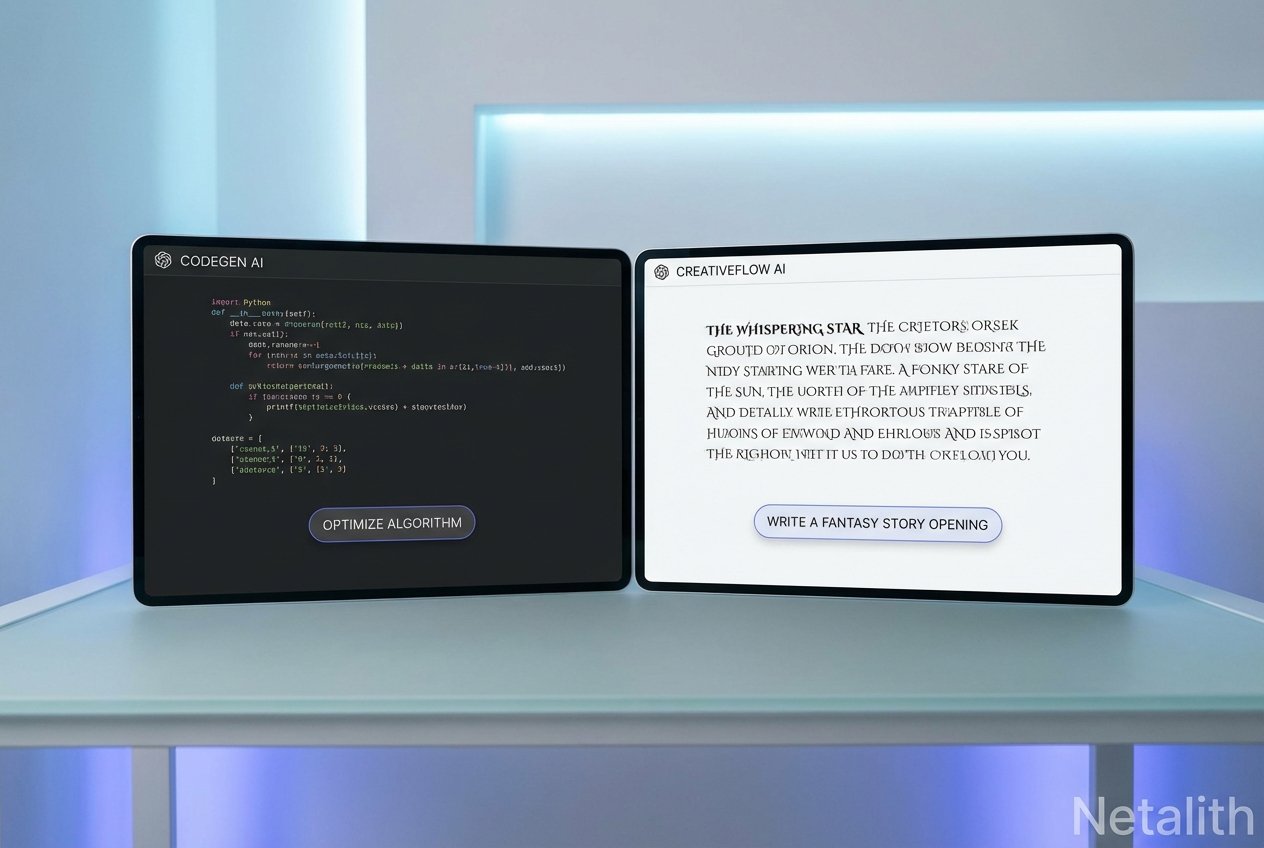
The State of AI Rivalry: Claude vs ChatGPT 2026
The landscape of generative AI tools has undergone a seismic shift, bringing us to the most anticipated ai comparison of the year: Claude vs ChatGPT 2026. As businesses, content creators, and developers search for the ultimate AI assistants for productivity, the competition between these two technological giants has reached unprecedented heights. In this comprehensive guide, we will break down the strengths, weaknesses, and core differences of both platforms to help you decide which assistant truly reigns supreme.
Choosing the right tool is no longer just about basic text generation. When evaluating claude vs gpt comparison, professionals must consider advanced logical reasoning, expansive context retention, and strict safety guardrails. Let's dive deep into the definitive claude vs chatgpt showdown to see how they stack up in everyday workflows.
Claude 4 vs GPT-5 Benchmark Comparison
The transition into the current generation of large language models has intensified the anthropic vs openai debate. When analyzing the claude 4 vs gpt-5 benchmark comparison, the metrics reveal fascinating insights into how both models have optimized their architecture. OpenAI has focused heavily on broad, versatile adaptability, while Anthropic has doubled down on analytical precision.
In standard industry evaluations encompassing zero-shot logic, mathematical problem-solving, and nuanced language comprehension, both models achieve near-human parity. However, the multi-modal capabilities comparison highlights distinct differences. GPT-5 excels in seamless voice, video, and visual integration, creating a highly interactive ecosystem. Conversely, Claude 4 proves exceptionally adept at processing massive document troves with unparalleled exact-text recall. This openai vs anthropic 2026 rivalry forces users to choose between an all-in-one multi-modal ecosystem and specialized analytical depth, pushing the boundaries of machine reasoning capabilities.
Best AI for Creative Writing: Claude or ChatGPT?
Content creators frequently ask: what is the best ai for creative writing claude or chatgpt? The answer largely depends on your workflow, narrative style, and the scale of your creative projects. Claude remains a massive favorite among long-form authors due to its incredibly expansive context window size. In 2026, Claude effortlessly retains hundreds of thousands of tokens without losing the narrative thread, making it highly reliable for drafting entire books, continuity-heavy screenplays, or comprehensive business reports.
On the other hand, the latest openai feature set introduces highly dynamic conversational tones and rapid stylistic adaptations. While ChatGPT is brilliant for brainstorming sessions, snappy marketing copy, and punchy short-form content, Claude tends to offer a more natural, less repetitive prose out of the box. Ultimately, any claude vs gpt comparison creative evaluation comes down to whether you prioritize massive contextual memory or versatile, snappy ideation.
Claude vs ChatGPT 2026: Complex Reasoning and Logic
When tasks move beyond standard text generation into intricate logic puzzles, multi-step legal analysis, or strategic financial planning, the battle of claude vs chatgpt for complex reasoning 2026 takes center stage. Claude's architecture is explicitly designed to parse convoluted instructions and apply step-by-step logical deductions. It actively avoids jumping to conclusions, a foundational trait that enhances its reasoning capabilities when handling multi-layered, ambiguous queries.
ChatGPT is no slouch in this department, leveraging dynamic internal chain-of-thought processes to break down queries autonomously. Yet, in rigorous professional environments—such as academic research or enterprise logistics—many users report that Claude provides more transparent, auditable reasoning paths. This makes assessing the claude vs gpt comparison performance critical for enterprise and institutional deployment.
Coding Performance Benchmarks
Software developers rely heavily on AI to accelerate application creation, making coding performance benchmarks a vital metric for adoption. Both models understand dozens of programming languages, but their outputs differ significantly in structure, security, and optimization.
// Claude 4 focuses on secure, explicitly typed functions
function calculateMetrics(data: DataSet): SecureResult {
    if (!data.isValid) throw new Error("Invalid data state");
    // Strict validation logic
}

// GPT-5 leans toward concise prototyping
const getMetrics = (data) => data.map(processItem).filter(Boolean);
GPT-5 generally writes faster, more concise scripts ideal for rapid prototyping and agile deployment. In contrast, Claude frequently excels in debugging massive legacy codebases. This is largely thanks to its superior context retention, allowing developers to scan entire code repositories and identify obscure security flaws without the AI losing track of the architecture.
AI Safety Features and Hallucination Rates 2026
As enterprise adoption scales globally, mitigating operational risk is paramount. Consequently, the emphasis on robust ai safety features has never been higher. Anthropic's commitment to safety is highly evident through their rigorous anthropic safety protocols, notably Constitutional AI. This framework drastically reduces biased, harmful, or legally risky outputs, guaranteeing a stable tool for corporate environments.
A crucial factor for business owners is examining the hallucination rates 2026. Thanks to improved algorithmic grounding techniques and real-time fact-checking mechanisms, both models have significantly reduced data fabrications. However, independent benchmarks confirm that Claude consistently edges out the competition with a demonstrably lower hallucination rate in highly technical, medical, and legal domains. In the ongoing Claude vs ChatGPT 2026 evaluation, this reliability often justifies choosing Anthropic for mission-critical sectors.
Final Verdict: Is Anthropic Claude Better Than OpenAI ChatGPT?
To answer the industry's burning question—is anthropic claude better than openai chatgpt 2026?—one must carefully look at the specific use case and daily workflow requirements. If you require an expansive ecosystem with unparalleled multimodal integration, voice features, and rapid ideation, ChatGPT remains the undisputed king. It continues to set the gold standard for versatility among the best AI chatbots.
Conversely, if your work demands parsing massive documents, stringent safety guardrails, and deep analytical logic, Claude emerges as the decidedly superior choice. This rigorous claude vs gpt comparison proves that while both are exceptional ChatGPT alternatives 2026, they serve slightly different professional masters. Ultimately, your choice in the definitive Claude vs ChatGPT 2026 debate will dictate the future efficiency and security of your tech stack.
Frequently Asked Questions (FAQs)
- Which AI is better for long-form writing in 2026? Claude is generally preferred for long-form writing due to its superior context window size and natural prose.
- Is ChatGPT better for coding? ChatGPT is often faster for prototyping, while Claude excels at debugging large, complex repositories.
- Who has better safety features? Anthropic's Claude is widely recognized for its robust safety protocols and lower hallucination rates in technical fields.