Network Security Basics: Essential Networking for Ethical Hackers
A comprehensive guide to network security basics for ethical hackers, covering the OSI model, TCP/IP, subnetting, and packet analysis.

Long Nguyen
Fullstack Developer · AI Engineer · Researcher
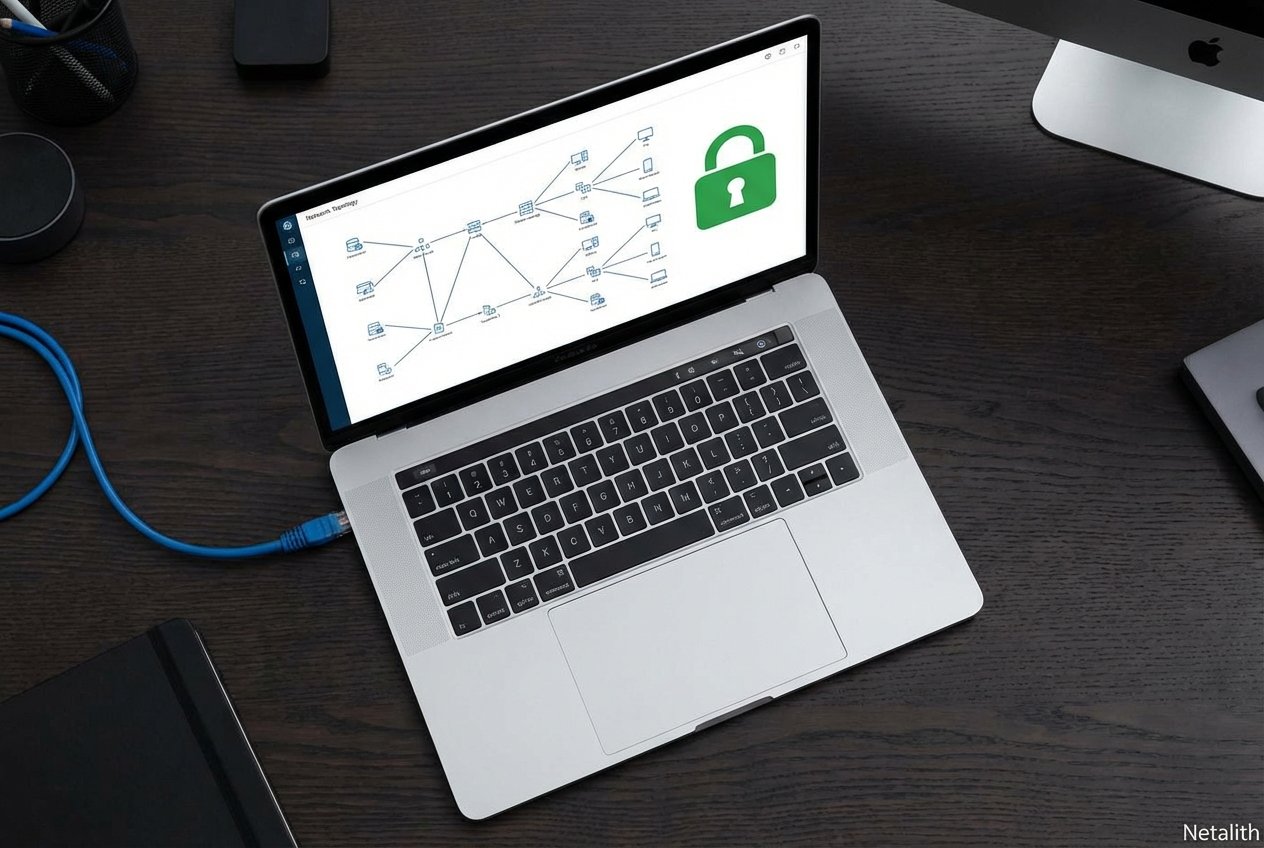
In the rapidly evolving digital landscape, understanding how data travels across a wire is just as critical as knowing how to exploit a web application. Grasping network security basics is the foundational stepping stone for anyone aiming to build a resilient and effective cybersecurity roadmap. After all, you cannot protect—or ethically hack—what you do not thoroughly understand.
Often, an ethical hacking tutorial for beginners will dive straight into flashy tools and automated scripts. However, real-world penetration testing requires a much deeper comprehension of hacking networking basics. Mastering network security basics empowers you to identify subtle misconfigurations, pivot undetected through segmented corporate environments, and map out the core infrastructure of your target. A comprehensive intro to computer networks for security is not just dry academic theory; it is the practical blueprint that underpins a successful, long-term career. By grounding yourself in network security basics, you transform from a script kiddie into a seasoned professional capable of understanding the "why" behind every exploit.
Why Network Security Basics Matter for Ethical Hackers
To be effective in the field, you must treat the network as your primary playground. Without a firm grasp of network security basics, an ethical hacker is essentially flying blind. Whether you are performing internal reconnaissance or external vulnerability scanning, your ability to interpret network behavior defines your success. Understanding hacking networking basics allows you to bypass simple security controls and move laterally within a target environment. By following a structured cybersecurity roadmap and starting with an intro to computer networks for security, you ensure that your technical skills are built on a bedrock of architectural knowledge rather than just tool familiarity.
Understanding OSI Model for Cybersecurity Professionals
As an ethical hacker, you must know exactly how computer systems communicate, from the physical cables all the way up to the user-facing software. Understanding OSI model for cybersecurity professionals is absolutely vital to this process. The Open Systems Interconnection (OSI) model breaks down complex network communication into seven distinct layers: Physical, Data Link, Network, Transport, Session, Presentation, and Application.
Any comprehensive osi model guide will emphasize that vulnerabilities and exploits can exist at every single one of these layers. By solidifying your network fundamentals, you can pinpoint exactly where a security flaw resides. For example, a MAC spoofing attack happens at Layer 2 (Data Link), while a SQL injection targets Layer 7 (Application). Learning this framework gives you a universal language to communicate findings to network administrators.
TCP/IP Protocol Suite Basics for Pentesting
While the OSI model serves as a brilliant conceptual framework, the TCP/IP model represents the practical reality of how the modern internet actually functions. Mastering TCP/IP protocol suite basics for pentesting involves understanding its four consolidated layers: Network Access, Internet, Transport, and Application.
Anyone studying networking for security or networking for infosec must intimately understand how protocols like TCP (Transmission Control Protocol) and UDP (User Datagram Protocol) operate. TCP requires a three-way handshake (SYN, SYN-ACK, ACK) ensuring reliable data delivery, making it a prime target for stealth scanning techniques like SYN stealth scans. Understanding these protocols is a core part of common network ports and services discovery during the enumeration phase.
Common Network Ports and Services
A massive component of practical pentesting is memorizing common network ports and services. When running enumeration tools like Nmap, you are essentially knocking on digital doors to see what is open.
- Port 21: FTP (File Transfer Protocol)
- Port 22: SSH (Secure Shell)
- Port 53: DNS (Domain Name System)
- Port 80/443: HTTP/HTTPS (Web Traffic)
- Port 445: SMB (Server Message Block)
Recognizing these services at a glance accelerates your ability to identify low-hanging fruit and insecure legacy services during a security assessment.
Subnetting and IP Addressing for Security Students
To successfully navigate and exploit a target environment, you need a solid grasp of subnetting and IP addressing for security students. IPv4 and IPv6 addresses dictate how individual devices are logically located on a sprawling network. Subnetting is the art of dividing these larger networks into smaller, more manageable (and ideally, more secure) segments.
Properly applied network security basics teach us that misconfigured subnets frequently lead to excessive internal visibility. If a network administrator fails to properly segment the guest Wi-Fi from the corporate database server, an attacker can effortlessly move laterally across the network.
MAC vs IP Addresses Explained
A frequent point of confusion in early training is distinguishing between physical and logical addressing. Getting MAC vs IP addresses explained is relatively straightforward:
An IP Address is a logical, routable address used to send data across different networks. A MAC Address (Media Access Control) is a physical address burned into the network interface card, used solely for communication on the local network segment.
Spoofing a MAC address is a common tactic in local network attacks, allowing hackers to bypass primitive access controls or execute Man-in-the-Middle (MitM) attacks.
Routing and Switching Basics
Traffic flow across any corporate infrastructure is controlled by routers and switches. Mastering routing and switching basics allows you to understand how packets are forwarded from one subnet to another (routing) and how frames are delivered to specific MAC addresses within the same network segment (switching).
As an ethical hacker, applying your knowledge to networking hardware is incredibly powerful. Compromising a core switch or a border router can grant you significant control over the organization's data flow. Furthermore, understanding DNS and DHCP security vulnerabilities often starts with knowing how these devices handle service requests.
DNS and DHCP Security Vulnerabilities
Core network services are always prime targets. DNS and DHCP security vulnerabilities are highly sought after during internal penetration tests. DHCP spoofing can allow an attacker to assign malicious IP configurations to unsuspecting clients, while DNS cache poisoning can silently redirect legitimate user traffic to malicious servers, enabling mass credential harvesting.
Packet Analysis Fundamentals
Once you have access to a network, you need the ability to "see" the invisible data flowing around you. Packet analysis fundamentals involve using sophisticated tools like Wireshark or tcpdump to capture and inspect live network traffic. A thorough grounding in network security basics reminds you that unencrypted protocols (like Telnet or FTP) will spill passwords in plain text if you know how to capture them.
Packet Header Analysis
Going one level deeper, packet header analysis allows you to understand the exact, byte-by-byte structure of network traffic. By analyzing specific flags set in a TCP header (SYN, ACK, FIN, RST), you can deduce firewall rules, identify operating system fingerprinting attempts, and troubleshoot why an exploit might be failing to reach its destination.
Intro to Firewalls and IDPS
No discussion of network infrastructure is complete without an intro to firewalls and IDPS (Intrusion Detection and Prevention Systems). These technologies are the gatekeepers. Firewalls block unauthorized traffic based on predefined rules, while an IDPS analyzes traffic patterns for known attack signatures or anomalous behavior.
Conclusion: Mastering Essential Networking Concepts
Mastering essential networking concepts for ethical hackers to master is a journey that never truly ends. As technology shifts toward software-defined networking and cloud infrastructures, the underlying network security basics remain the same. By understanding the OSI model, TCP/IP protocols, and packet analysis, you provide yourself with the tools necessary to dismantle and defend any network you encounter. Continue your education by practicing in lab environments, and always prioritize these core fundamentals to remain a top-tier security professional.