Reproducible Data Science: A Guide to Data Science Version Control and Experiment Tracking
A comprehensive guide on data science version control, covering Git, DVC, and MLflow for building reproducible machine learning workflows and experiment tracking.

Long Nguyen
Fullstack Developer · AI Engineer · Researcher
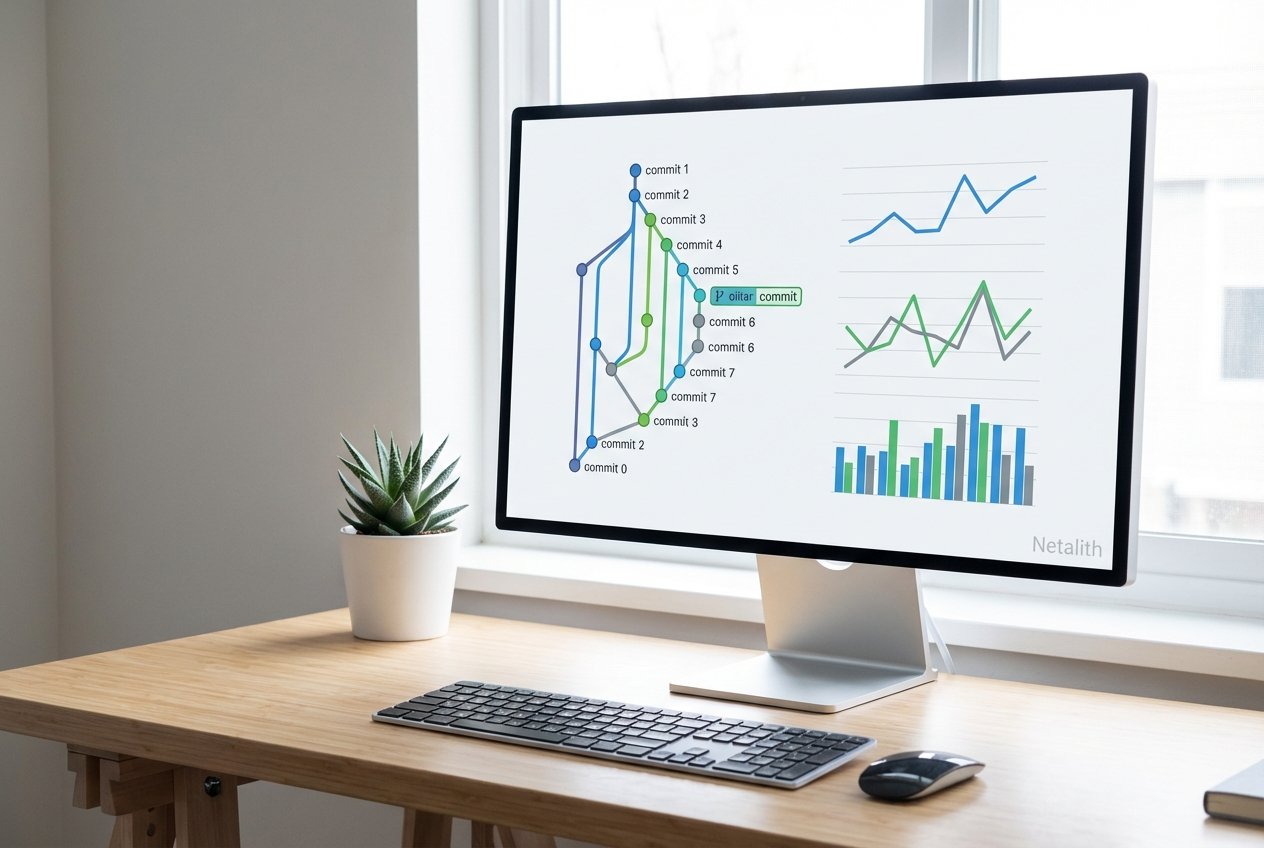
Introduction to Reproducible Data Science Workflows
As machine learning and artificial intelligence systems rapidly evolve, scaling projects from local environments to production has become increasingly complex. To build reliable and robust systems, mastering data science version control is no longer optional—it is a foundational requirement for any professional pipeline. This guide explores modern reproducible data science workflows, designed to help data scientists, software developers, and cloud engineers build sustainable and auditable machine learning systems.
Historically, software engineering has relied heavily on code tracking. However, machine learning demands more: you must track code, datasets, environments, and hyperparameters simultaneously. Without strict reproducibility, teams waste countless hours trying to replicate past results. By leveraging modern data versioning tutorial and collaboration tools, practitioners can ensure their experiments are fully traceable and reproducible at any stage of the lifecycle.
Why You Need Data Science Version Control
There is a stark difference between a script that works on a local laptop and a model that runs seamlessly in a distributed cloud environment. Implementing reliable data versioning tutorial bridges this gap. When you treat data and models as first-class citizens alongside your code, you unlock true experiment management and maintain absolute clarity over your project's history.
Many teams initially rely on ad-hoc naming conventions, only to realize that professional ML operations (MLOps) require dedicated versioning systems. Transitioning to a structured DS version control strategy ensures that your team avoids the pitfalls of overwritten data and lost model weights. If you are following any comprehensive ML project management guide, you will find that data versioning tutorial sits firmly at the center of operational success.
Challenges Without Versioning and Tracking
For anyone navigating a data science roadmap for beginners, understanding the pitfalls of poor tracking is crucial. Without proper versioning, you inevitably face the "works on my machine" syndrome. If a dataset is modified without a trace, reproducing an earlier, highly accurate model becomes practically impossible.
As covered in a typical data versioning tutorial, the absence of versioning systems leads to fragmented codebases and corrupted data pipelines. When multiple data scientists collaborate on a shared network drive without data versioning tutorial, conflicting scripts and untraceable updates can derail a project for weeks.
Using Git and DVC for Data Science
Traditional Git is perfect for tracking code, but it is not designed for massive datasets or multi-gigabyte model files. To solve this, Data Version Control (DVC) acts as an extension to Git. In this using Git and DVC for data science tutorial, we explore how to pair these tools to create robust versioning systems. DVC allows you to track large files by storing lightweight metadata in Git while the actual data resides in remote cloud storage like Amazon S3, Google Cloud Storage, or Azure Blob.
Integrating DVC ensures that your data versioning tutorial strategy covers the complete trinity of ML: code, data, and models. For those looking for a definitive DVC tutorial for data scientists, the process involves initializing DVC in your Git repository, adding your dataset using dvc add data/dataset.csv, and committing the resulting .dvc metadata file to Git.
Git Workflows for ML Projects Guide
Building on top of basic tracking, your team needs standardized collaboration tools and branching strategies. In this Git workflows for ML projects guide, we recommend adopting a structure that aligns with ML experimentation. Unlike standard software development, ML features often correspond to experimental algorithms or different data preprocessing techniques.
For someone following a python for data science tutorial, applying branching logic to experiments is a game-changer. Create a new Git branch for every major modeling experiment. Use your data versioning tutorial setup to ensure that merging an experimental branch into the main branch brings the Python code updates and the DVC pointers to the exact dataset state used during that experiment.
Implementing ML Experiment Tracking on Cloud Platforms
While DVC handles the versioning of assets, you also need to monitor the metrics, parameters, and artifacts generated during the training phase. Effective ML experiment tracking transforms trial-and-error into scientific iteration. By systematically recording every run, you create an immutable ledger of what worked and what failed.
This is why consulting a tracking ML experiments on cloud platforms guide is essential. Cloud-native experiment management solutions aggregate your data versioning tutorial insights into a centralized dashboard, allowing distributed teams to compare metrics, visualize loss curves, and select the optimal model version for deployment.
MLflow Implementation Tutorial for Beginners
MLflow remains a premier tool for tracking experiments. In this MLflow implementation tutorial for beginners, we look at how easily it integrates into Python scripts. Tracking your machine learning implementation tutorial steps requires just a few lines of code to log parameters and metrics:
import mlflow
import mlflow.sklearn

# Start an MLflow experiment run
with mlflow.start_run():
    # Log hyperparameters
    mlflow.log_param("max_depth", 5)
    mlflow.log_param("n_estimators", 100)

    # Log metrics
    mlflow.log_metric("rmse", 0.42)
    mlflow.log_metric("r2_score", 0.88)

    # Log the model artifact
    mlflow.sklearn.log_model(rf_model, "random_forest_model")
By executing this, your experiment management becomes automated. When combined with proper data science version control, MLflow allows you to trace a specific metric back to the exact code commit and DVC dataset state that produced it.
Experiment Tracking Best Practices for Cloud-Native Teams
To scale your efforts, your methodologies must be engineered for the cloud. Any experiment tracking best practices for cloud-native teams guide emphasizes that automation and CI/CD integration are vital. According to our cloud-native data science guide, teams should adhere to these core practices:
- Automate your logging: Use APIs to enforce experiment management automatically instead of manual spreadsheets.
- Unify collaboration tools: Ensure your data science version control system integrates with team communication platforms and issue trackers.
- Tag aggressively: Tag Git commits and DVC pushes with semantic versioning to guarantee absolute reproducibility.
- Centralize tracking servers: Host your tracking servers in the cloud to provide a single source of truth for all stakeholders.
Conclusion
Mastering data science version control is the most effective way to transition from experimental scripts to professional, production-grade machine learning. By combining Git for code, DVC for data, and MLflow for experiment management, you create a reproducible data science workflow that stands the test of time. As the industry moves toward more complex architectures, having a solid foundation in version control and experiment tracking for data science ensures your projects remain scalable, collaborative, and, above all, reproducible.