Python interview questions 2026: Top 50 Python Interview Questions and Answers for 2026: Ace Your Technical Review
Prepare for your technical review with the top 50 Python interview questions 2026. This guide covers beginner basics, OOP, advanced CPython concepts, and coding challenges.

Long Nguyen
Fullstack Developer · AI Engineer · Researcher
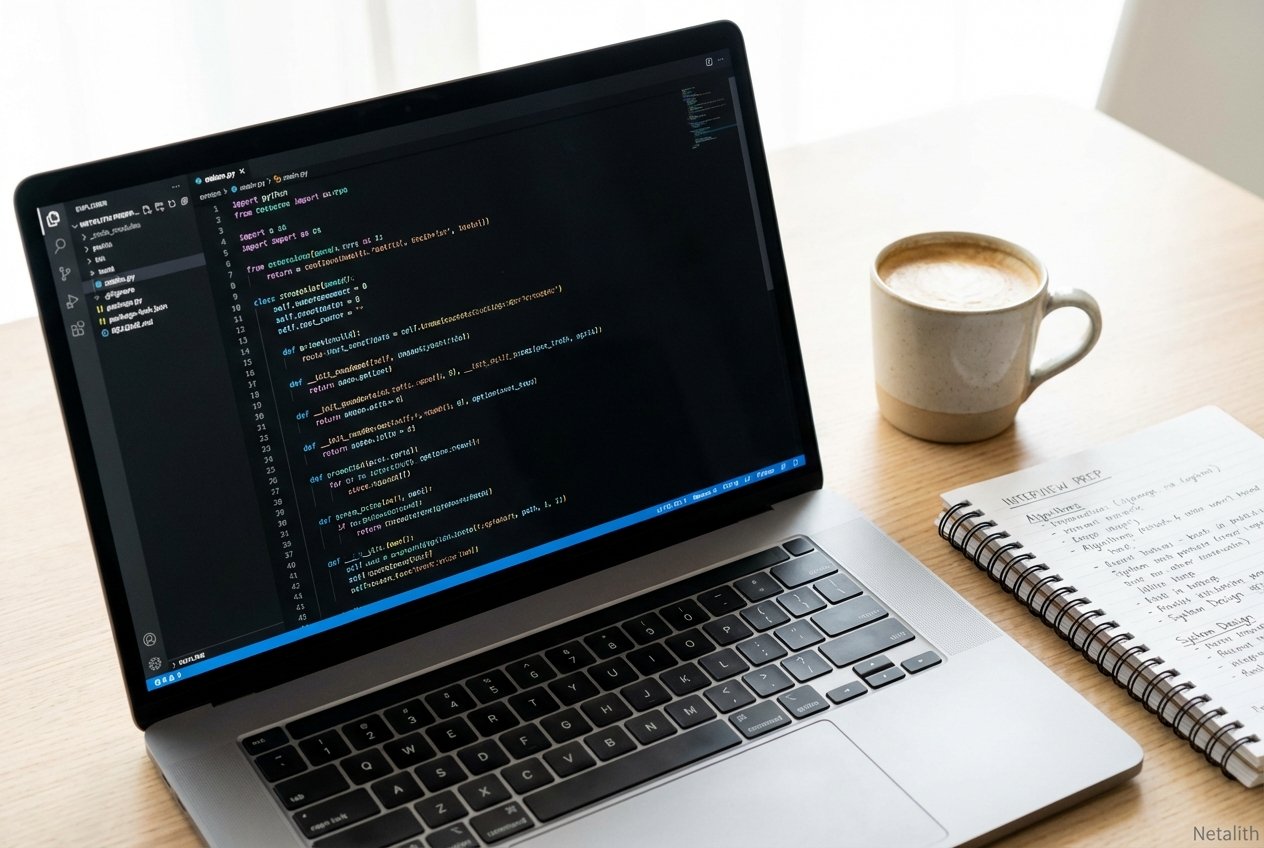
Stepping into the competitive job market requires more than just knowing how to write basic scripts; it demands targeted, high-quality technical interview prep. With the language evolving rapidly, mastering the right Python interview questions 2026 is the surest way to stand out to hiring managers. Whether you are aiming for a junior role or a senior backend architecture position, understanding the modern Python landscape is essential for success.
Before diving into the code, you need a solid grasp of your tools. Setting up and explaining your Python development environment—including virtual environments, linters, and dependency management—is often the first hurdle in a modern technical screen. A structured approach to your Python prep will help you articulate your thoughts clearly, turning a stressful technical review into a confident conversation. Let's explore the essential Python interview questions 2026 that will help you ace your upcoming technical assessments.
Beginner Level: Most Common Python Interview Questions 2026
If you are newly entering the field, mastering the most common python interview questions 2026 is your top priority. Hiring managers use these fundamental questions to ensure candidates have a solid foundation before advancing to complex system design. Here is a curated Python Q&A designed specifically to tackle the top python technical interview questions for freshers 2026.
Core Fundamentals (Questions 1-15)
- What is Python and why is it so popular? Python is a high-level, general-purpose programming language known for its readability and massive ecosystem.
- How does dynamic typing in Python work? Unlike statically typed languages, dynamic typing in Python means variable types are checked during execution, allowing you to assign different types of values to the same variable.
- What are the essential Python syntax fundamentals? You should be comfortable explaining indentation rules, variable naming conventions, and basic operators, as these Python syntax fundamentals form the bedrock of clean code.
- What is the difference between mutable and immutable data types? Mutable objects (lists, dictionaries, sets) can be changed after creation, whereas immutable objects (tuples, strings, integers) cannot.
- What is PEP 8? It is the official style guide for Python code, promoting readability and consistency.
- What is the difference between a list and a tuple? Lists are mutable and enclosed in brackets
[]; tuples are immutable and enclosed in parentheses(). - How do dictionaries work in Python? Dictionaries store data in key-value pairs using hash tables for fast O(1) lookups.
- What is a lambda function? An anonymous, inline function defined using the
lambdakeyword, typically used for short, throwaway operations. - What is the purpose of the
__init__method? It serves as the constructor in Python classes, initializing the object's attributes. - Explain the difference between
break,continue, andpass.breakexits a loop,continueskips the current iteration, andpassis a null statement used as a placeholder. - How does slicing work in Python? Slicing extracts parts of a sequence using the syntax
sequence[start:stop:step]. - What is negative indexing? Negative indexing allows you to access sequence elements from the end, where
-1is the last element. - What is the difference between
isand==?==checks for value equality, whileischecks for identity (memory address). - What are docstrings? String literals used for documentation appearing right after the definition of a function or class.
- How do you handle scope in Python? Python follows the LEGB rule: Local, Enclosing, Global, and Built-in scopes.
Intermediate Level: Top 50 Python Interview Questions and Answers 2026
Once you clear the basics, interviewers will push deeper into how you organize and structure your code. This section covers the core of the top 50 python interview questions and answers 2026, focusing heavily on a dedicated Python data structures interview and standard Object-Oriented Programming principles.
Data Structures and OOP (Questions 16-30)
- What are list comprehensions? A concise way to create lists, e.g.,
[x for x in range(10) if x % 2 == 0]. - How do you utilize standard library modules? Python's standard library modules like
datetime,math, andjsonprovide powerful built-in functionality. - What is a generator? A function that returns an iterator using the
yieldkeyword, generating items one at a time to save memory. - Explain decorators in Python. Decorators are functions that modify the behavior of another function or class without changing its source code.
- OOP Python questions: What is Inheritance? It allows a class to inherit attributes and methods from another class, promoting code reuse.
- What is Polymorphism in Python? The ability of different objects to respond to the same method call in their own specific ways.
- How does Python handle Encapsulation? By convention, prefixing attributes with underscores (e.g.,
_protectedor__private). - What is MRO (Method Resolution Order)? The order in which Python looks for a method in a hierarchy of classes.
- What is the difference between
append()andextend()?append()adds an object as a single element;extend()iterates over an iterable and adds each element. - How do context managers work? Used with the
withstatement to ensure resources like files are properly closed. - How do you handle exceptions? Using
try,except,else, andfinallyblocks to manage runtime errors. - Explain
map(),filter(), andreduce(). Functional programming tools used to process iterables efficiently. - What is the difference between shallow copy and deep copy? Shallow copy references nested objects; deep copy creates a completely independent clone.
- What is the difference between class methods and static methods? Class methods (
@classmethod) access the class viacls; static methods (@staticmethod) do not. - What are
*argsand**kwargs?*argsallows for a variable number of non-keyword arguments;**kwargsallows for keyword arguments.
Advanced Level: Python Programming Interview Answers for Experienced Professionals
For senior roles, expect deeper questions regarding the CPython implementation and internal optimizations. These python programming interview answers for experienced professionals highlight your expertise in advanced Python concepts and high-performance computing.
Advanced Concepts (Questions 31-40)
- What is the Global Interpreter Lock (GIL)? A mutex that allows only one thread to execute Python bytecode at a time, protecting memory management. Note: Modern Global Interpreter Lock (GIL) updates are exploring "no-gil" builds for better parallelism.
- Explain how memory management works in Python. It uses a private heap, reference counting, and a cycle-detecting garbage collector.
- What are metaclasses? Classes that define how other classes behave. A class is an instance of a metaclass (usually
type). - What are the new Python 3.14 features? Expect questions on continued performance improvements and potential changes to the C-API.
- How do you optimize Python performance? Techniques include using built-in functions, local variables, and tools like Cython or Numba.
- What is the difference between multi-threading and multi-processing? Threads share memory and are GIL-bound; processes have separate memory and bypass the GIL.
- How does
asynciowork? It provides a foundation for writing single-threaded concurrent code usingasyncandawait. - What is a closure in Python? A function object that remembers values in enclosing scopes even if they are not present in memory.
- How do you use
__slots__? It restricts the creation of__dict__, saving memory for classes with many instances. - What is the purpose of the
collectionsmodule? It provides specialized container datatypes likenamedtuple,deque, andCounter.
Python Coding Challenges and Technical Quiz Scenarios
No coding interview is complete without practical application. These scenarios test your ability to apply interpreted vs compiled languages theory to real-world problem-solving through a Python technical quiz.
Coding Exercises (Questions 41-50)
- Reverse a string without built-in functions: Use slicing:
s[::-1]. - Find duplicates in a list: Use a set or a dictionary to track seen elements.
- Check for palindromes: Compare
string == string[::-1]. - Implement a decorator that logs execution time: Use
time.time()around the function call. - Flatten a nested list: Use a recursive function or a nested list comprehension.
- Merge two sorted lists: Use a two-pointer approach for O(n) complexity.
- Count word frequency in a file: Use
collections.Counterafter reading lines. - Check if two strings are anagrams: Sort both strings and compare them.
- Identify the missing number in a range: Use the sum formula
n*(n+1)/2. - Implement a Singleton pattern: Use a class method or a decorator to ensure only one instance exists.
Conclusion: Acing Your Python Assessment
Preparing for your next role involves more than just memorization; it requires a deep understanding of why Python works the way it does. By reviewing these Python interview questions 2026, you've covered everything from basic syntax to advanced concurrency. Whether you are reviewing Python job interview questions for a startup or preparing Python assessment answers for a tech giant, consistency is key. Keep practicing your Python prep daily, stay updated on the latest releases, and you will be ready to ace your technical review with confidence.