Threat Modeling AI-Generated Web Apps (2026): Common Attack Paths, Risks, and Mitigations
A 2026 guide to threat modeling AI-generated web apps, covering common attack paths (prompt injection, model poisoning, data leakage, key theft, supply chain) and practical mitigations, checklists, and secure design patterns.
Drake Nguyen
Founder · System Architect
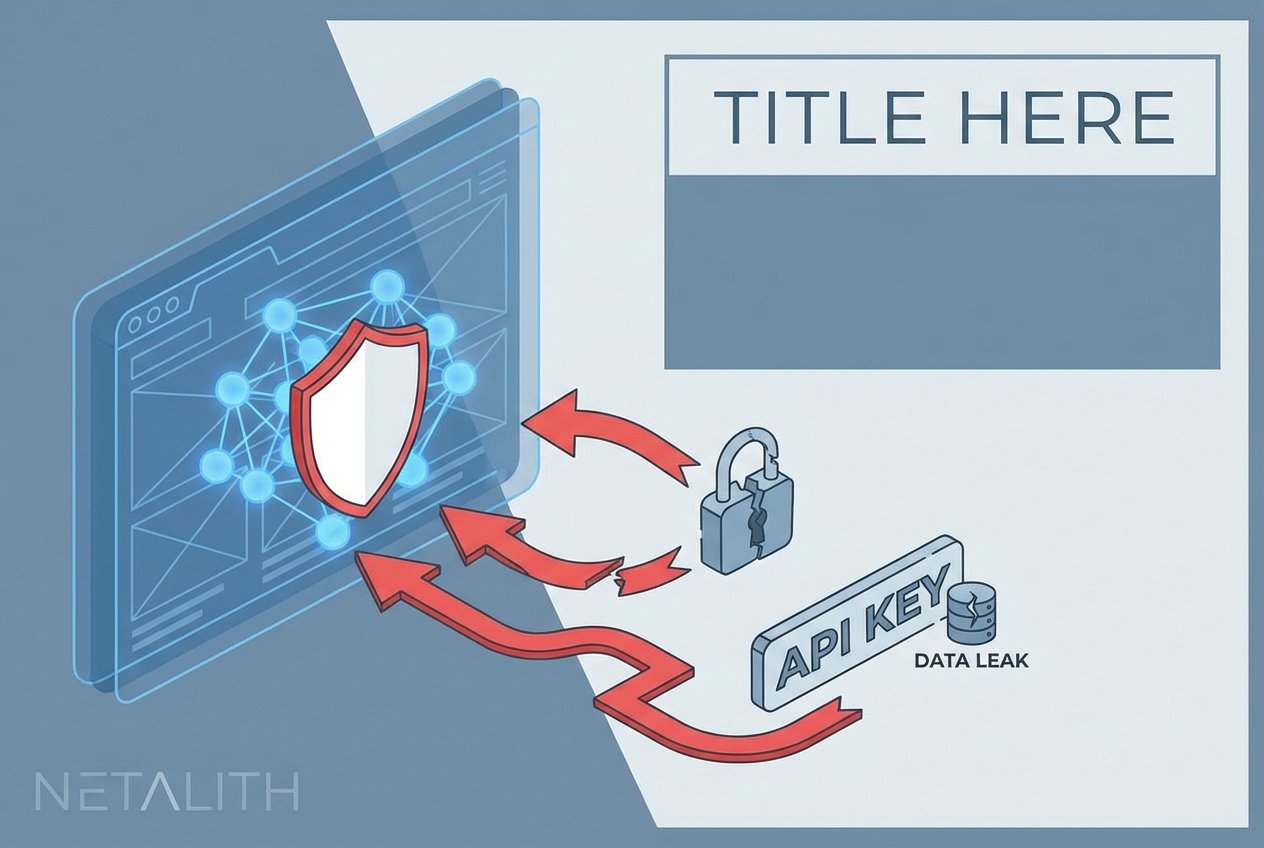
Threat Modeling AI-Generated Web Apps (2026): Common Attack Paths, Risks, and Mitigations
Netalith provides practical guidance for individual developers, indie makers, startups, product teams, and DevSecOps stakeholders on threat modeling AI-generated web apps in 2026. Learn common attack vectors, mitigations, checklists, and tools to reduce risk from prototype to production.
Why threat modeling matters for AI-generated web apps (2026 context)
AI-generated web apps accelerate product development by producing UI, backend code, and model-backed features quickly. In 2026, attacker incentives and tooling have evolved: lower-cost compute, commoditized model access, and automated attacks make AI-specific risks easier to operationalize. Threat modeling helps teams identify high-impact attack paths early, prioritize mitigations, and reduce blast radius during rapid prototyping and production rollout.
Scope and definitions: what we mean by “AI-generated web apps”
For this guide, an AI-generated web app is any web application where AI/ML systems actively generate content, decisions, or code that influence user-visible behavior. That includes features powered by LLMs, retrieval-augmented generation (RAG) using vector embeddings, automated code generation, and online learning or fine-tuning pipelines embedded in SaaS features.
Key components in scope: model endpoints, prompts and prompt templates, embedding/vector stores, training/fine-tuning pipelines, API keys and secrets, CI/CD for model deployment, and client-facing UI that consumes model outputs.
Threat landscape for AI-enabled web applications
Attacker incentives in 2026
- Automated monetization of model access (abuse-as-a-service): low-cost automation exploits public AI endpoints.
- Targeted data exfiltration from models and vector stores (embeddings may encode sensitive facts).
- Model and prompt theft for IP replication or to clone proprietary user experiences.
- Supply-chain compromise: model registries, third-party SDKs, or dependency backdoors impact many apps.
- Precision evasion: adversarial inputs tuned to bypass filters and safety heuristics.
Key assets and sensitive data in AI-generated web apps
- Trained models and checkpoints (proprietary weights)
- Prompt templates and system prompts (business logic embedded in prompts)
- Embeddings and vector stores (may leak training data or PII)
- Training data, fine-tuning datasets, and annotation stores
- API keys, signing keys, and service mesh credentials
- User data, session tokens, and audit logs
Attacker profiles and capabilities (script kiddies to state-level)
Map threats against realistic attacker profiles to prioritize defenses for AI web app security:
- Script kiddie: uses public exploits and low-cost scraping to abuse open endpoints.
- Criminal group: automated credential stuffing, extortion, or resale of scraped data.
- Competitor or insider: targets IP theft (prompts, models, embeddings).
- Nation-state / APT: targets supply chain and stealthy model poisoning.
Trust boundaries and data flow mapping
Define trust boundaries between client, server, third-party model providers, vector stores, and CI/CD systems. Explicitly document data flows for sensitive inputs (PII, API keys, proprietary documents). A minimal data flow map should list sources, transformations (e.g., embedding, redaction), sinks, and trust levels.
// Example simplified data flow entries
- Source: user_upload (PDF)
  Transform: extract_text -> redact -> embedding -> store_in_vector_db
  Trust boundary: app_server -> managed_vector_service (3rd party)
  Sensitive: contains PII, proprietary code
- Source: system_prompt (server)
  Transform: applied at call-time
  Trust boundary: server-side only
  Sensitive: business logic
Common attack paths in AI-generated web apps
1) Prompt injection leading to logic or privilege abuse
Attackers craft inputs that manipulate prompt templates or bypass guardrails so the model produces unintended actions, reveals secrets, or generates privileged outputs.
Indicators: model echoing control tokens, revealing system prompt contents, or returning secrets embedded in context.
2) Model poisoning and training-data manipulation
Poisoning occurs when an attacker inserts crafted samples into training or fine-tuning datasets to make models behave incorrectly or leak data. Online fine-tuning endpoints that accept user-supplied data are particularly at risk.
3) Data leakage and embeddings-based exfiltration (RAG and vector stores)
Embeddings and vector search can leak exact or approximate source data. Attackers can craft queries to extract embedded documents or reconstruct PII from nearest-neighbor responses.
4) API key theft, credential stuffing, and token misuse
Exposed credentials in client code, logs, analytics, or backups enable attackers to call paid model endpoints or access restricted datasets.
5) Supply-chain attacks on third-party models and libraries
Compromised model registries, weight hosting, or ML libraries can introduce backdoors or poisoned components during build and deployment.
6) Side-channel and inference attacks against hosted models
Timing, memory, or response-based side channels allow attackers to infer properties of training data or the model architecture, undermining confidentiality.
7) Adversarial examples and evasion of classifiers/filters
Attackers craft inputs that cause misclassification or bypass content filters used for moderation and safety checks.
8) Infrastructure attacks (cloud misconfigurations and insecure CI/CD)
Misconfigured storage or CI/CD pipelines often store model artifacts, credentials, and datasets. A single misconfiguration can expose production models and sensitive data.
Mitigations and secure design patterns (mapped to each attack path)
Prompt injection mitigations
- Keep system prompts and sensitive logic server-side; never send raw system prompts to untrusted clients.
- Use structured prompts: store system, developer, tool, and user content as distinct fields; avoid raw string concatenation.
- Sanitize and canonicalize input (control characters, hidden markup, prompt-delimiters); reject known injection patterns.
- Constrain tool use with allow-lists, parameter schemas, and policy checks; require explicit authorization for side-effecting actions.
- Implement output validation: enforce JSON schemas, length limits, and deny-list sensitive tokens in responses.
Model governance and integrity controls
- Sign model artifacts and verify signatures before deployment; enforce provenance checks in CI/CD.
- Maintain a model BOM (SBOM-like): origin, datasets, preprocessing, eval results, and dependencies.
- Detect drift and unexpected changes with scheduled evaluations and alerts.
RAG and vector database security (data leakage prevention)
- Minimize what you embed: redact PII and secrets; apply document classification before ingestion.
- Encrypt data in transit and at rest; isolate vector store networks and enforce least-privilege IAM.
- Use per-tenant indexes or strong tenant-aware filtering; test for cross-tenant retrieval.
- Limit retrieval: top-k caps, doc-level ACL checks, and provenance logging for every retrieved chunk.
Credential and session protection
- Never ship provider API keys to browsers; use server-side token exchange and short-lived credentials.
- Rotate secrets; store in a dedicated secrets manager; scrub logs and telemetry.
- Apply rate limiting, bot protection, and anomaly detection to model endpoints.
Supply-chain hardening
- Pin dependencies, verify checksums/signatures, and scan for malicious packages.
- Restrict who can publish model artifacts; enforce approvals for registry promotions.
- Run models in sandboxed runtimes; apply egress controls and minimal permissions.
Infrastructure and CI/CD security
- Harden cloud storage (private buckets, IAM least privilege, object lock where appropriate).
- Segment environments (dev/stage/prod) and restrict dataset access by environment.
- Secure CI/CD runners; require signed commits and protected branches; scan artifacts before release.
Threat modeling checklist for AI-generated web apps
- Inventory AI assets: models, prompts, tools, vector stores, datasets, and secrets.
- Draw data-flow diagrams and mark trust boundaries (client/server/provider/vector DB/CI/CD).
- Define attacker profiles and rank risks by likelihood × impact.
- Test prompt injection and tool-abuse scenarios; add automated regression tests.
- Validate RAG access control (tenant isolation, doc ACL checks, provenance logging).
- Implement rate limiting, authZ checks, and monitoring for model endpoints.
- Harden supply chain: dependency pinning, provenance, and artifact signing.